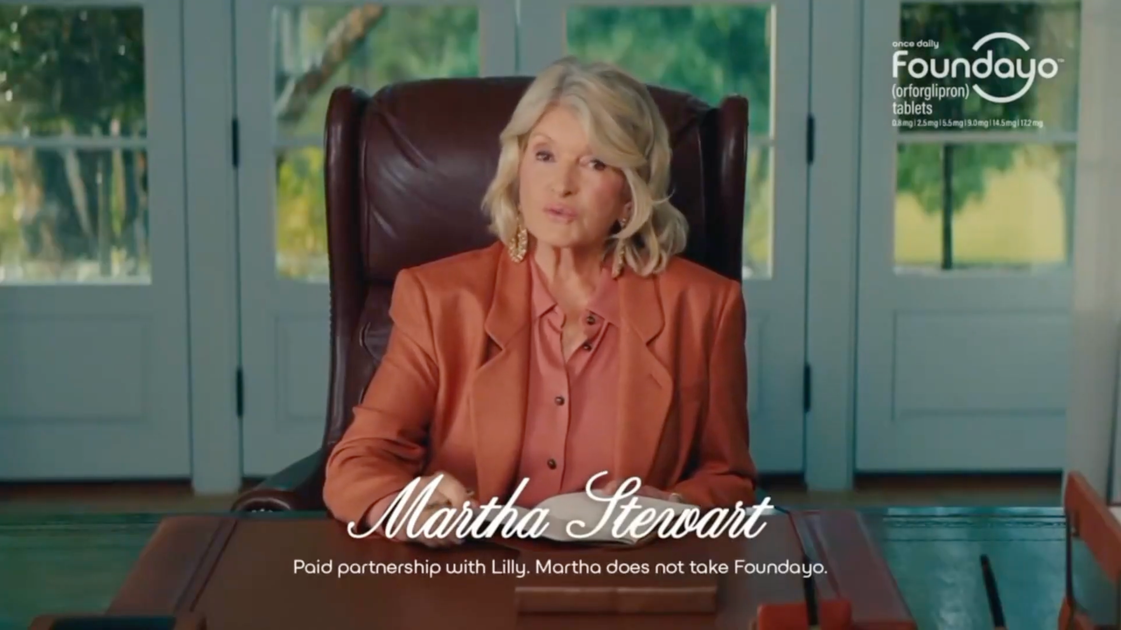
Lilly, the pharmaceutical company officially known as Eli Lilly and Company, has released a new Instagram advertisement featuring Martha Stewart for Foundayo, a daily oral GLP-1 medication. The advertisement includes a visual disclosure stating that Stewart does not use the drug, a detail that has drawn criticism from some social media users on platforms such as Reddit.
The U.S. Food and Drug Administration (FDA) approved Foundayo for chronic weight management and weight loss in April 2026. While the drug is part of the GLP-1 class, it is not approved for the treatment of type 2 diabetes. The advertisement follows a surge in marketing for such medications driven by rising consumer demand for weight loss treatments.
In the ad, Stewart encourages viewers to "ask your doctor about Foundayo," while an on-screen disclaimer reads, "Martha does not take Foundayo." Regulatory attorney Edgar Asebey told HuffPost that the advertisement complies with FDA requirements because it includes proper disclosures and directs viewers to consult a physician. Marketing consultant Noah Mallin and PR executive Evan Nierman noted that the campaign likely aims to leverage Stewart’s image to reach specific demographics rather than implying personal use.
The scale of this market involves millions of potential patients and billions in pharmaceutical revenue. With one in eight adults reporting use, the reach extends to roughly 12.5% of the adult population. For a household with a member seeking weight management, these advertisements serve as the primary introduction to new FDA-approved treatments like Foundayo, which requires a daily pill rather than the injections common to other GLP-1 drugs. Patients will notice these campaigns when they visit their doctors to discuss weight loss options, as the ads are designed to prompt those specific medical consultations.
The use of Stewart sets a precedent for how pharmaceutical companies may market sensitive weight-loss treatments by focusing on "lifestyle" associations rather than patient testimonials. As the FDA continues to regulate how these drugs are presented, the success or failure of this campaign will likely determine if other pharmaceutical firms use similar non-user celebrity endorsements. While some viewers expressed skepticism online regarding the authenticity of the endorsement, marketing experts suggest the controversy itself may increase brand awareness. No specific upcoming court dates or regulatory deadlines were reported following the April 2026 approval.