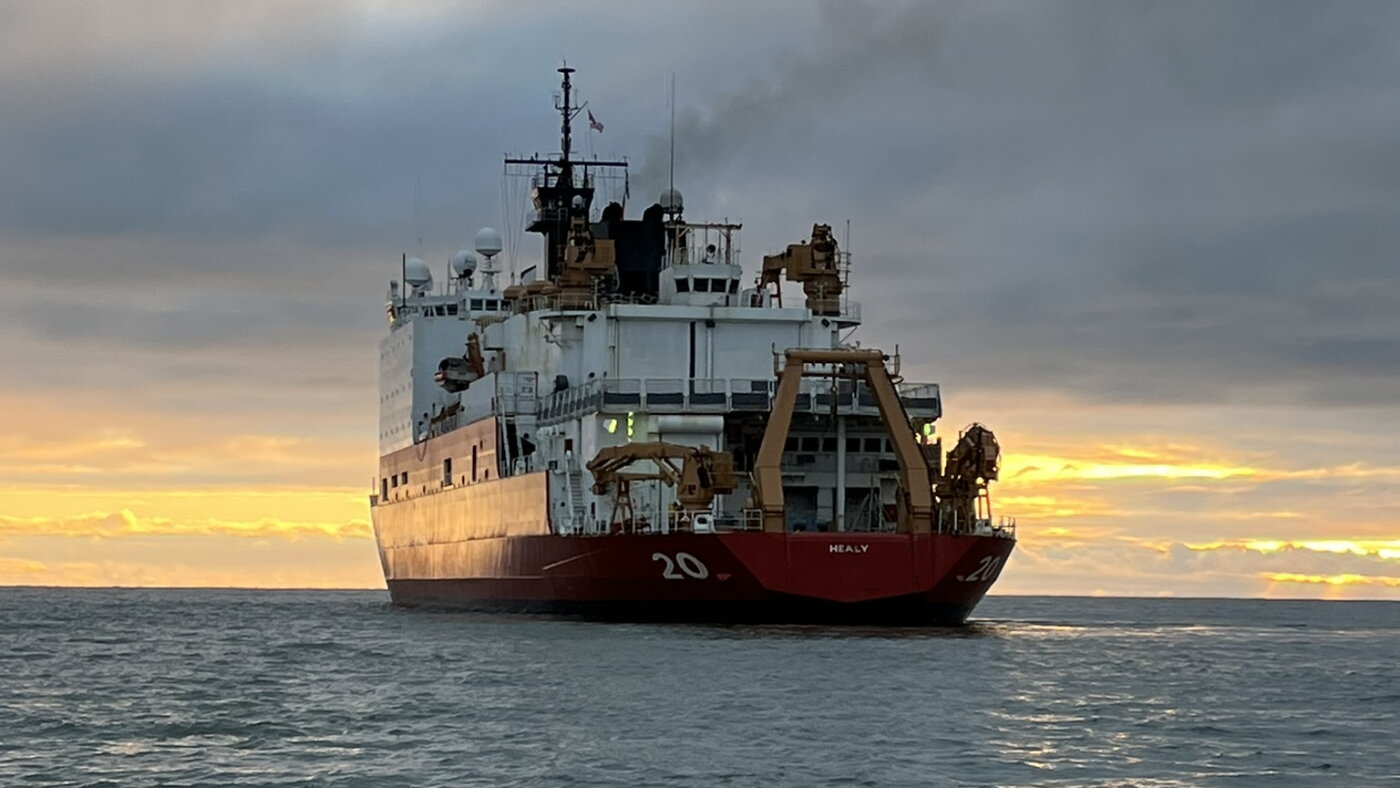
Writer Rana Foroohar reported from the USS Healy, a U.S. Coast Guard icebreaker, to document how melting polar ice is creating new navigable shipping lanes in the Arctic. In her new book, "Sea Change: America's New Great Game in the Arctic Circle," Foroohar describes a shift from conceptual to real transit possibilities through the North Pole. She noted that ships can now potentially traverse these routes for two to three weeks per year, a duration that could expand to one to three months over the next one to two decades if warming trends continue.
The opening of these lanes provides a significant economic incentive for international shipping. According to Foroohar, using Arctic routes can reduce travel time between the Atlantic and Pacific oceans by as much as 40%. The cost savings associated with these shorter routes depend on the current price of oil. These geographic changes have led to increased interest from China and Russia, who Foroohar said are attempting to establish the most influence at the top of the world.
Beyond shipping, the Arctic region contains large deposits of natural gas, oil, and rare earth minerals. The area also hosts undersea cables that facilitate a large part of intercontinental information flow. Foroohar characterized these cables as a "touchstone" in global conflicts, leading to a race between countries and companies to lay new cables and commercialize or militarize the surrounding areas. Scientists aboard the Healy are analyzing data that shows how warming in the High North affects fish populations, wind and wave patterns, and distant events like wildfires in the Canadian boreal forest.
For everyday citizens, these changes could impact the cost of goods shipped internationally and the security of global internet traffic handled by Arctic undersea cables. The legal status of these resources remains a point of contention; the United States has not signed the United Nations Convention on the Law of the Sea, an international agreement that sets rules for maritime mining and territorial rights. Foroohar stated that while former presidents Clinton, Bush, and Obama supported the treaty, some Republican senators opposed it to prevent an international body from having sovereign rights over U.S. actions. This lack of a unified legal framework, combined with allegations that Russia and China do not always follow United Nations rules, creates what Foroohar described as a "free-for-all" for territory and mineral rights.
The knock-on effects of Arctic warming extend to environmental and regional stability. Changes in the High North are linked to weather patterns that influence wildfires in North America and shift the habitats of commercial fish species. This regionalization of power mirrors conflicts over mineral rights and ports occurring in Latin America, West Africa, and the South China Sea. As the ice continues to thin, Foroohar expects the U.S. to increase its military and commercial priority in the region. The specific timeline for new shipping regulations or military deployments was not reported, but scientific data collection regarding these environmental changes is ongoing.