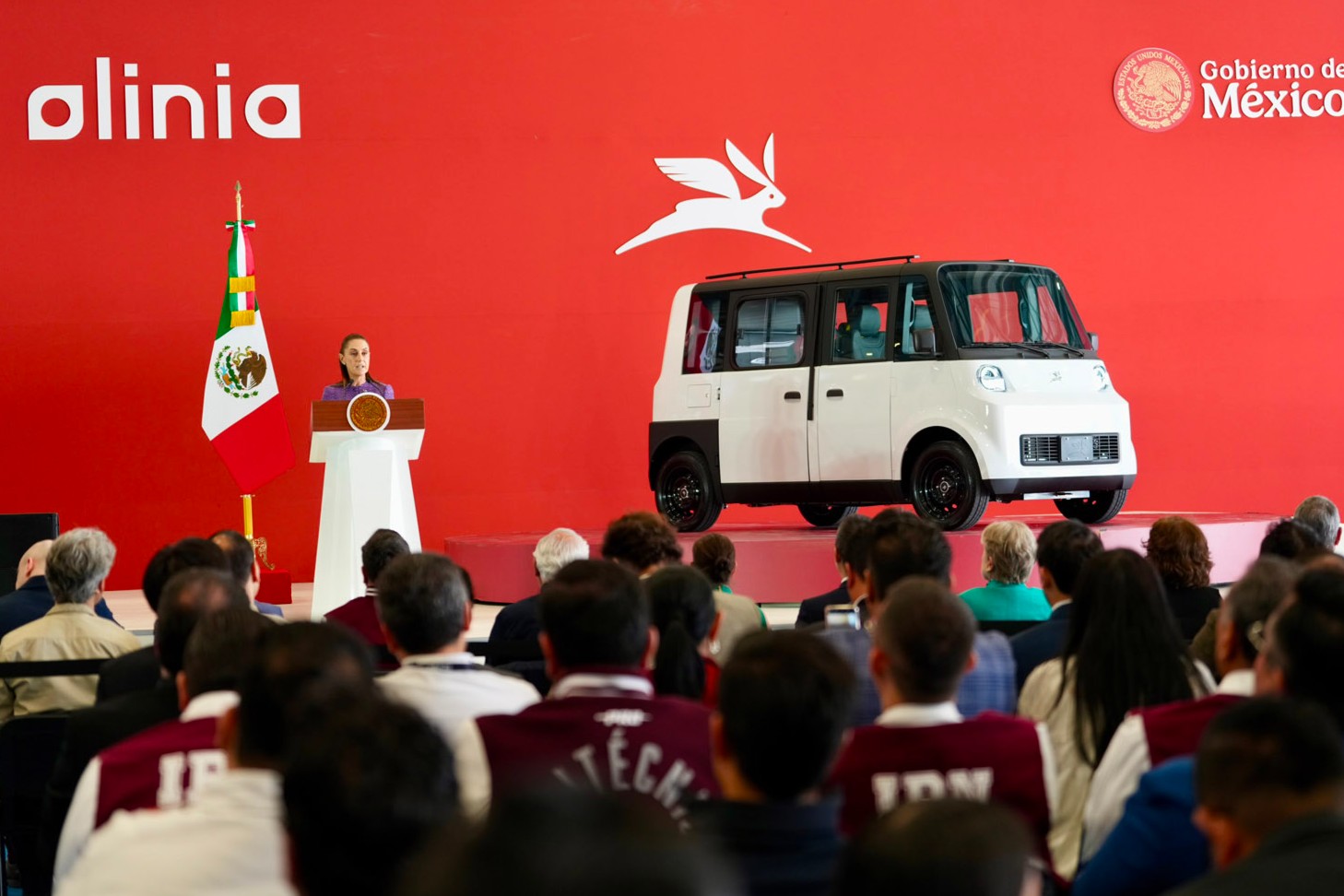
Mexico has unveiled the prototype for the Olinia Uno, the first domestically developed electric vehicle (EV) brand in the country. The project, coordinated by the Ministry of Science, Humanities, Technology and Innovation (SECIHTI), is scheduled to begin commercial production in 2027.
The initiative follows a plan first presented in January 2025 to transition Mexico from an export-focused assembly base to a vertically integrated automotive industry. Engineering for the Olinia Uno was conducted by more than 80 researchers at a center in Puebla, with contributions from the National Polytechnic Institute (IPN) and the National Technological Institute of Mexico (TecNM).
The Olinia Uno is a compact urban vehicle designed to seat up to six passengers and includes accessibility features for wheelchair users. It is equipped with a 14.7 kWh battery, providing a range of 125 kilometers and a top speed of 50 km/h. The target entry price is 150,000 Mexican pesos (approximately 7,500 euros), with estimated operating costs of 0.49 pesos per kilometer. The vehicle is designed to be charged using standard household electrical outlets.
The project sets a precedent for domestic industrial policy by mandating specific local content requirements. Manufacturing is expected to begin with 50% domestic content, with a target to reach 75% by 2030. This shift affects local small-business owners and suppliers who must expand their capabilities to meet these standards. Additionally, the project includes the rollout of 2,000 charging points across Mexico City, the State of Mexico, and Puebla. The government is also creating a new regulatory category for low- and medium-speed urban vehicles, which will change the legal rights and requirements for drivers of these specific car types compared to traditional high-speed vehicles.
What happens next depends on securing approximately 200 million Mexican pesos (9.95 million euros) in private investment needed to move from the prototype phase to commercial manufacturing. Construction of the production facility is scheduled to begin between August and September 2026. Looking further ahead, the government plans to implement a "second-life" battery strategy where used packs are repurposed for residential energy storage in Sonora before final recycling. The domestic content integration target of 75% is set for completion by 2030.