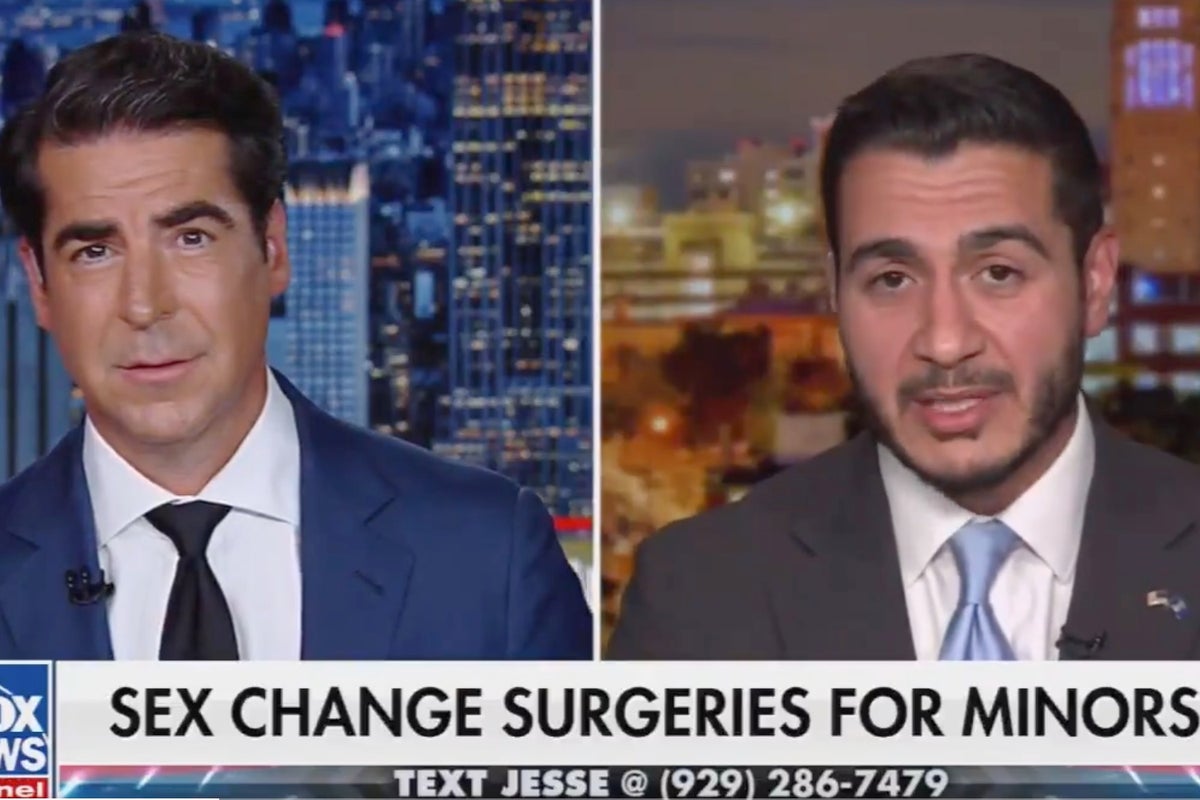
Dr. Abdul El-Sayed, the Democratic nominee for the U.S. Senate in Michigan, and Fox News host Jesse Watters engaged in a heated exchange during a prime-time interview on Monday. The discussion became focused on personal medical procedures after Watters questioned El-Sayed on his stance regarding gender-affirming surgery for minors.
El-Sayed, a former public health official, appeared on the network as part of his campaign against Republican nominee Mike Rogers, a former U.S. representative. Earlier this month, El-Sayed won the Democratic primary, an event President Donald Trump characterized as favorable for the Republican Party in the upcoming general election.
During the interview, Watters asked El-Sayed if he supported "sex change for minors." El-Sayed responded by stating that the government should not dictate healthcare choices. When Watters used informal language to describe surgical procedures on children, El-Sayed asked Watters if he was circumcised, noting that circumcision is also a form of surgery performed on minors.
Watters called the question personal and argued that circumcision differs from castration, labeling El-Sayed’s comparison "wacky" and "sick." While the nearly 30-minute interview included disagreements over immigration, taxation, and the war in Iran, it concluded with Watters expressing respect for El-Sayed’s willingness to appear on the program, though he described the candidate's policies as "naive."
The debate over gender-affirming surgery for minors involves specific legal rights and medical access for transgender youth and their parents. A shift in policy could result in changes to insurance coverage or the legality of certain procedures, impacting the out-of-pocket costs for families which can range from thousands to tens of thousands of dollars depending on the treatment. Voters in Michigan will decide in November which approach to healthcare autonomy and minor-specific regulations will represent them at the federal level.
Furthermore, the interaction underscores the strategy of progressive candidates appearing on conservative media outlets to reach a broader electorate. The knock-on effects of such high-profile media confrontations often influence fundraising cycles and national party platform priorities. The next major milestone for this contest is the general election in November, where Michigan voters will cast ballots to determine the successor to the current seat.
Effective dates for any proposed policy changes remain dependent on the results of the November general election and subsequent legislative action in the U.S. Senate. No specific court dates or immediate regulatory deadlines were reported in relation to this interview.