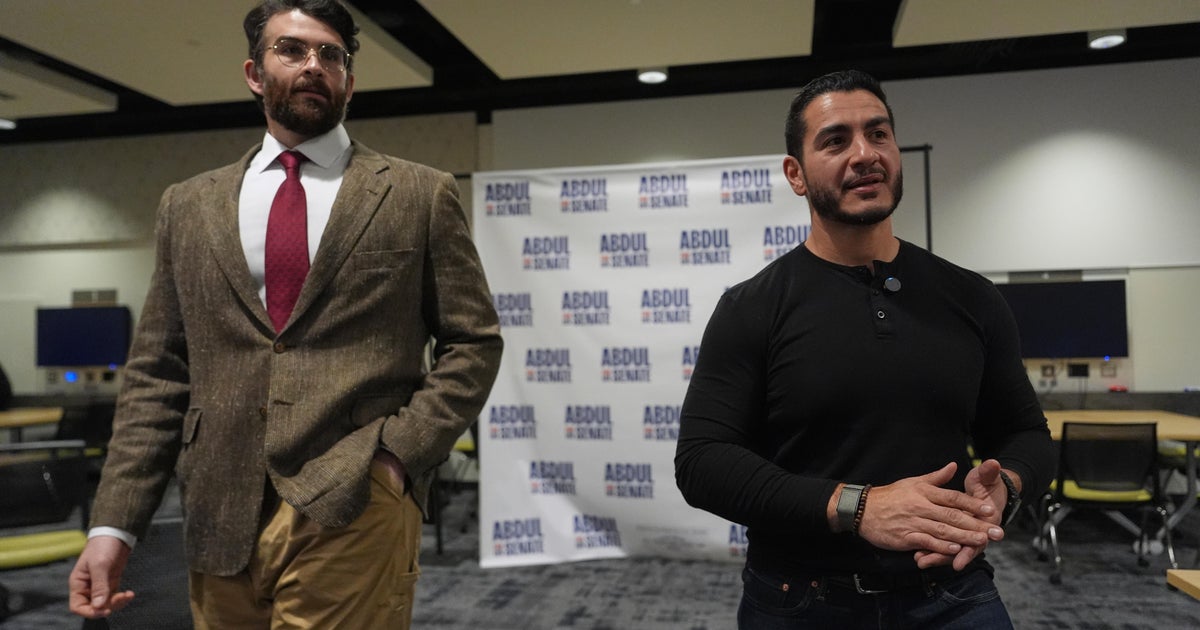
Abdul El-Sayed, the Democratic nominee for the U.S. Senate in Michigan, issued a statement Monday distancing his campaign from Hasan Piker after the Twitch streamer made comments regarding Jewish Americans and Israel. Piker, who campaigned with El-Sayed during the primary, stated during a recent broadcast that some Jewish Americans are "making antisemitism worse" by linking their identity to the state of Israel. El-Sayed's campaign responded by stating that "nobody speaks for this campaign besides me and my campaign spokespeople."
The controversy stems from a Twitch stream last week in which Piker criticized Jeremy Moss, a Democratic nominee for a Michigan Congressional seat who has not endorsed El-Sayed. Piker argued that institutions are teaching a "dangerous mode of propaganda" by suggesting Jewish people are monolithic in their support for Israel. He stated that if American Jews continue to project a singular investment in Israel, "someone's going to come around and take action" against them. Piker later defended his remarks on X, formerly Twitter, and in a Monday stream, stating he was warning against the "false conflation" of Zionism and Judaism.
Republican Senate nominee Mike Rogers criticized El-Sayed's response, calling it a "sham statement" and attempting to link the candidate to Piker's "violent and hateful rhetoric." Rogers, a former U.S. Representative, referred to Piker as El-Sayed's "running mate" and characterized the distancing as a political tactic used after winning the primary. Meanwhile, prominent Democrats also condemned Piker's remarks, including House Minority Leader Hakeem Jeffries (D-NY), who described the claim that American Jews invite violence against themselves as "dangerous and antisemitic."
The scale of the situation involves the millions of viewers who follow Piker's content and the hundreds of thousands of voters in Michigan's upcoming general election. While the exact financial impact is not reported, the political cost involves the potential loss of endorsements; Rep. Scholten and Jeremy Moss have both noted they have not yet endorsed El-Sayed. For an average resident, this conflict manifests as a debate over whether a candidate's associates reflect their own policy positions, potentially influencing how residents cast their ballots for the U.S. Senate and local Congressional seats in November.
The knock-on effects include a heightened focus on the definition of antisemitism versus anti-Zionism in political discourse. Piker's previous comments, including past remarks about Hamas and 9/11, have become central themes in Republican campaign messaging against El-Sayed. This sets a precedent for how campaigns may be held accountable for the speech of independent surrogates and influencers. Moving forward, El-Sayed indicated he will continue to address "hateful rhetoric" generally, while Rogers is expected to continue using the association as a campaign issue leading up to the general election. Specific upcoming debate dates or court deadlines related to this matter were not reported.