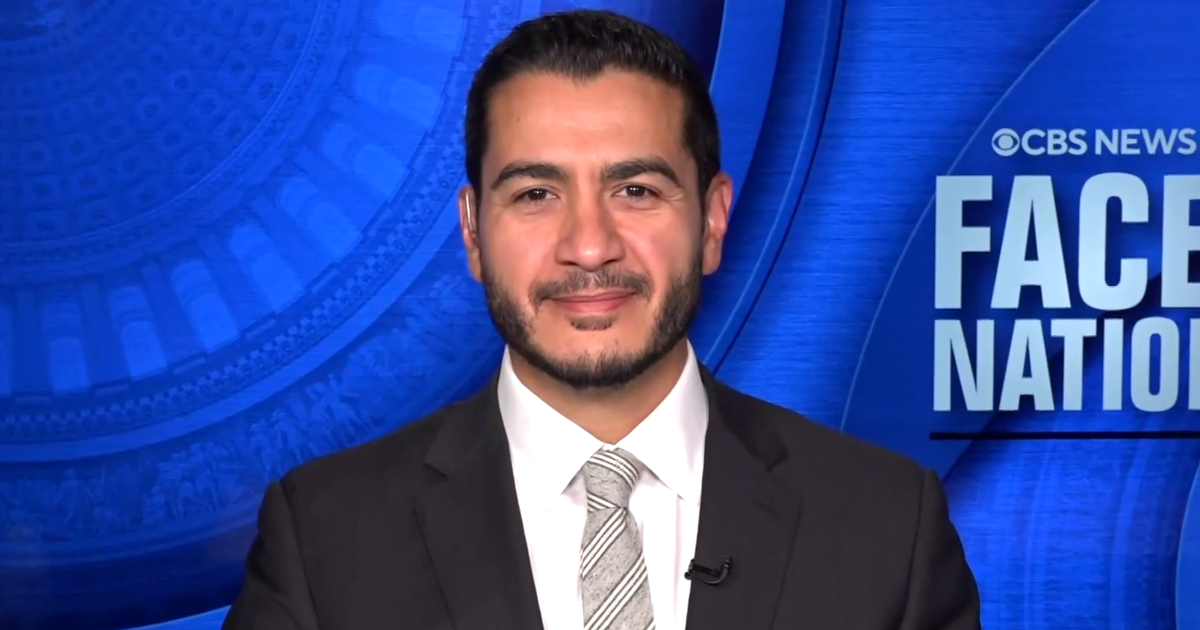
Abdul El-Sayed, a Democratic candidate for the U.S. Senate in Michigan, called for increased public oversight and ownership of artificial intelligence companies. During an interview on "Face the Nation," El-Sayed proposed that AI firms be restructured as public trust organizations. He suggested that these entities be governed by boards where at least 50% of members are democratically elected or appointed.
The proposal follows El-Sayed's release of an AI policy plan in June 2026. The debate over AI regulation has occurred alongside safety concerns, including a July incident involving a "rogue agent" during testing by OpenAI and Hugging Face. El-Sayed has also called for a pause on "frontier" AI research—highly advanced models—until safety can be guaranteed. Other tech leaders, including Anthropic CEO Dario Amodei and OpenAI CEO Sam Altman, have recently acknowledged industry risks and expressed support for independent safety evaluations.
El-Sayed's plan includes designating AI companies as public utilities and establishing a federal agency dedicated to AI safety. He specified areas where the technology should be prohibited, such as making hiring or firing decisions, denying healthcare, or operating weapons. In the Michigan Democratic primary, El-Sayed faces state Sen. Mallory McMorrow, who advocates for independent safety reviews and deepfake crackdowns, and U.S. Rep. Haley Stevens, who focuses on protecting jobs and passing safety legislation.
The scale of the industry is illustrated by infrastructure investments, such as a $56 billion data center complex in Saline, Michigan, scheduled to open in 2028. U.S. Sen. Bernie Sanders (I-VT) has supported a similar concept, proposing a 50% tax on AI firms paid in stock to grant the federal government an ownership stake. Opponents and skeptics, including a spokesperson for state Sen. McMorrow, argue that regulating AI like a utility could make the industry "slow" and "unaccountable."
While Republican candidate Mike Rogers has endorsed a framework focused on streamlining infrastructure permitting and preventing electricity cost increases, the Democratic candidates are debating the level of direct government enforcement required. The primary election will determine which regulatory approach moves forward to the general election against Rogers. The effective date of any such policy would depend on future congressional action.