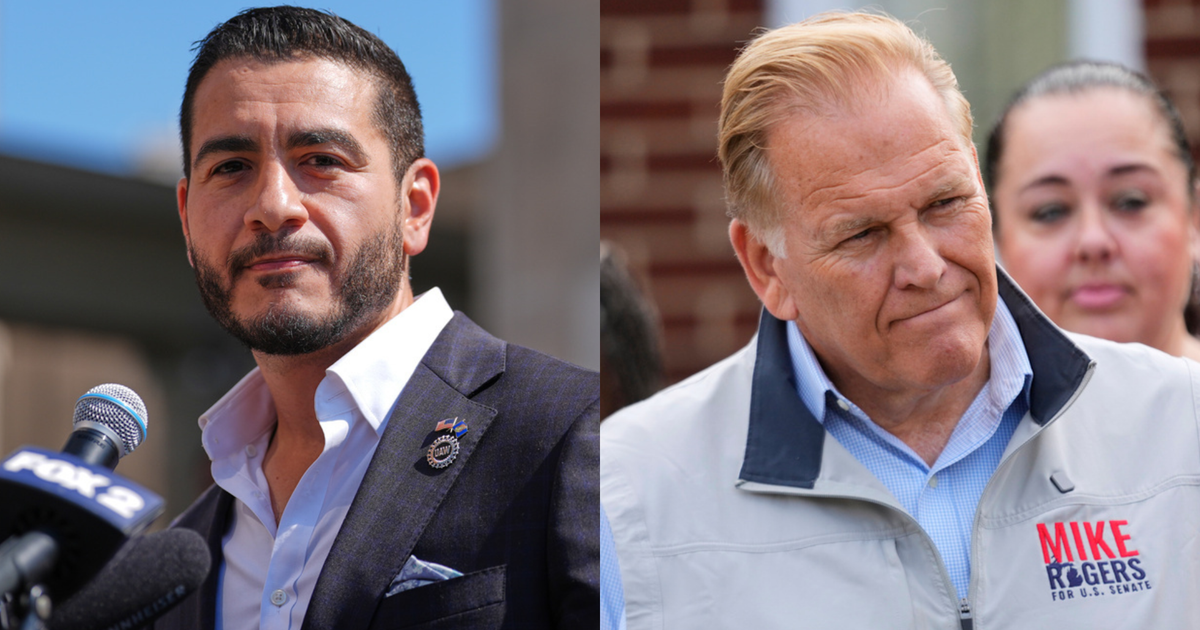
In the final months of Michigan’s U.S. Senate race, Democratic nominee Abdul El-Sayed and Republican nominee Mike Rogers have challenged each other’s records regarding the September 11, 2001, terrorist attacks. The exchange occurred as the state and nation marked the 25th anniversary of the events.
The 2026 contest to succeed retiring Democratic Senator Gary Peters is a closely watched race for control of the Senate. Michigan is considered a swing state, having supported Joe Biden in 2020 and Donald Trump in 2024. Republicans, who have not won a Senate race in Michigan since 1994, are seeking to flip the seat in a state Trump won by 1.4% in the most recent presidential election.
At a Friday town hall, El-Sayed criticized Rogers’ past congressional votes regarding health benefits for 9/11 survivors. While Rogers supported immediate financial aid after the attacks, El-Sayed highlighted Rogers’ votes against the 2010 James Zadroga Act, which established medical treatment and aid for first responders. Rogers responded on X, formerly Twitter, that the claim he does not support victims is "patently false." He noted that he had advocated for an annual $150 million appropriation for survivors rather than the permanent funding mechanism in the 2010 bill, which he argued at the time could jeopardize the nation’s financial health.
Republicans have focused their criticism on El-Sayed’s ties to streamer Hasan Piker, who said in 2019 that "America deserved 9/11." While El-Sayed campaigned with Piker during the primary, he has since distanced himself from the streamer, called those comments "dumb," and stated that nothing justifies the murder of civilians. Rogers and other Republicans, including Vice President JD Vance, have characterized El-Sayed’s past comments—specifically a 2021 statement that U.S. post-9/11 actions "scarred millions of other people"—as extreme. El-Sayed's supporters and Muslim advocacy groups have described the focus on these ties as Islamophobic.
The scale of the campaign is reflected in the significant financial investments being made in the state. The Senate Leadership Fund, a political action committee supporting Republican candidates, has reserved more than $45 million in advertising for the Michigan market this fall. Residents will likely see these funds translated into a high volume of television and digital advertisements focusing on the candidates' records and personal ties through the November election.
The day-to-day impact for voters involves weighing competing claims about first-responder healthcare. The debate over the James Zadroga Act involves federal funding for individuals who were exposed to toxins at the World Trade Center site. While Rogers argued for an annual $150 million appropriation to manage costs, the current system provides medical treatment and financial aid. Voters will decide on November 3, 2026, which candidate's approach to national security and domestic benefits best represents their interests. Following the election, the winner will be seated in January 2027.