The Plain Record

Neutral daily news — clear headlines, complete facts.

Business

Minneapolis Fed President cites global conflicts and debt as persistent inflation risks

Minneapolis Fed President Neel Kashkari cited debt levels, Middle East conflict, and trade tensions as ongoing obstacles to reaching the 2% inflation target.

Published August 23, 2026 at 1:05 PM EDT

The short answer

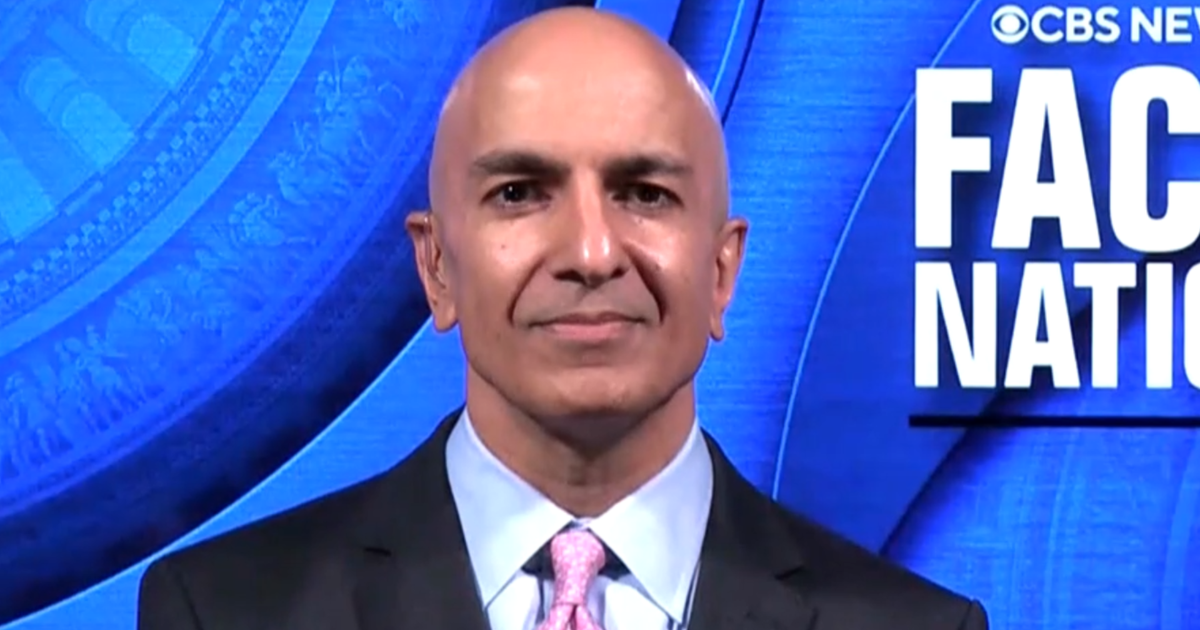
Minneapolis Fed President Neel Kashkari cited debt levels, Middle East conflict, and trade tensions as ongoing obstacles to reaching the 2% inflation target. Neel Kashkari, President and CEO of the Federal Reserve Bank of Minneapolis, stated in a televised interview that he lacks confidence that inflation is returning to its 2% target in the short term.

Minneapolis Fed President cites global conflicts and debt as persistent inflation risks

The Facts

Who
Neel Kashkari (President of Federal Reserve Bank of Minneapolis), Margaret Brennan (CBS News)
What
Interview with Minneapolis Fed President Neel Kashkari regarding inflation, interest rates, and national debt.
When
August 23, 2026
Where
United States
Why
Kashkari expressed skepticism that inflation is returning to the 2% target, citing $40 trillion in national debt, energy price volatility from the Iran conflict, and new tariffs from Canada as primary factors influencing future interest rate decisions.

Timeline of what happened

Key dates and decisions, in the order they occurred.

  1. August 23, 2026

    Kashkari discusses $40 trillion debt and inflation risks on 'Face the Nation'

  2. August 24, 2026

    Expected press conference by Treasury Secretary Scott Bessent on fiscal consolidation

Neel Kashkari, President and CEO of the Federal Reserve Bank of Minneapolis, stated in a televised interview that he lacks confidence that inflation is returning to its 2% target in the short term. Speaking on Sunday, August 23, 2026, Kashkari noted that five years of persistently high inflation and ongoing geopolitical conflicts, specifically regarding Iran and trade tensions with Canada, continue to pressure the U.S. economy.

The interview followed the U.S. national debt reaching $40 trillion and a period of volatility in the bond market. Treasury Secretary Scott Bessent recently intervened in a bond sell-off, attributing the market activity to traders acting on inaccurate information. Kashkari noted that while the 10-year Treasury yield recently reached 4.7%, these levels are comparable to those seen in the early 2000s and remain lower than those in the 1990s.

Kashkari confirmed he dissented at the most recent meeting of the Federal Open Market Committee (FOMC), the body that sets U.S. monetary policy. While the committee voted to hold interest rates steady, Kashkari advocated for a rate increase of 0.25 percentage points. He stated that further data is needed before the next FOMC meeting to determine if another rate hike is necessary to meet the Federal Reserve's mandate.

The scale of the economic pressure is highlighted by the $40 trillion national debt and a 10-year Treasury yield at 4.7%. These figures influence the "long-run" yields that determine interest rates globally. According to Kashkari, the persistence of these high rates is partially driven by "supply shocks," including trade conflicts. Specifically, the pending implementation of retaliatory tariffs by Canada on steel, dairy, electronics, and agricultural equipment next week could further influence the prices U.S. consumers pay for imported goods and the costs for domestic manufacturers using imported materials.

The knock-on effects of these economic conditions extend to international relations and energy markets. Kashkari identified the conflict with Iran as a primary driver of inflation, as energy costs impact nearly every sector of the U.S. economy. A shift toward "financial warfare" against Iran, as described by Vice President J.D. Vance, may have yet-unknown implications for global commodity prices. The Federal Reserve is scheduled to meet in Jackson Hole later this week, and Secretary Bessent is expected to hold a press conference Monday to detail a plan for fiscal consolidation and debt reduction.

Summaries are written by The Plain Record to state the facts of a story plainly and without political slant. See our editorial standards, or report a correction.

← Back to the front page

Questions readers ask

What happened: Minneapolis Fed President cites global conflicts and debt as persistent inflation risks?

Interview with Minneapolis Fed President Neel Kashkari regarding inflation, interest rates, and national debt.

Who is involved?

Neel Kashkari (President of Federal Reserve Bank of Minneapolis), Margaret Brennan (CBS News)

When did this happen?

August 23, 2026

Where did this happen?

United States

Why does this matter?

Kashkari expressed skepticism that inflation is returning to the 2% target, citing $40 trillion in national debt, energy price volatility from the Iran conflict, and new tariffs from Canada as primary factors influencing future interest rate decisions.