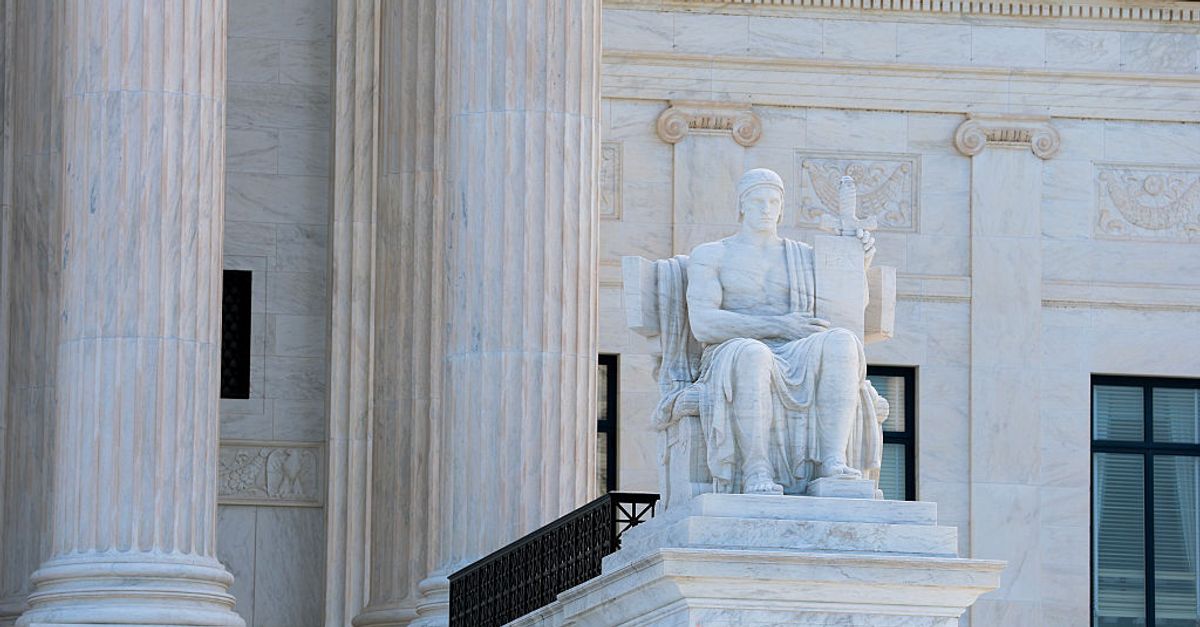
Missouri officials and a group of candidates led by Rep. Robert Onder (R-MO) asked the U.S. Supreme Court on Wednesday, September 23, 2026, to allow the state to use a new congressional map in the upcoming November general election. The request seeks to uphold a Monday ruling from the U.S. Court of Appeals for the 8th Circuit that permits the use of the 2025 map, despite a Missouri Supreme Court ruling that the map should be suspended pending a voter referendum.
The dispute stems from House Bill 1 (HB 1), which was passed by the Missouri General Assembly and signed by Gov. Mike Kehoe on September 28, 2025. The map would change the boundaries of Kansas City, which is currently mostly contained in the 5th congressional district, by dividing it across multiple districts. Former President Donald Trump stated the map would help elect an additional Republican to Congress, while U.S. House Minority Leader Hakeem Jeffries (D-NY) characterized the plan as a gerrymandering scheme intended to protect the Republican House majority.
Missouri Solicitor General Louis Capozzi argued in the filing that changing the map for a fifth time in September would cause significant candidate and voter confusion. The state argued that because the August 2026 primary elections were conducted using the HB 1 districts, reverting to the 2022 map for the general election would disenfranchise voters. Opponents of the map, the group People Not Politicians and its executive director Richard von Glahn, asked the Supreme Court on Tuesday to stay the 8th Circuit's decision, arguing that the 2022 map should remain in effect.
Missouri and the individual plaintiffs further argued that People Not Politicians lacks standing, or the legal right, to pursue the appeal. They cited the 2013 Supreme Court decision in *Hollingsworth v. Perry*, which held that private citizens lacked standing to defend a state initiative when the state itself declined to do so. The state maintains that keeping the map used in the primary is the best way to promote stability for the November 3, 2026, election.
A person living in Kansas City would notice a concrete change in their representation, as the city would no longer be consolidated primarily in one district but split among several. This change was already experienced by those who voted in the August 2026 primary. If the Supreme Court denies the stay, Missouri will proceed with the general election using these new boundaries. If the Court grants the stay, election officials would be required to revert to the 2022 boundaries, which the Secretary of State, Denny Hoskins, indicated would be the fifth change to the map this month, affecting how hundreds of thousands of primary votes translate to the general election.
The outcome will set a precedent regarding the "standing" of citizen groups to defend or challenge referendums when state officials take a different legal position. It also impacts the national balance of power in the U.S. House, where a single seat can influence which party holds the majority. The map's ultimate fate will likely be decided by Missouri voters on November 3, 2026, through Proposition A. A "yes" vote would uphold the HB 1 map enacted in 2025, while a "no" vote would repeal it and keep the 2022 map for future cycles. A decision from the U.S. Supreme Court on the emergency stay is expected shortly.