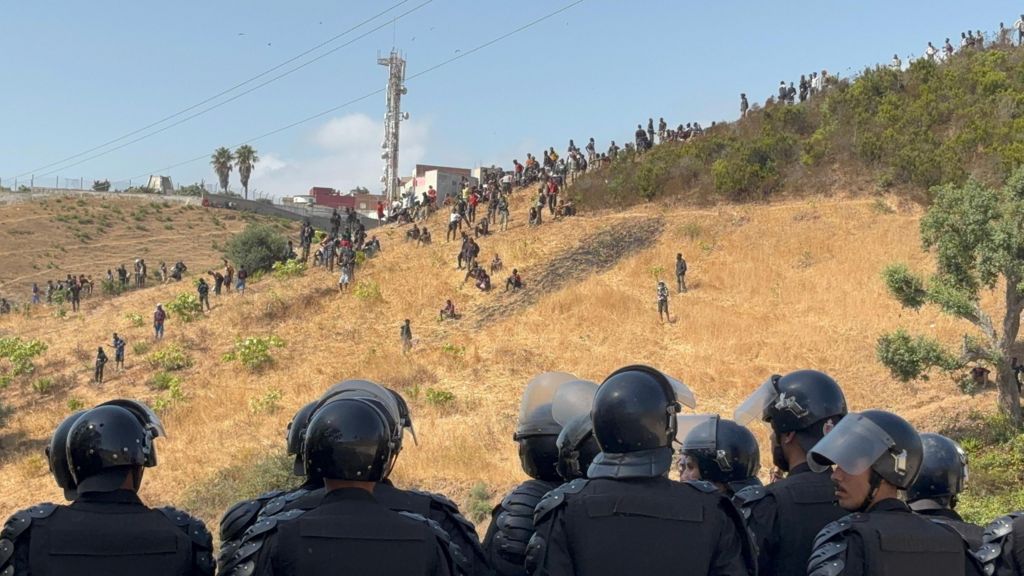
Moroccan authorities intercepted 111 people on Saturday who were attempting to cross the border into the Spanish exclave of Ceuta. The detentions occurred near the town of Fnideq, located approximately 3 kilometers from the border, following reports on social media suggesting a mass crossing attempt was planned for the weekend.
The incident follows a significant influx two weeks ago, when roughly 78,000 people arrived in the North African exclave by sea within a few hours. The mayor of Ceuta stated that 100 people died during that event, though he noted the vast majority of those who arrived have since returned to Morocco. In response to that surge and the recent social media posts, both Moroccan and Spanish authorities increased their security presence in the area.
According to security sources cited by Reuters and Spanish media, the majority of those detained on Saturday were from sub-Saharan Africa. Moroccan police reportedly used tear gas to disperse groups gathered on hillsides near the border. Earlier in the week, the Moroccan government stated it was monitoring social media messages of unknown origin calling for the Saturday crossing and warned it would prosecute those involved in organizing or participating in the event.
For people living in or traveling through the region, the concrete change involves heightened security measures and restricted movement. Spain has deployed 1,500 security officers to the border and installed new physical barriers, including a metal fence and a floating barrier. Additionally, Italy has suspended the Schengen arrangement of free movement with Spain, meaning travelers arriving from Spain now face border checks that were not previously required. Finland and Denmark have supported Italy's position, while the Czech Republic has called for Spain's membership in the Schengen zone to be temporarily suspended.
The knock-on effects include increased diplomatic tension between Spain and other EU member states. Spanish Prime Minister Pedro Sánchez has argued that since Ceuta is not part of the Schengen area, arrivals there cannot travel to the European mainland, and he has implemented reciprocal border controls against Italy. While the situation had calmed since late July, the new activity on August 15 prompted Italy to maintain its controls, citing the risk of a new wave of arrivals. Future policy regarding EU border management and the status of Spanish exclaves remains a subject of debate between these nations.
Moroccan authorities dispatched army officers, navy speedboats, and drones to the border area on Saturday. Spanish newspaper El País reported that security at the breakwater entrance was ten times stronger than the previous day. While no further mass crossings were reported late Saturday, the Moroccan government has stated its intent to continue monitoring social media for organizers of such attempts.