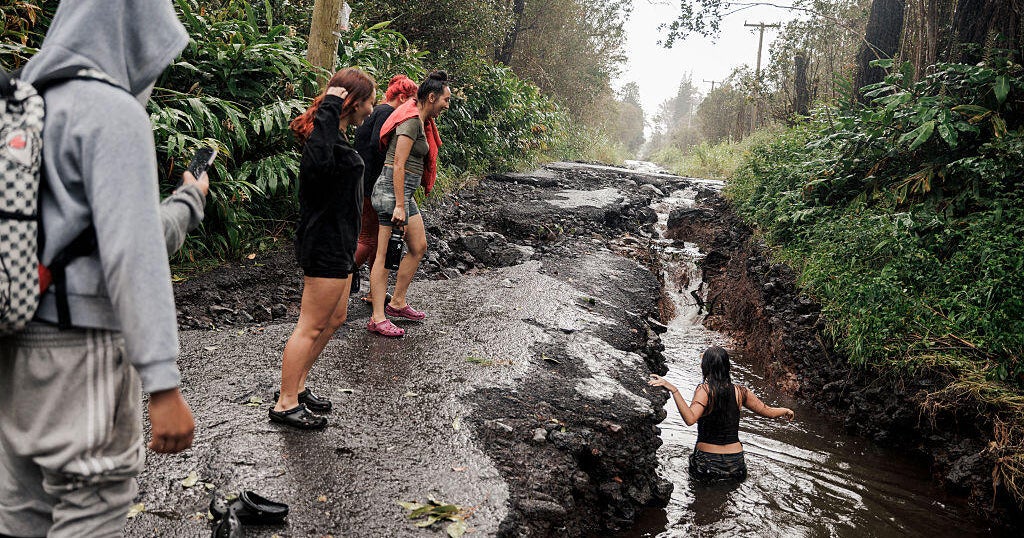
A mudslide triggered by the remnants of Hurricane Lala destroyed approximately a dozen homes in the Waiohinu community on Hawaii’s Big Island over the weekend. The storm, which passed within 30 miles of the island's coast as a Category 1 hurricane, brought torrential rain and wind gusts exceeding 80 mph before weakening to a tropical storm. As of Monday, residents in isolated areas reported they were still waiting for outside assistance and emergency services.
The destruction followed a weekend of extreme weather that produced significant rainfall totals across the islands. Kapalua, located in Maui County, recorded 48 inches of rain, while other areas saw more than three feet of precipitation. These conditions led to the washing away of bridges on the Big Island, effectively cutting off several communities from the rest of the island and forcing neighbors to rely on one another for survival.
Local resident Alice Birnbaum told CBS News that the mudslide involved boulders heavy enough to shake the ground. She stated that as of Monday, her community remained in need of basic supplies, including water, propane, gasoline, and food. Another resident recounted a family with a young child narrowly escaping their home before it was destroyed by the debris flow.
In response to the storm's impact, state officials closed all Hawaii state and county offices, Department of Education schools, public charter schools, and court offices on Monday. Data from poweroutage.us indicated that more than 100,000 customers across the Hawaiian Islands remained without electricity as of Monday. While Lala has moved west away from the state, the National Hurricane Center reported that the storm could regain hurricane strength over open waters by late Tuesday.
The scale of the event is marked by the 48 inches of rain recorded in Kapalua and wind speeds reaching 80 mph. For the thousands of students and government employees affected by closures on Monday, the storm caused a total suspension of daily educational and legal activities. A resident would notice the immediate loss of infrastructure, such as bridges, which prevents travel to work or grocery stores, and the physical loss of property for those whose homes were in the path of the mudslide.
The knock-on effects include a prolonged recovery period for the state's infrastructure and power grid, as well as the continued threat of the storm as it moves across the Pacific. While the storm has moved away from Hawaii, the National Hurricane Center noted its potential to strengthen back into a hurricane by late Tuesday, which could impact maritime interests or other landmasses later in the week. The immediate next steps for the region involve the restoration of power and the establishment of supply routes to the currently isolated communities on the Big Island.