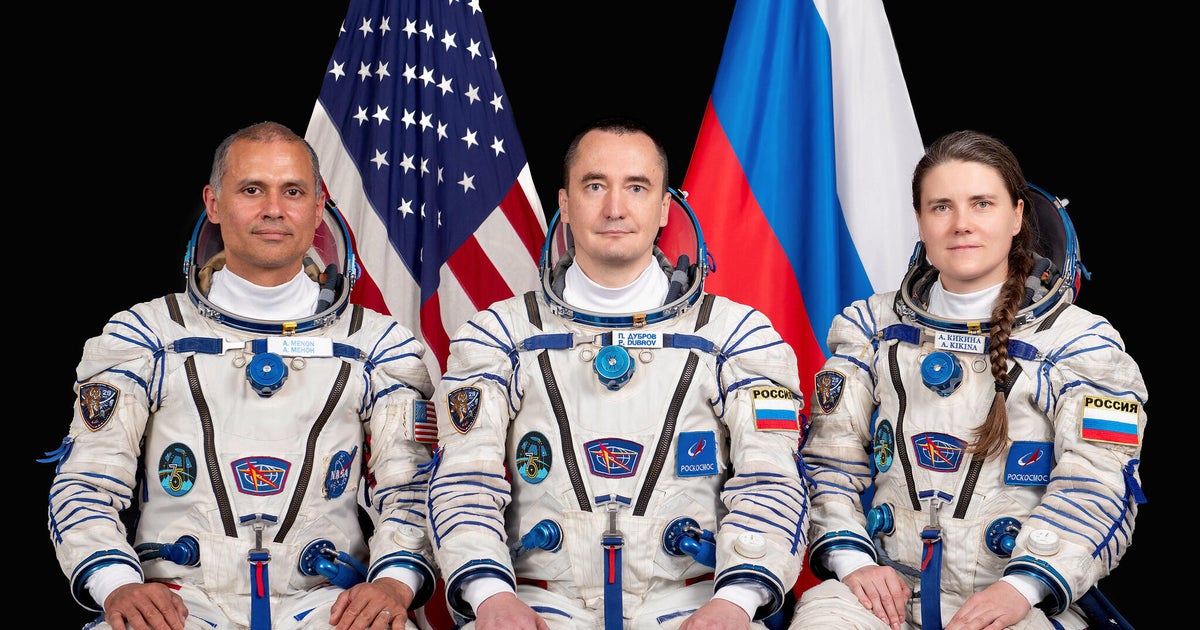
NASA astronaut Anil Menon and Russian cosmonauts Pyotr Dubrov and Anna Kikina launched from the Baikonur Cosmodrome in Kazakhstan on Tuesday for an eight-month mission to the International Space Station (ISS). The Soyuz MS-29/75S spacecraft lifted off at 10:47 a.m. EDT and docked with the station's Prichal module at 1:52 p.m. following a three-hour flight. The crew was welcomed aboard by seven existing residents, including NASA astronauts Chris Williams, Jessica Meir, and Jack Hathaway.
The mission is part of an ongoing exchange agreement between NASA and Roscosmos, the Russian federal space agency. Under this arrangement, at least one NASA astronaut must fly on each Russian Soyuz mission, and one Russian cosmonaut must fly on each SpaceX Crew Dragon mission. This policy ensures that both nations have personnel aboard the station capable of operating their respective segments in the event that a medical emergency or mechanical failure requires a spacecraft to depart prematurely.
Menon, a physician and former flight surgeon for both NASA and SpaceX, is embarking on his first spaceflight. His wife, Anna Menon, also a NASA astronaut, watched the launch from Kazakhstan with their children. She previously flew on a private five-day mission in 2024. The arriving crew will replace the Soyuz MS-28/74S team, which has been in orbit for approximately 240 days since launching last November. NASA Administrator Jared Isaacman, who flew to Kazakhstan for the event, congratulated the crew during their automated approach.
For the three individuals arriving at the station—Menon, Dubrov, and Kikina—the scale of the mission is a 260-day commitment, lasting through April. During this time, they will be responsible for maintaining the $100 billion orbital laboratory and conducting scientific research. The presence of a mixed crew ensures that the U.S. and Russian segments of the station remain functional regardless of unforeseen vehicle departures. This collaborative framework persists despite broader geopolitical tensions, maintaining the operational integrity of the ISS for its international partners.
The next significant change for the station is scheduled for September, when NASA plans to launch a replacement crew for Jessica Meir and her colleagues. The newly arrived Soyuz crew members will see their daily routines revolve around station maintenance and scientific experimentation for the next eight months. Their return to Earth is currently projected for April. The mission serves as a logistical test of the extended eight-month deployment model, which may set a precedent for future long-duration orbital stays and supply chain management in low-Earth orbit.