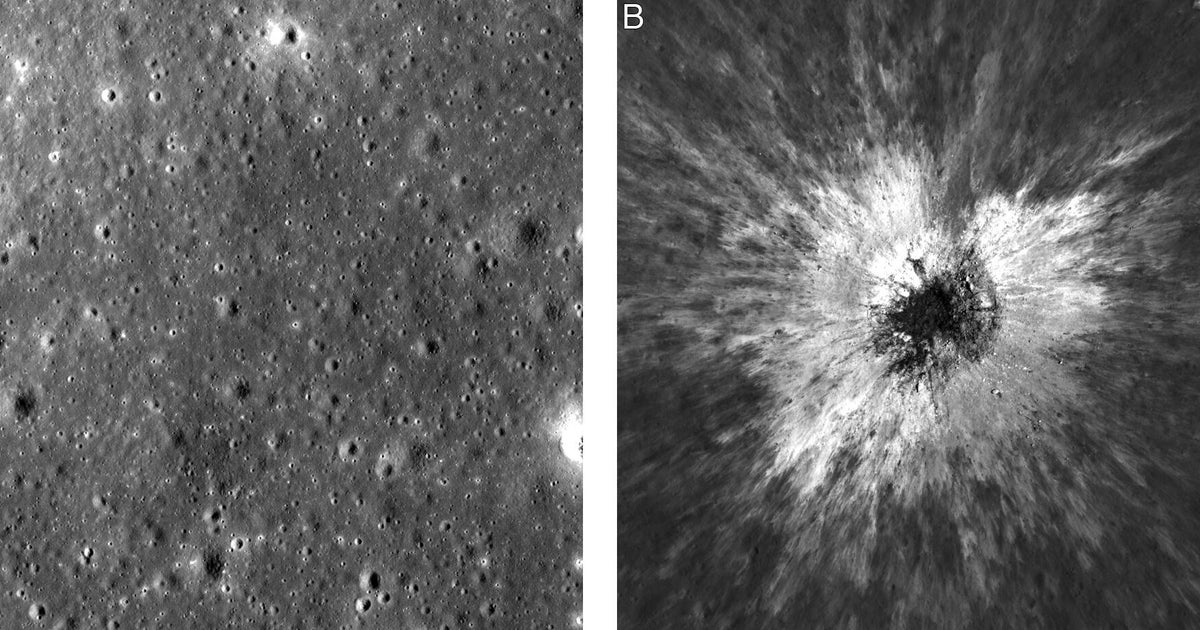
NASA researchers have identified a large new impact crater on the moon's near side, measuring approximately 728 feet across and 141 feet deep. The crater was formed by an asteroid or comet fragment between April 11 and May 22, 2024, but the impact went undetected by Earth-based and space telescopes at the time. The discovery was confirmed early this year after scientists analyzed data collected by the Lunar Reconnaissance Orbiter (LRO).
The Lunar Reconnaissance Orbiter first captured wide-angle images of the impact site in 2024, though the event was not identified in the data until August 2025. The spacecraft subsequently gathered detailed images in the fall of 2025. According to two studies published in the journal Science Advances, the crater is the largest known impact site formed in the solar system in recent times and is three times larger than the previous record-holder discovered by the LRO a decade ago.
The impactor, estimated to be the size of a three- to six-story building, churned the lunar surface across a 66-mile radius. Mark Robinson, chief scientist for the LRO's cameras, noted that dust and rocky soil were ejected at a higher angle than researchers expected. A separate study co-authored by David Paige of UCLA identified a 4-mile-wide "cold spot" around the crater, which researchers attribute to the loosening of the moon's top soil, or regolith.
The findings also provide a new timeline for how quickly the lunar surface changes. Robinson reported that LRO data indicates the moon's top inch of soil is overturned by ejected material every 80,000 years, which is faster than scientists previously estimated. This rate of change means that historical markers, such as the footprints left by Apollo astronauts, will eventually be erased by this natural "gardening" process. For the scientific community, the crater offers a unique opportunity to study how sediments from beneath the surface are redistributed during high-velocity impacts.
The crater has been named after Thomas McGetchin, the late former director of the Lunar and Planetary Institute in Houston. Moving forward, scientists will continue to use the data to calculate the specific risks that ejected debris poses to the planned lunar habitat. NASA has not yet reported a specific deadline for the completion of these safety calculations, but the LRO continues to circle the moon to provide high-resolution imagery as the agency prepares for upcoming crewed missions.