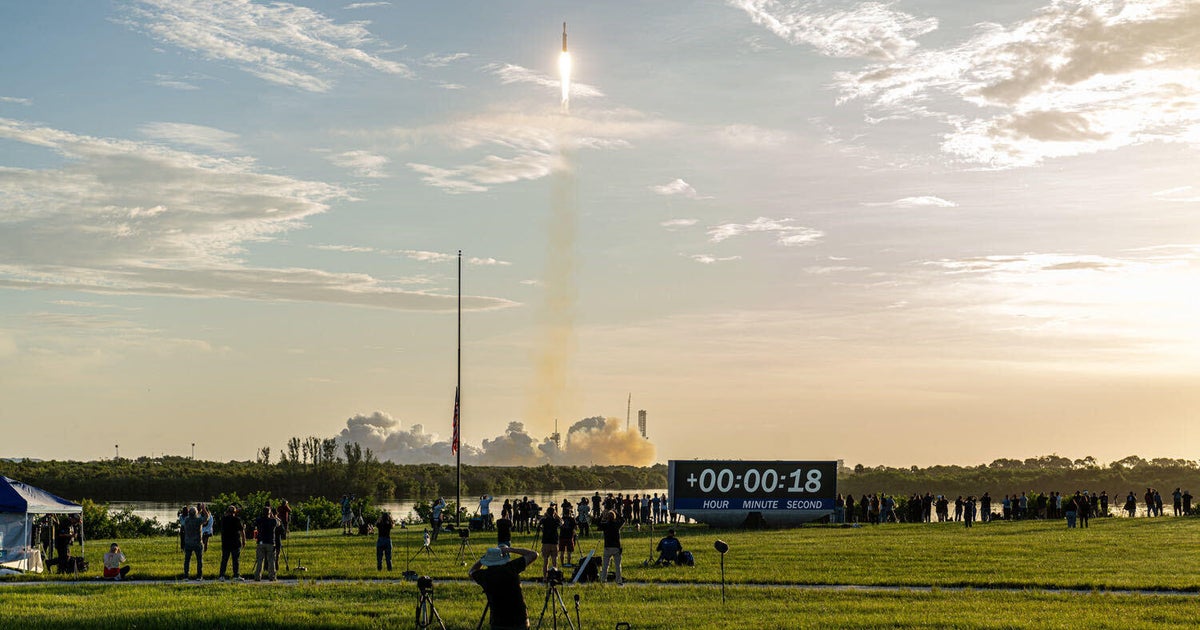
NASA launched the $4.3 billion Nancy Grace Roman Space Telescope Sunday morning from the Kennedy Space Center in Florida. The observatory, carried by a SpaceX Falcon Heavy rocket, is now on a three-month journey to a destination one million miles from Earth. Once in position, the telescope will use a 300-megapixel camera and a Hubble-class mirror to map the large-scale structure of the universe and study dark energy and dark matter.
The mission is named after Nancy Grace Roman, NASA's first chief astronomer, who advocated for space-based observatories. The telescope will reside at Lagrange Point No. 2, a stable orbital location where the gravitational pull of the Earth, sun, and moon balance out. This region is also home to the James Webb Space Telescope. The Roman telescope's primary mission involves searching for clues about dark energy, a force that is accelerating the expansion of the universe, and dark matter, the substance that provides the mass necessary to hold galaxies together.
The launch utilized a SpaceX Falcon Heavy rocket, which produced 3.7 million pounds of thrust from its three core stages. Approximately 2 1/2 minutes after liftoff, two side boosters separated and returned to Cape Canaveral Space Force Station for landing. The central core stage was expended into the Atlantic Ocean, while the second stage completed two engine burns to place the 18,000-pound telescope on its proper trajectory. The spacecraft was successfully released 31 minutes after liftoff to continue its voyage alone.
The technology aboard Roman introduces new capabilities for studying other worlds. An experimental instrument called a coronagraph, which uses deformable mirrors to block out the light of distant stars, will attempt to detect planets 100 million times fainter than the stars they orbit. If successful, this would allow scientists to analyze the atmospheres of Jupiter-sized planets for their chemical makeup using reflected visible light. NASA officials indicate that proving this technology could lead to future telescopes capable of imaging Earth-like planets and searching for signs of biological activity.
The mission also aims to address fundamental questions in cosmology, specifically the "Hubble tension." This refers to a discrepancy in measurements regarding the strength of dark energy between the early universe and more recent cosmic history. According to senior project scientist Julie McEnery, the data collected by Roman could potentially demonstrate that the current standard model of how the universe works is incorrect. The telescope will take approximately 100 days to reach its station, with observations scheduled to begin after it arrives and completes testing.