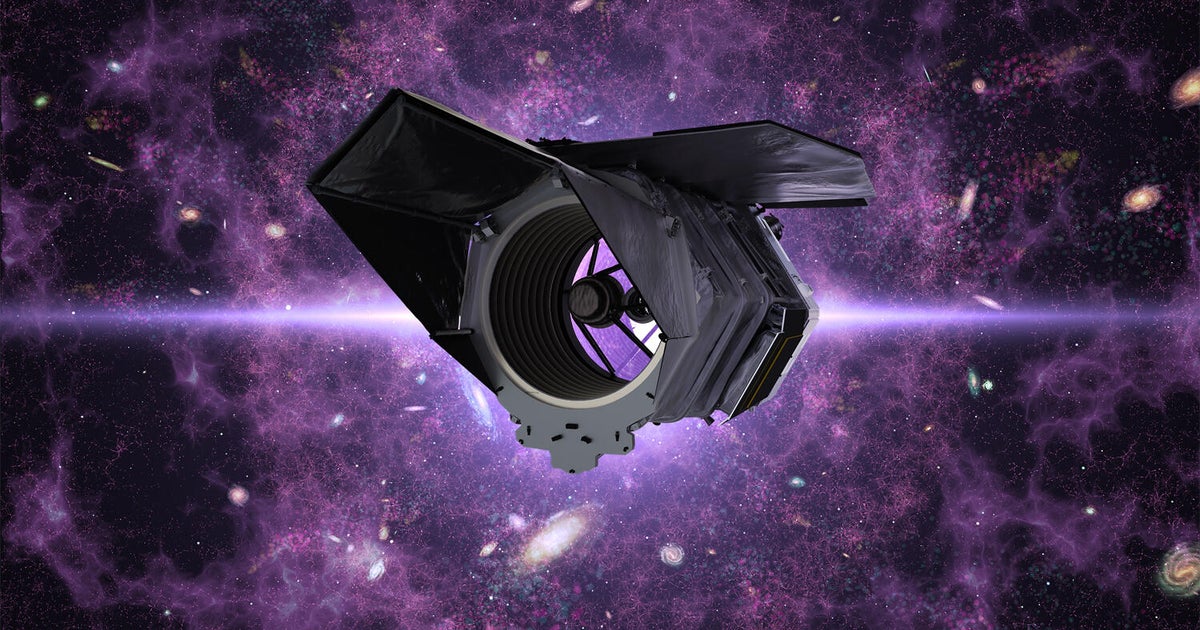
NASA and SpaceX are scheduled to launch the Nancy Grace Roman Space Telescope at 7:26 a.m. EDT on Sunday from the Kennedy Space Center. The $4.3 billion mission, utilizing a 7.9-foot-wide mirror originally designed for a classified satellite, aims to study dark matter, dark energy, and exoplanets from Lagrange Point 2, approximately one million miles from Earth. The spacecraft will be carried by a SpaceX Falcon Heavy rocket and is expected to operate for a primary mission of five years.
The telescope is named for Nancy Grace Roman, NASA’s first chief astronomer and a central figure in the development of the Hubble Space Telescope. While the Roman telescope uses a mirror of the same size as Hubble’s, its 300-megapixel wide-field camera is designed to scan the cosmos 1,000 times faster. NASA officials stated that the observatory will downlink 2,500 terabytes of data over its five-year lifespan, compared to the 172 terabytes produced by Hubble over three decades.
Scientific objectives include investigating the "Hubble Tension," a discrepancy in measurements of the universe's expansion rate that suggests a potential flaw in the current standard model of cosmology. Additionally, the telescope carries an advanced coronagraph designed to block starlight, which researchers at the Jet Propulsion Laboratory expect will allow the detection of exoplanets 100 million times fainter than their host stars. The mission is projected to discover more than 100,000 exoplanets.
The use of a donated mirror from the National Reconnaissance Office demonstrates how hardware from classified programs can be repurposed for civilian science. However, the agency noted that even with the donated mirror, the project required significant funding to modify the hardware for the extreme temperatures of deep space.
Following the Sunday launch, the spacecraft will travel to Lagrange Point 2. A three-to-four-month commissioning period will follow, during which engineers will calibrate instruments and test subsystems. Science operations are not expected to begin in earnest until this phase is complete. The mission's core surveys, including the High-Latitude Wide-Area Survey and the Galactic Bulge Time-Domain Survey, are scheduled to take place over the five-year mission.