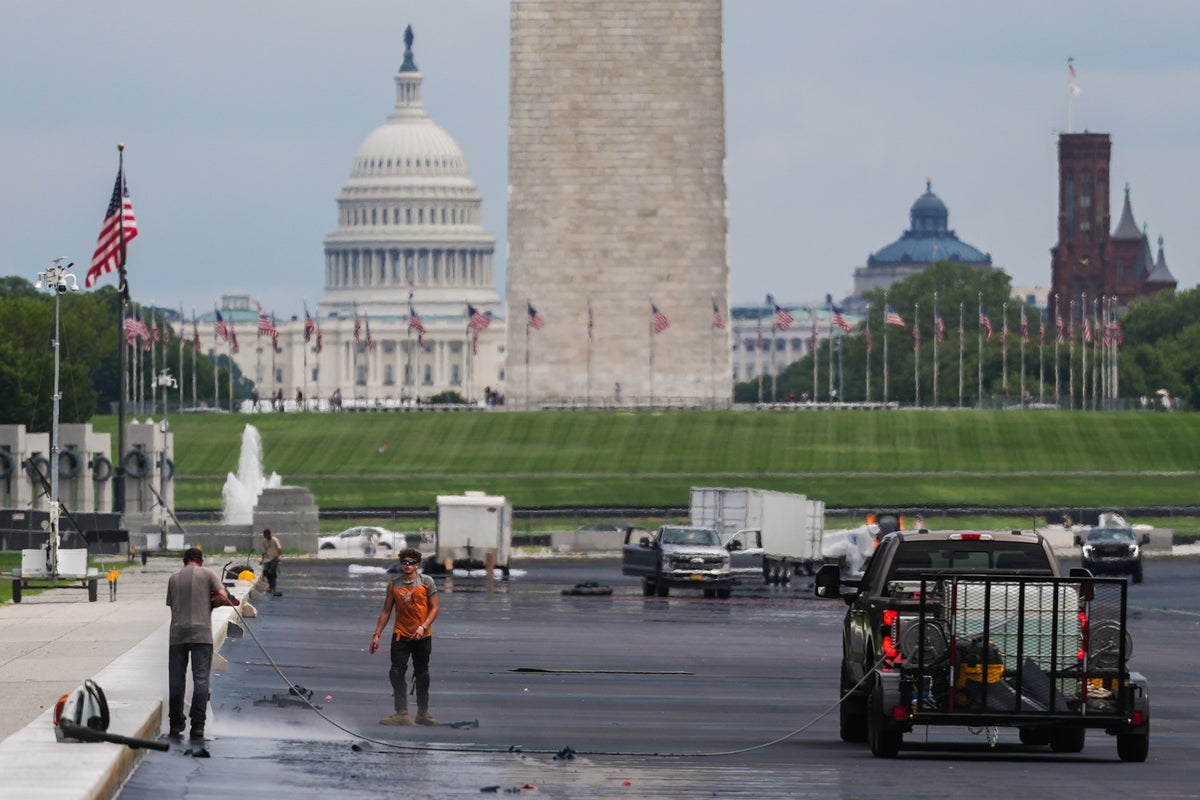
National Park Service (NPS) employees received a directive from Washington to reclassify approximately 1,500 previously approved maintenance projects across the U.S. as "low priority." Documents obtained by The Associated Press and accounts from three anonymous Interior Department and park officials indicate that resources are being redirected toward the "Freedom 250" initiative, a White House effort to prepare for the 250th anniversary of U.S. independence.
The shifts in funding and labor priorities are intended to support projects championed by President Donald Trump and Interior Secretary Doug Burgum, specifically those located in the nation's capital. These include repairs to the Lincoln Memorial Reflecting Pool and the rehabilitation of other fountains and parks in Washington, D.C. While some administration projects have moved forward, others, such as a $70 million turf maintenance plan, were marked as canceled in agency data.
The deferred "low priority" list includes projects spanning more than 200 sites with a combined estimated cost of $400 million. Examples cited in the documents include roof repairs at Golden Gate National Recreation Area, computer upgrades at Katmai National Park in Alaska, and the purchase of sanitation supplies like toilet paper and garbage bags at Yellowstone National Park. Interior Department spokesperson Katie Martin stated that the agency must prioritize projects most in need and noted that many entries on the low priority list were "mis-prioritized and were corrected."
The National Park Service reports a repair backlog that has reached more than $24 billion over the last decade. Current staffing challenges have complicated the execution of these projects; the NPS lost at least 25% of its permanent workforce under the current administration. Furthermore, the number of contracting officers—the staff responsible for managing project agreements—dropped by more than 20% after being consolidated into the Interior Department.
The scale of the shift is significant for the agency’s long-term health, as the $24 billion maintenance backlog represents a debt of roughly $72 per American citizen to restore existing park infrastructure. By focusing at least $80 million on projects in Washington, D.C., including a $16 million effort to paint the Reflecting Pool blue, the administration is prioritizing aesthetic improvements for the 250th anniversary over structural and operational needs in rural and Western parks. Sen. Angus King (I-ME) stated this could lead to the "deterioration" of national sites as basic maintenance is bypassed for high-profile celebrations.
Looking ahead, the status of these 1,500 projects remains uncertain. While the Great American Outdoors Act provided $6.5 billion for repairs through 2025, a legislative extension is currently pending in Congress. Interior Department officials indicated they are exploring alternative revenue sources, such as park pass sales—which rose to $16.7 million in the first quarter of 2026—and private endowments. The current fiscal year ends September 30, 2026, which two officials identified as a critical deadline after which uncontracted "low priority" projects may not move forward without new workarounds.