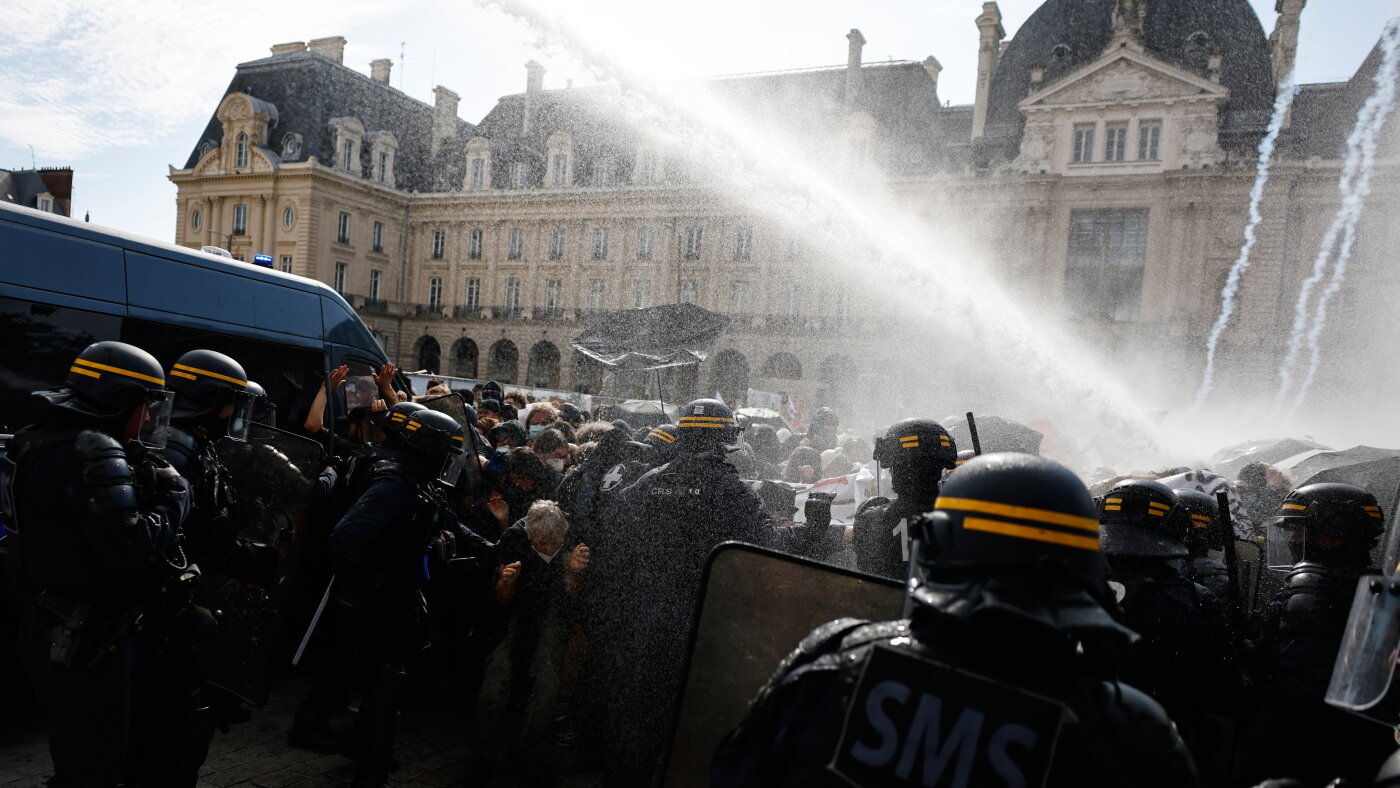
More than 250,000 people demonstrated across France on Tuesday, Oct. 6, to support students demanding increased education funding and improved school conditions. According to the Interior Ministry, approximately 256,000 people participated in the nationwide rallies, including 56,000 in Paris. The protests led to confrontations between demonstrators and riot police, who used tear gas, water cannons, and stun grenades.
The demonstrations originated at a high school in the Paris region in mid-September and have expanded over three weeks into a national movement. Protesters, including students, parents, and teachers, have cited deteriorating infrastructure—such as classrooms with falling ceilings, water leaks, and rat infestations—as well as staff shortages and high workloads. The movement occurs amid broader public dissatisfaction regarding rising fuel prices linked to the Iran war, wealth inequality, and spending constraints under the administration of outgoing President Emmanuel Macron.
Police reported making more than 6,100 arrests, mostly of minors, since the protests began. Interior Minister Laurent Nuñez stated that 715 officers have been injured and defended the police response as "proportionate" in most cases, citing instances of riots. However, the use of force against teenagers has drawn criticism following several severe injuries. On Monday, Oct. 5, a 15-year-old boy in Lens lost a hand after an encounter with a police stun grenade, and last week a 14-year-old in Saint-Ouen-l’Aumône suffered a jaw fracture. Local officials have announced investigations into both incidents.
The scale of the government response is reflected in the 6,100 total arrests reported by police, more than 4,000 of whom were teenagers. The detention of minors has turned the protests into a central issue for the upcoming spring presidential election campaign. Lawmakers like Aurélien Le Coq of the France Unbowed party have criticized the police tactics as unbearable, while Prime Minister Sébastien Lecornu has countered by denouncing "ultra violence" directed at schools. The unrest sets a precedent for how the French state balances public order against youth-led social movements, particularly as the administration faces a period of political deadlock and President Macron cannot seek a third term.
In response to the tension, the Education Ministry launched an online portal on Tuesday to allow students to anonymously submit complaints about school conditions. Prime Minister Lecornu stated that the government must listen to student concerns to find solutions, but no specific funding increases or policy changes have been enacted yet. Suzanne Nijdam, president of the federation of student associations, stated that demonstrations will continue until the government meets their demands. Investigations into injuries caused by police riot-control weapons are ongoing.