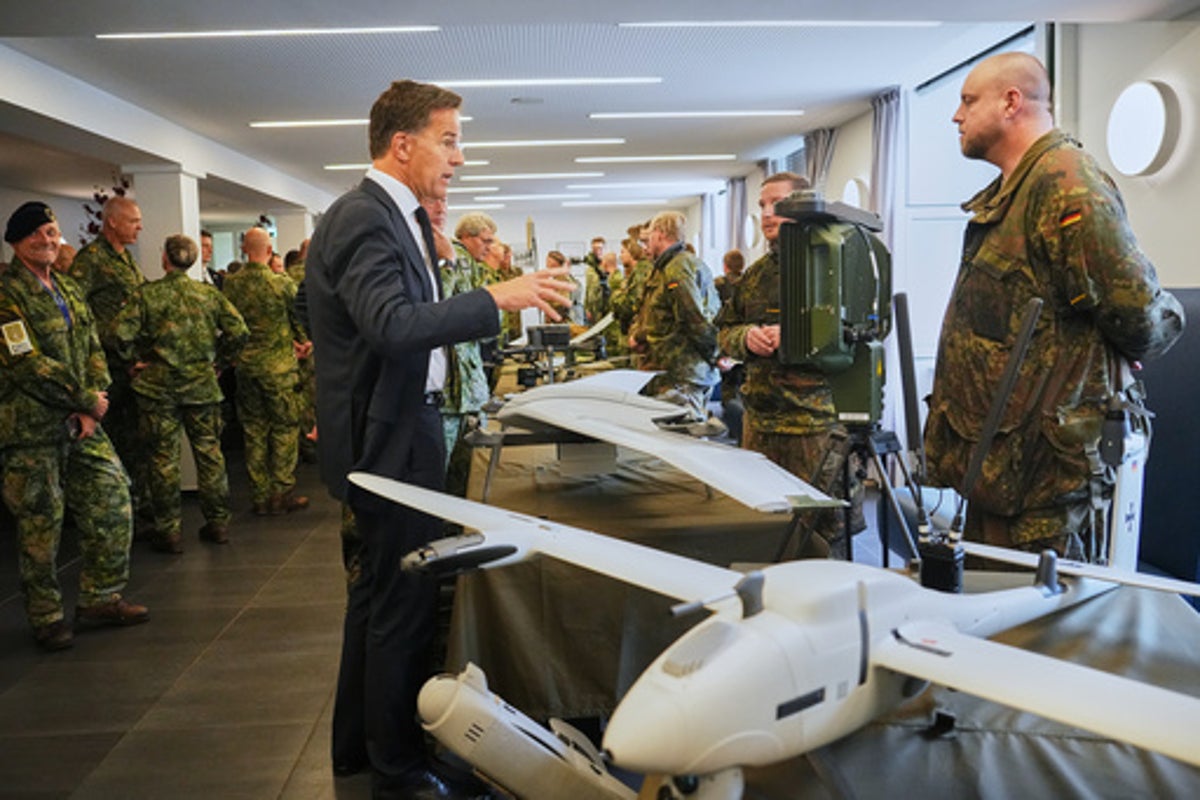
NATO aircraft were scrambled on Sunday, October 18, 2026, after an unidentified flying object was detected over Lithuania. Residents in central and northern parts of the country were instructed to seek shelter for approximately one hour during a "red alert." Lithuanian government officials later stated the object was likely a drone that had entered the country’s airspace from Poland.
The incident led to the temporary closure of Kaunas airport, located near Lithuania's second-largest city. While NATO fighter jets were deployed to investigate, they were unable to visually identify the object due to cloudy weather conditions. In neighboring Poland, the military reported it was verifying a possible violation of its own airspace and deployed ground search-and-rescue teams to southern Lublin to search for a potential crash site.
In a separate development, U.S. President Donald Trump signed an executive order on Friday, October 16, to block a new sanctions package targeting the Russian economy. The sanctions, part of the Lindsey Graham Russian Sanctions Act, were scheduled to take effect on Sunday. President Trump cited "national interest" for the pause, while Secretary of State Marco Rubio stated the administration would take up to 60 days to evaluate the economic impact of the measures on global and domestic markets.
The shift in U.S. policy directly affects Ukrainian military operations and infrastructure. President Zelensky reported that Ukraine is investigating sudden speed restrictions on Starshield, a military-grade satellite internet service provided by SpaceX. The restrictions, which began Thursday, October 15, cap data connections for terminals moving faster than 160 kph (100 mph), a change that slows Ukrainian drones and makes them more vulnerable to Russian defenses. While SpaceX CEO Elon Musk stated the U.S. government controls the system, the White House and the Pentagon have not confirmed involvement in the service reduction.
Domestic political tension is expected to increase as the U.S. Congress remains on recess until after the November midterm elections. The pause on sanctions has drawn criticism from members of both parties, including Sen. Thom Tillis (R-NC) and Senate Democratic leader Chuck Schumer (D-NY), who questioned the administration's decision to halt a law passed by an 86-11 Senate margin. Moving forward, the U.S. is reportedly working to arrange a three-way meeting between President Trump, President Zelensky, and Russian President Vladimir Putin to discuss the conflict, while Ukraine continues to face large-scale Russian strikes on its energy infrastructure.