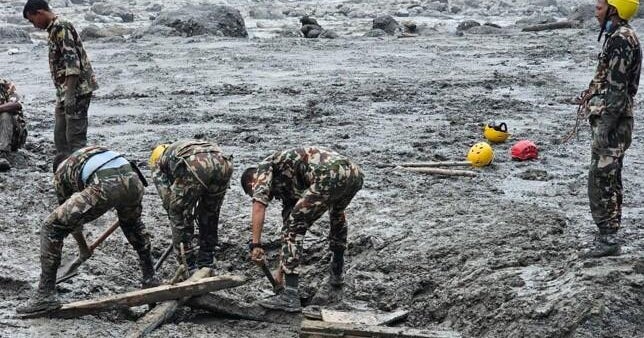
Authorities in Nepal reported Monday that the death toll from flash flooding and landslides has reached at least 903 people, with approximately 4,200 others still listed as missing. The disaster began five days ago when a rocky mountainside and the glacier it supported collapsed near the Nepal-Tibet border, sending torrents of water and debris through Himalayan valleys. Search and rescue operations continued Monday as monsoon rains caused the Trishuli River to surge, creating further risks for recovery teams.
The event originated with a geological collapse that destroyed infrastructure along the border, including a checkpoint in Tibet. Satellite imagery confirmed that the flash floods swept through the Gyirong Port border post. The impact of the water and debris traveled as far as 150 miles away into India, according to the report. In the capital of Kathmandu, hospital walls have been covered with photos of unidentified bodies to assist families in identifying victims.
Search efforts were bolstered over the weekend by the rescue of a 6-year-old girl from the rubble, though officials expressed concern that the death toll will continue to rise. Among the missing are Americans, including Vivek Srivastav, who was last heard from near the border just before the collapse. While some families continue to wait for information, others, including a family in Virginia, told reporters Monday they have begun mourning their parents whom they believe were in Tibet during the flood.
For the residents and travelers in these Himalayan valleys, the day-to-day reality has shifted to a race against weather conditions as monsoon rains threaten further flooding. The surge of the Trishuli River reported on Monday complicates the efforts of the Nepal Army and other rescuers who are working to clear thick mud and rubble. Those looking for loved ones are currently visiting hospitals in Kathmandu to view photos of recovered bodies.
The disaster sets a significant challenge for international coordination, as families have called for increased assistance from the U.S., Chinese, and Nepalese governments to locate the missing. The destruction of the Tibet immigration checkpoint and surrounding infrastructure follows a mountainside collapse near the border. Recovery operations are ongoing, but specific deadlines for ending the search or dates for official casualty updates have not been reported.