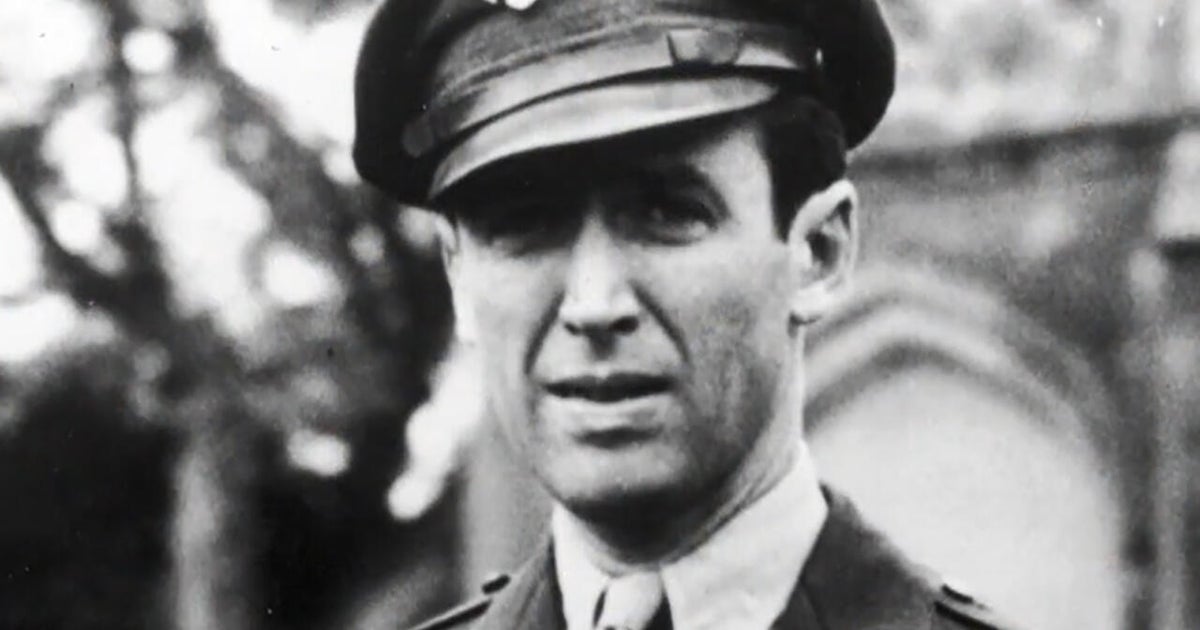
Actor James Stewart, an Academy Award winner who reached the peak of Hollywood fame in 1941, paused his film career to serve as a combat pilot during World War II. After enlisting in the Army Air Corps, Stewart flew 20 combat missions over Germany. His transition from military service back to civilian life and his subsequent performance in the film "It's a Wonderful Life" are the subjects of a new biographical film titled "Jimmy."
Stewart came from a family with a history of military service, including an ancestor who fought in the Revolutionary War, a grandfather who served in the Civil War, and a father who served in both the Spanish-American War and World War I. Despite his celebrity status, Stewart sought combat duty rather than stateside assignments. Janie McKirgan, curator at the Jimmy Stewart Museum, stated that the Army Air Corps was initially hesitant to allow Stewart to fly because of the potential blow to national morale if he were shot down.
During the war, Stewart rose from the rank of private to colonel. In private diaries discovered after his death in 1997, Stewart recorded the emotional toll of the conflict, describing one mission where 13 crews were lost as a "terrible day." His daughter, Kelly Stewart Harcourt, noted that her father returned home suffering from symptoms that would today be diagnosed as post-traumatic stress disorder (PTSD), including nightmares, depression, and anxiety.
Stewart's first film after his nearly five-year absence from Hollywood was the 1946 production "It's a Wonderful Life," directed by Frank Capra. While the film was a disappointment upon its initial release, it later became a holiday classic. Harcourt stated her belief that her father's wartime experiences informed his performance as George Bailey, a character who also faces emotional desperation. Stewart continued his military service in the Air Force Reserve after the war, eventually retiring in 1968 at the rank of brigadier general.
The account of Stewart's service highlights the transition experienced by many who served in World War II and returned to civilian careers while managing what is now understood as psychological trauma. For Stewart, this meant returning to a high-profile industry after nearly five years away. He remained in the military through 27 years of total service across the Army, Army Air Forces, and Air Force Reserve.
The biographical film "Jimmy" focuses on the impact this service had on a public figure who was one of the top five box office draws of the 1950s. The story addresses the challenges faced by veterans in the 1940s, a time when survivors often kept their experiences private. Readers interested in film history or military biography will see how Stewart’s career path—from winning an Oscar for "The Philadelphia Story" in 1941 to commanding the 703d Bombardment Squadron—preceded his postwar work.
The film "Jimmy" is scheduled to open in theaters on November 6. It features K.J. Apa as Stewart and Max Casella as director Frank Capra. Beyond the release of the film, Stewart’s legacy continues through the Jimmy Stewart Museum in Indiana, Pennsylvania, and the broadcast of "It's a Wonderful Life" each December. The historical records and diaries cited by his family provide a primary-source look at the internal life of a veteran who remained a prominent public figure until his death at age 89 in 1997.