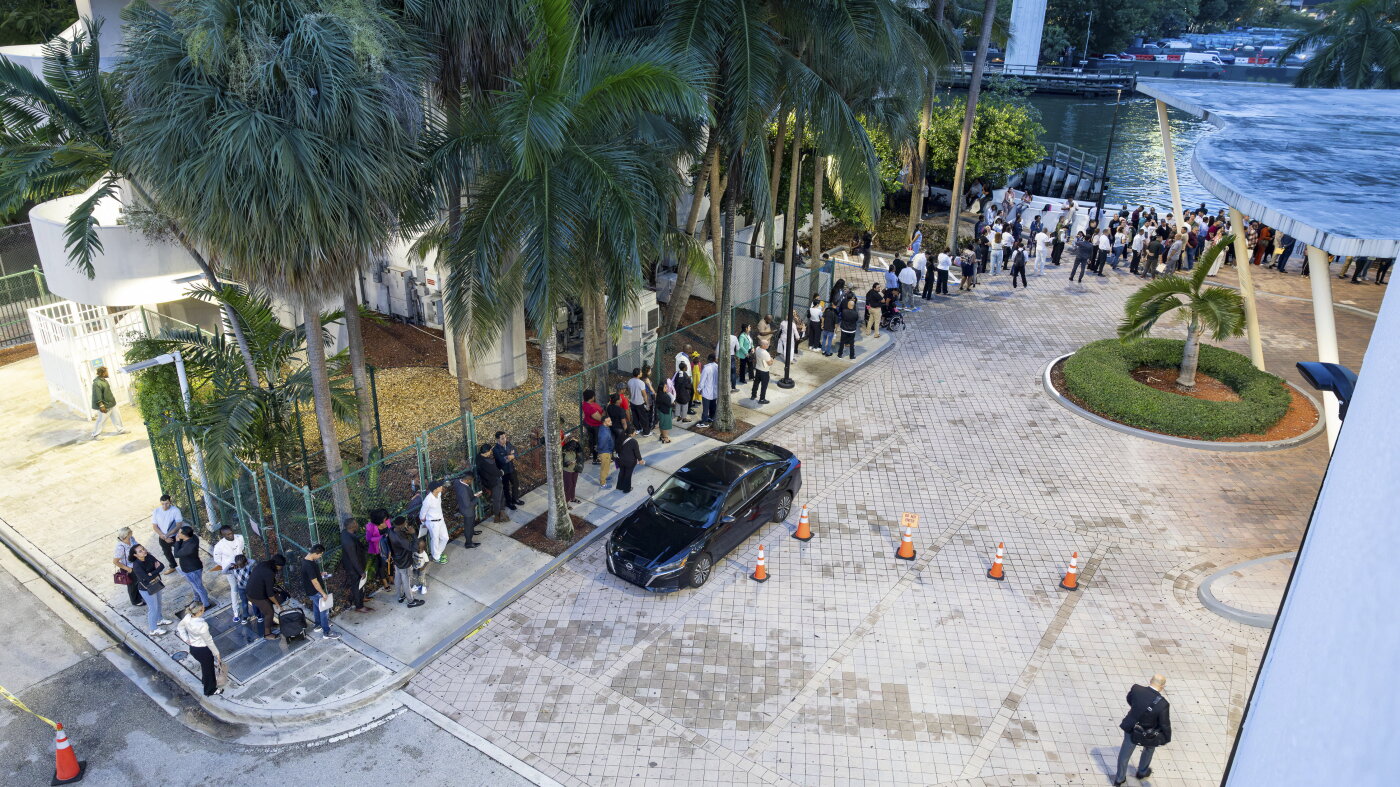
The Trump administration has implemented a new scheduling tactic at the Miami Immigration Court known as "mega master" calendar hearings, leading to long lines and increased deportation orders. Under this policy, judges who previously handled approximately three dozen cases per day are now assigned dockets exceeding 100 people, often seeing dozens of individuals simultaneously. The change has resulted in hundreds of people waiting for hours in lines that stretch across several city blocks.
The administration stated that accelerated calendars are necessary to address a significant backlog of pending cases. However, legal representatives, including David Wilson of the American Immigration Lawyers Association, said the practice creates operational chaos that makes it difficult for the court to send timely notices and for immigrants to secure legal counsel. The Executive Office for Immigration Review (EOIR), which oversees the courts, stated it will continue to adjust scheduling to ensure cases are handled lawfully as it adds more judges.
In Miami, the docket has increased due to record monthly arrests, the rescheduling of 2027 court dates to the present, and the processing of cases previously deemed low priority. Additionally, a transition from virtual to mandatory in-person hearings, officially effective September 8, 2026, began affecting schedules as early as late August. Observers reported that some individuals are arriving late to their appointments because of the length of the lines outside the building.
Data from the legal tech platform bklg indicates that in-absentia deportation orders—orders issued when a person fails to appear—have reached record highs. In July 2026, more than 54,000 immigrants were ordered deported nationwide for missing hearings, a 60% increase over recent months. In Miami specifically, in-absentia orders rose from 1,383 in May to 2,886 in July, representing a 108% increase.
For the immigrants involved, the shift translates to a change in legal status and preparation. Individuals who were prepared for virtual hearings or long-term waiting periods must now appear in person on short notice, sometimes as little as two weeks. This creates a surge in demand for legal representation that local attorneys say is difficult to meet. Renters and workers in immigrant communities may notice absences as deportation orders spike, with over 54,000 such orders issued in July 2026 on a national scale.
The policy prioritizes speed through grouped hearings. The knock-on effect includes increased pressure on local infrastructure in downtown Miami and potential strain on the due process rights of those who cannot find lawyers in the shortened timeframes. Moving forward, the mandatory in-person requirement becomes official on September 8, 2026, meaning any immigrant attempting to use virtual platforms like WebEx after that date will no longer be permitted to do so.