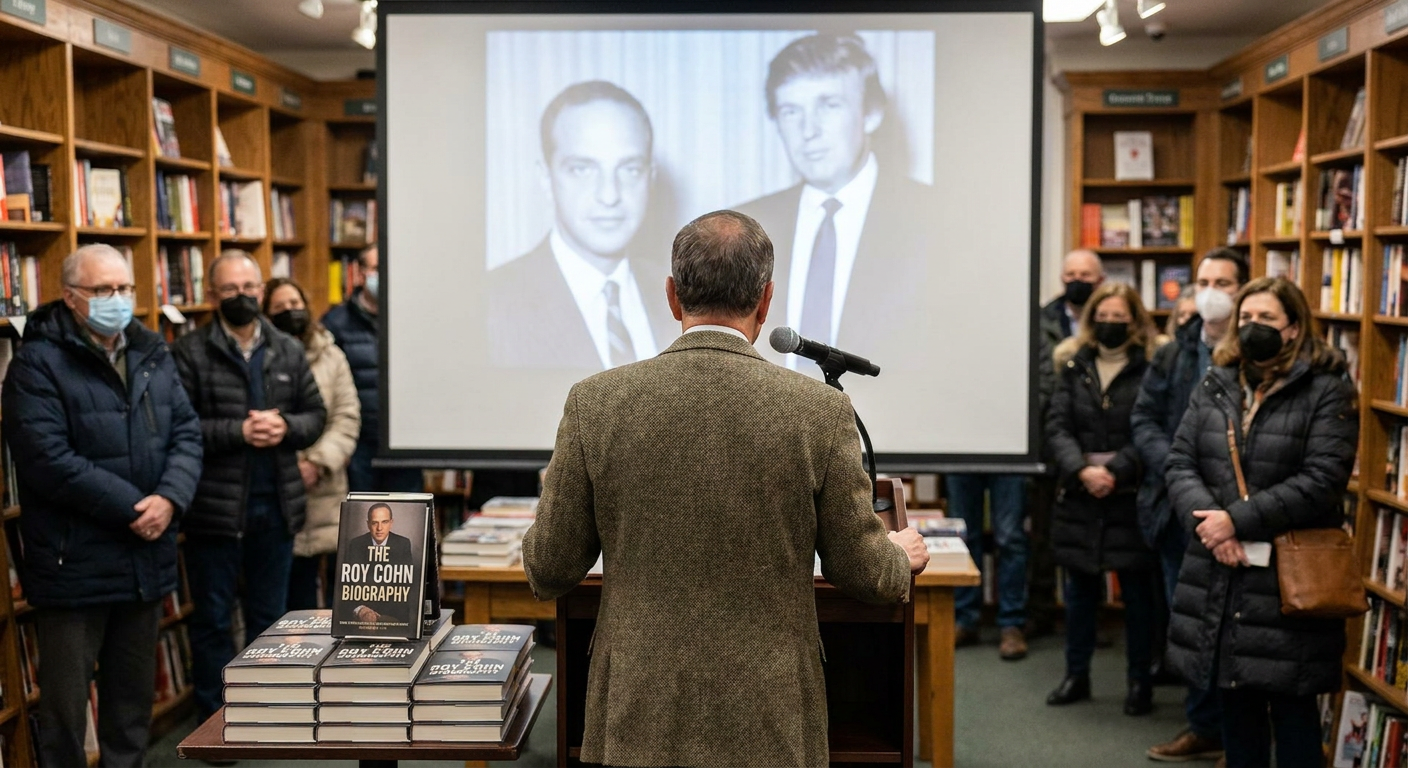
Author Kai Bird has released a new biography titled "American Scoundrel," which examines the career of lawyer Roy Cohn and his influence on Donald Trump. The book details how Cohn served as a mentor to Trump during the latter's early years as a real estate developer. According to Bird, Trump adopted several of Cohn’s strategies, including denying allegations, delaying legal proceedings, and utilizing countersuits.
Cohn rose to national prominence in the 1950s as legal counsel for Senator Joe McCarthy’s subcommittee, which investigated alleged communists and gay people in the federal government. Bird notes that Cohn, despite being a closeted gay man, interrogated civil servants about their sexual orientation, leading to dismissals. Following his time in Washington, Cohn established a law practice in New York, where he represented leaders of crime families and high-profile figures.
The biography details Cohn’s history of legal challenges and financial practices. He was indicted three times by the Justice Department for bribery, perjury, and extortion, though he was acquitted in each instance. Bird reports that Cohn frequently avoided paying bills for services like dry cleaning and limousines by using delay tactics in small claims court. In 1986, Cohn was disbarred following accusations of bribery and fraud, just weeks before his death.
The scale of Cohn’s influence is framed by his participation in the McCarthy hearings, which the source says ruined the careers of hundreds or thousands of people. The book describes how Cohn practiced law over the phone and avoided leaving a paper trail to prevent the creation of evidence, a trait Bird observes in Trump’s preference for verbal communication.
The publication of "American Scoundrel" adds material to the public record. While Cohn died in 1986, the strategies described in the biography continue to be cited in discussions regarding contemporary legal and political maneuvers. Bird confirms that during four brief interviews for the book, Trump spoke effusively of Cohn, describing him as a "wonderful man" and a "great lawyer."