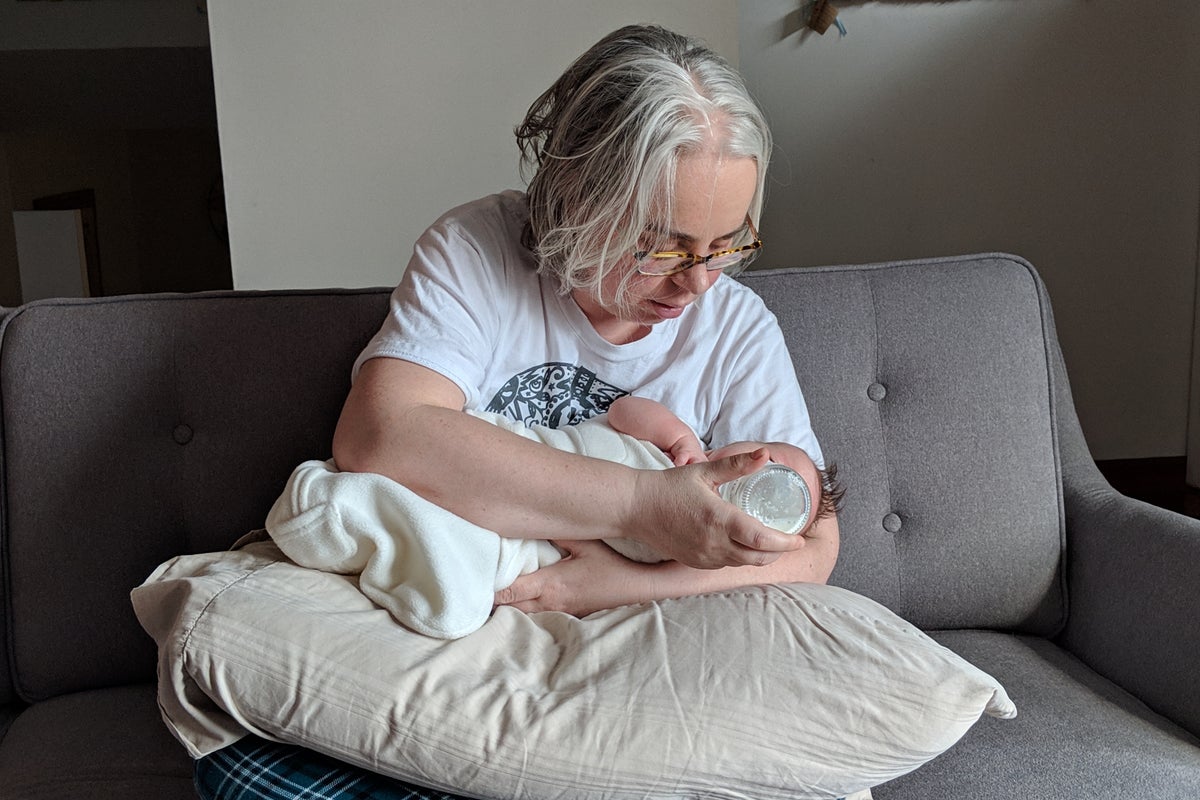
Bridget María Chesterton, a 52-year-old history professor, shared her personal experience with postpartum psychosis as the condition receives national attention due to the murder trial of Lindsay Clancy in Massachusetts. Chesterton, who was diagnosed with the condition in 2019, said she is speaking out to counter online claims that the psychiatric emergency is not real.
The condition involves a sudden onset of psychiatric symptoms following childbirth, which researchers estimate affects approximately 1 to 2 people per 1,000 births. While most people with the diagnosis do not harm their children, medical experts state that severe cases carry risks of harm to both the mother and the infant. In the Clancy case, the defense argues the defendant was experiencing this condition when she killed her three children.
Chesterton’s symptoms began approximately two weeks after delivering her daughter prematurely by C-section in January 2019. Her husband, James Fitzsimmons, found her on the bathroom floor in a state of confusion; later at the hospital, her mother reported that Chesterton did not remember having a baby. She was hospitalized twice at BryLin Hospital in Buffalo, New York, for two weeks each time and credited antipsychotic medication and extensive family support for her recovery.
According to a 2023 journal article by researchers at the Medical University of Lublin in Poland, approximately half of those with postpartum psychosis have a history of psychiatric problems, with bipolar affective disorder cited as the most common risk factor. Dr. Emily Williams of Buffalo OB/GYN, one of Chesterton’s physicians, emphasized that family support and a quick response to symptoms are critical, as early warning signs are sometimes dismissed as routine exhaustion from newborn care.
The scale of the condition's impact extends to the entire family unit, often requiring full-time external support. In Chesterton's experience, the recovery process necessitated her husband, parents, and a postpartum doula—a non-medical professional trained to assist new mothers—to manage both her health and the infant's needs for several months. For families without these resources, the consequences of a severe psychiatric emergency can be significantly more difficult to manage, particularly when symptoms like mania or disorganized thinking occur.
The legal and social precedent surrounding postpartum psychosis is currently being tested in the trial of Lindsay Clancy. The outcome of that trial, and the testimony of prosecution rebuttal witnesses like Dr. Kirk Heilbrun, will define how the legal system treats mothers who commit acts of violence while experiencing documented psychiatric emergencies. While Chesterton recovered by her daughter’s first birthday, the next steps for the broader medical and legal community involve determining how to better screen for risk factors, such as bipolar disorder, before symptoms escalate to a crisis.