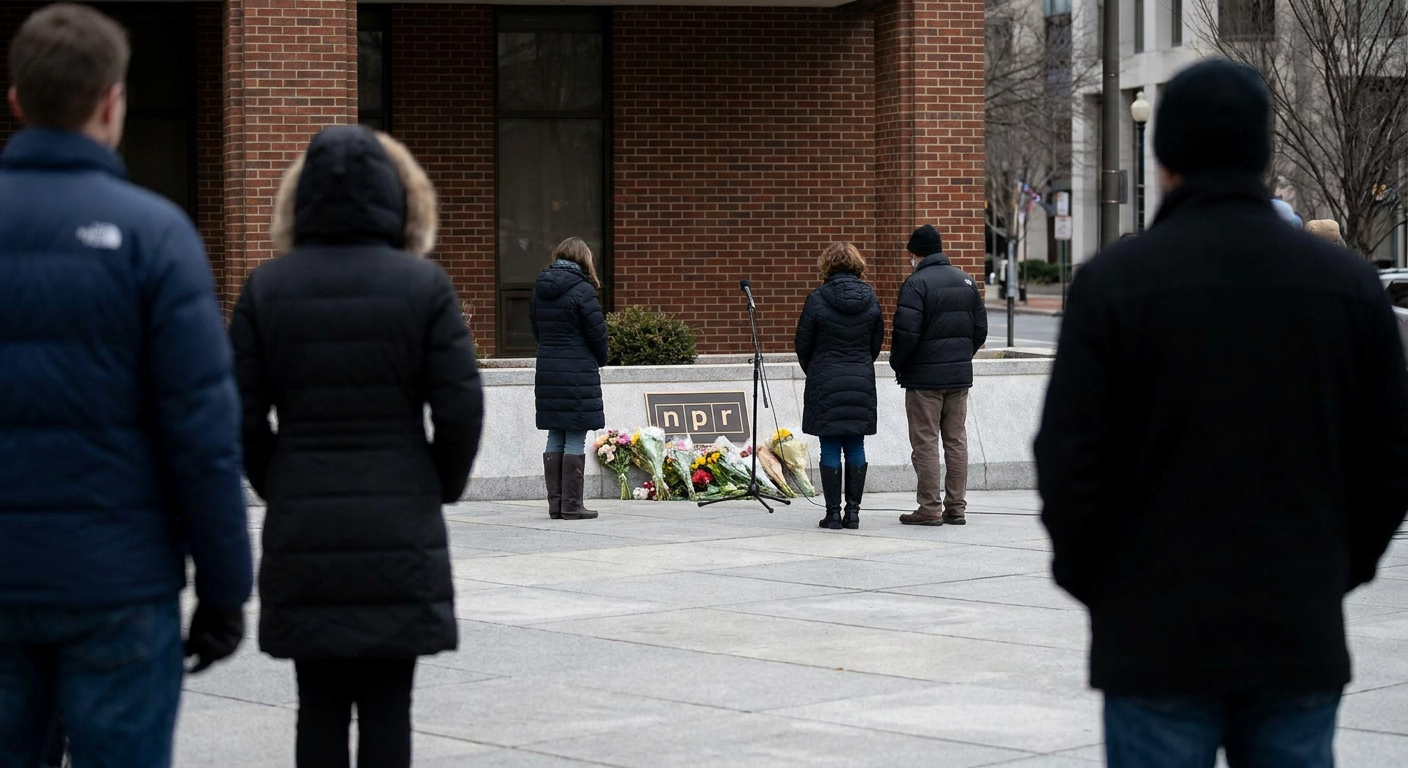
Noah Adams, a writer and broadcaster who served as a host of NPR’s All Things Considered for 18 years, died Friday at his home in Yellow Springs, Ohio. His wife, Neenah Ellis, reported his death and confirmed he was 84 years old.
Adams joined NPR in the mid-1970s following work at the University of Kentucky’s public radio station starting in 1972. During his tenure at the network, he anchored coverage of significant historical events, including the electoral victories of Ronald Reagan, the fall of the Berlin Wall, and the September 11 terrorist attacks.
Known for his reporting on rural America and small-town life, Adams frequently traveled by train to conduct interviews outside of major political centers. Former co-host Robert Siegel noted that Adams served as a voice for stories occurring far from the Interstate 95 corridor. His interviewing style, which involved using conversational techniques to put subjects at ease, was cited by Ira Glass as an inspiration for the tone of the program This American Life.
In 1981, Adams narrated "Father Cares: The Last of Jonestown," a radio documentary using recordings from the Jim Jones cult. The production was noted for its experimental approach, in which Adams narrated from the perspective of a fictional character presented as a survivor rather than as a traditional journalist. Beyond his radio career, Adams authored five books, including the 1996 memoir "Piano Lessons" and works focused on the New River and the Wright brothers.
The scale of his influence is reflected in the institutional practices of public broadcasting. His specific approach to interviewing—characterized by Ira Glass as avoiding "talking down" to subjects and steering away from pre-programmed political statements—set a precedent for the conversational style now used in many public radio programs and podcasts. This affects how listeners receive information about both major international crises and domestic life in rural communities.
For current and future journalists, Adams’ career highlights a methodology of observational reporting that emphasized handwritten shorthand and extensive fieldwork. His work on experimental documentaries like "Father Cares" remains a point of study for its use of narrative voice in news production. No public memorial services or further administrative steps following his death were reported in the source text.