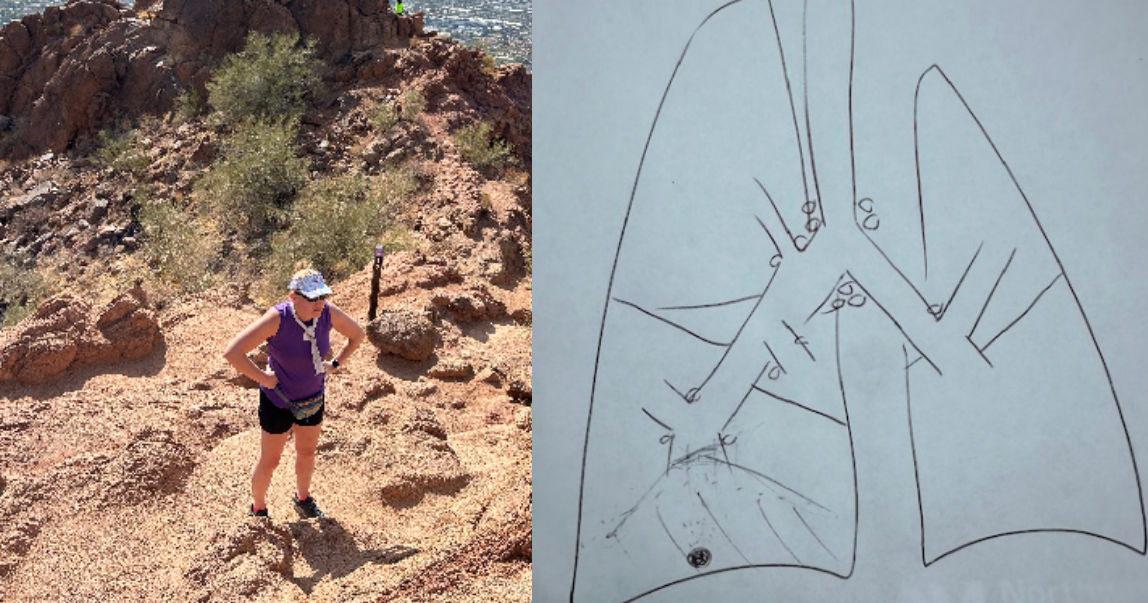
Leslie Stoll, a lifelong non-smoker and athlete, was diagnosed with Stage One lung cancer in 2024 after a routine medical follow-up for a previous injury. The diagnosis resulted from a computed tomography (CT) scan ordered by a hematologist to monitor blood clots related to a 2014 leg fracture and subsequent foot surgery. Although Stoll reported no symptoms and normal lung function, the scan identified a small anomaly that led to a positron emission tomography (PET) scan and a biopsy.
Stoll underwent robotic surgery performed by Dr. Andrew Arndt at Northwestern Medicine to remove a section of the lower lobe of her right lung. During the procedure, Arndt also biopsied her lymph nodes, which tested negative for the spread of the disease. Because the cancer was detected at an early stage and had not spread, Stoll did not require chemotherapy or radiation. Six months after the operation, Stoll has returned to her regular activities and undergoes regular scans to monitor for recurrence.
Medical experts state that lung cancer in "never-smokers" is more frequent than the general public may realize. Dr. Jonathan Villena-Vargas, a thoracic surgeon at NewYork-Presbyterian and Weill Cornell Medicine, noted that people who have never smoked account for approximately 20% of the 250,000 new lung cancer diagnoses recorded annually. Dr. Lucas Delasos of the Cleveland Clinic added that women, particularly those of Asian descent, are more likely to be diagnosed despite having no history of smoking.
For the individual patient, a diagnosis in the early stages, such as Stage One, can result in a shift from long-term chronic illness to a curative surgical intervention. In Stoll's case, the transition from a routine check-up for a decade-old injury to lung surgery occurred within months. A patient would notice the physical impact of a lobectomy—the removal of a portion of the lung—which Stoll described as a temporary but significant reduction in mobility, moving from being able to run miles to struggling to walk down a hospital hallway. However, early detection allowed her to avoid the systemic effects of chemotherapy or radiation, which typically involve months of fatigue, nausea, and other side effects.
The increase in these diagnoses is attributed by oncologists to improved imaging technology and heightened clinical awareness. While researchers are investigating environmental factors like radon gas, the immediate impact for patients is a move toward personalized medicine, as younger non-smoking patients are more likely to carry specific genetic mutations that drive tumor growth. What happens next for patients like Stoll is a long-term regimen of surveillance; she continues to attend regular follow-up scans to monitor for any evidence of the disease returning, emphasizing the role of consistent medical oversight in managing early-stage cancer.