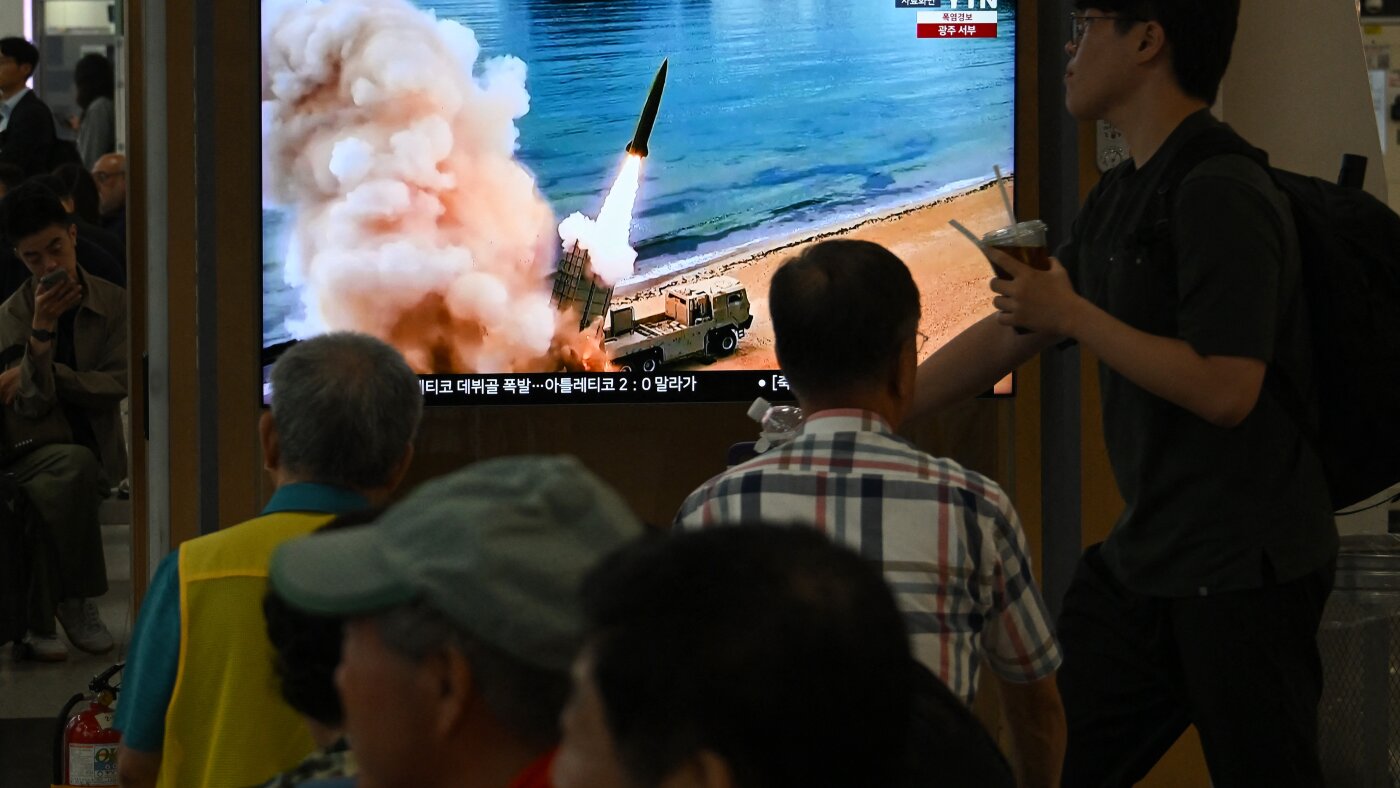
North Korea launched approximately 12 short-range ballistic missiles toward the sea on Thursday, shortly after President Trump announced plans to meet with North Korean leader Kim Jong Un later this year. The missile launches followed a decision by the U.S. and South Korea to end their annual military exercises six days earlier than scheduled. President Trump stated he ordered the reduction because the drills are expensive and perceived as hostile by Pyongyang.
In a statement released through state media, Kim Yo Jong, the sister of the North Korean leader, described the decision to shorten the drills as "unworthy of comment" and maintained that the exercises remained "provocative." While she claimed to be unaware of direct contact between her brother and the U.S. President, she noted that the relationship between the two leaders remained "excellent." Analysts suggest these actions indicate North Korea is raising its requirements for diplomatic reengagement.
South Korean officials expressed concern over the U.S. decision to scale back the exercises, with Foreign Minister Cho Hyun informing lawmakers that Seoul was not notified in advance of the order. Cho suggested the move might be intended to pressure South Korea to increase its $350 billion investment in the U.S. in exchange for lower tariffs. Additionally, President Trump recently criticized South Korea on social media for declining to participate in U.S. operations against Iran.
For South Korean citizens and government officials, the immediate concern is the possibility of being excluded from negotiations that could result in the withdrawal of U.S. troops or the lifting of economic sanctions without the removal of North Korea's nuclear weapons. While South Korea historically served as a mediator, North Korea’s recent mutual defense pact with Russia and revived ties with China have reduced Seoul's influence. Experts from the Korea Institute for Defense Analyses warn that using military exercises as leverage for unrelated trade or investment goals may lead to a gradual loss of political trust within the alliance.
What happens next depends on the timing of the proposed summit between President Trump and Kim Jong Un, which the U.S. administration indicated would occur later this year. South Korean Foreign Minister Cho Hyun stated he will work to ensure the alliance remains intact during any U.S.-North Korea dialogue. Meanwhile, China has urged the U.S. to drop its "hostile policies" but has declined to act as a formal broker for the upcoming talks, stating the two nations should handle the matter themselves.