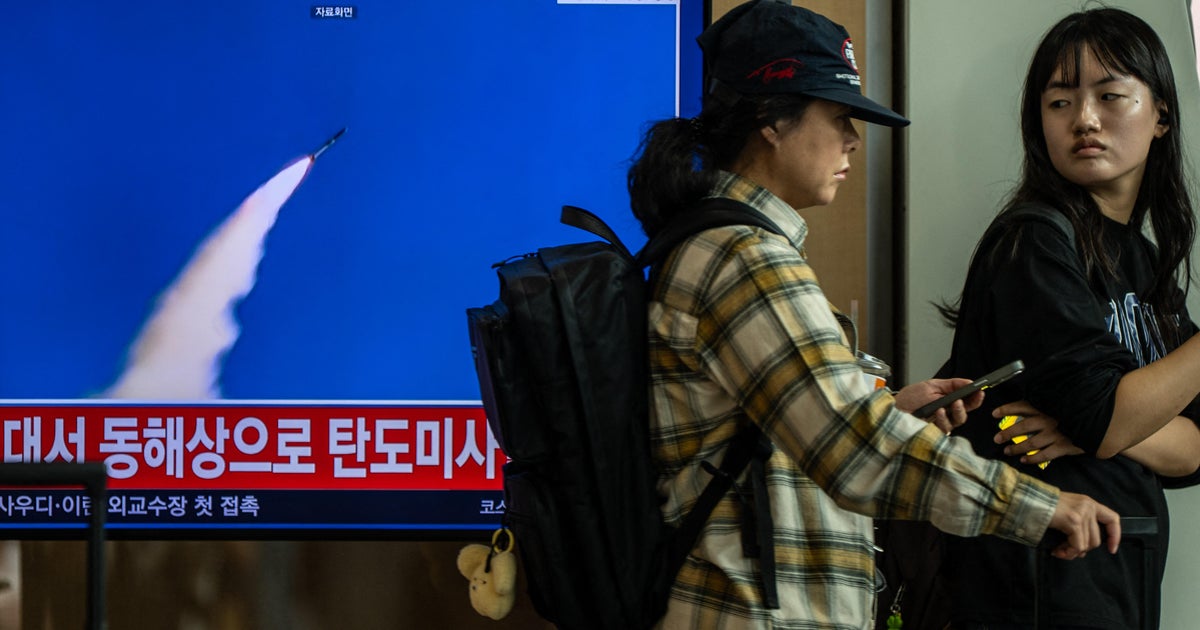
North Korea launched multiple ballistic missiles toward its eastern waters on a Monday, according to South Korea’s military. The South Korean Joint Chiefs of Staff stated the weapons were fired from an area near the capital, Pyongyang, though the specific number of missiles and their flight distance were not immediately released. Japan’s Defense Ministry reported detecting at least two missiles, which it assessed fell into waters outside of Japan’s exclusive economic zone.
The launch followed a Friday test by South Korea of its first domestically developed hypersonic weapon. South Korean President Lee Jae-myung described that test as a measure to strengthen the nation’s conventional defense capabilities. Additionally, on Oct. 31, 2024, North Korea tested a new intercontinental ballistic missile as reports emerged of North Korean troops in Russian uniforms moving toward the Ukrainian border.
Regional tensions have been elevated following land mine explosions near the inter-Korean border that injured three South Korean soldiers. A joint investigation by the South Korean military and the U.S.-led United Nations Command attributed the blasts to mines planted by North Korea. The North Korean government has denied involvement and ridiculed demands for an apology. North Korean leader Kim Jong Un has recently characterized South Korea as a permanent enemy and has maintained a freeze on diplomatic engagement with both Seoul and Washington.
The scale of military activity is marked by North Korea's continued weapons demonstrations and the deployment of its personnel to Russia. Reports from Oct. 31, 2024, indicated that North Korean troops were moving toward the Ukraine border, marking an expansion of the country's involvement in international conflict beyond the Korean Peninsula. These actions have occurred alongside a prolonged stalemate in nuclear negotiations with the United States. North Korea has demanded that Washington abandon what it calls a "hostile" policy and drop denuclearization as a requirement for talks, while the U.S. previously scaled back a major military exercise with South Korea, with Donald Trump citing his relationship with Kim.
For the international community, these tests set a precedent of continued weapons development despite international sanctions and diplomatic pressure. The effects include increased defense spending and hardware testing by South Korea, as evidenced by its recent hypersonic flight test. What happens next depends on the response from the United Nations Command regarding border tensions and whether North Korea continues its streak of launches. No specific dates for future diplomatic talks or further missile tests were reported by the sources.