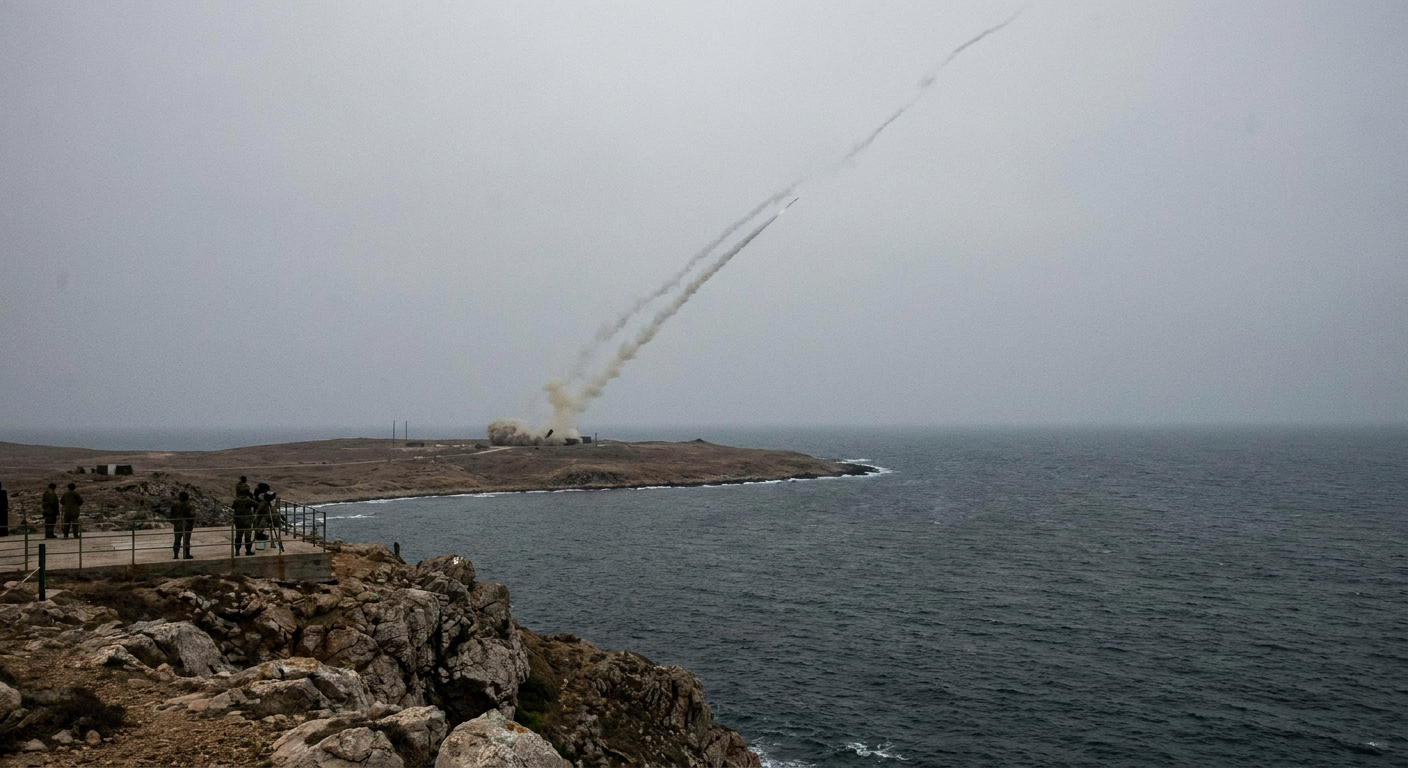
North Korea fired several short-range ballistic missiles from the Wonsan area toward the sea off its east coast on Saturday, Sept. 12, 2026, according to South Korea's Joint Chiefs of Staff (JCS). The missiles were detected around 5:20 a.m. local time and traveled approximately 250 kilometers (155 miles). South Korean and U.S. intelligence authorities tracked the launches from the outset and shared information with Japanese officials.
The launches followed the conclusion of joint military drills by South Korea, Japan, and the U.S. intended to test readiness against North Korea's nuclear and missile threats. Last month, North Korea launched more than 10 short-range ballistic missiles and ordered its military to maintain full readiness during South Korea's joint exercises with the U.S. Also last month, U.S. President Donald Trump reduced the scale of these military exercises, which he described as hostile to Pyongyang, and said he expected to meet North Korean leader Kim Jong Un later this year.
In response to the Saturday launches, South Korea's presidential National Security Office held an emergency meeting with the defense ministry and the JCS to assess the impact on security. The presidential office urged North Korea to stop the launches, calling them a violation of U.N. Security Council resolutions. U.S. Pacific Command stated the launches did not pose an immediate threat to U.S. personnel, territory, or allies, but noted the U.S. remains committed to the defense of the homeland and regional allies.
South Korean and U.S. authorities are currently continuing their detailed analysis of the specifications of the missiles launched on Saturday. Separately, South Korean President Lee Jae Myung recently called for advancing military technology, including drone capabilities and the potential acquisition of nuclear-powered submarines. What happens next depends on the expected meeting between President Trump and Kim Jong Un later this year, though no specific date for that summit has been reported.