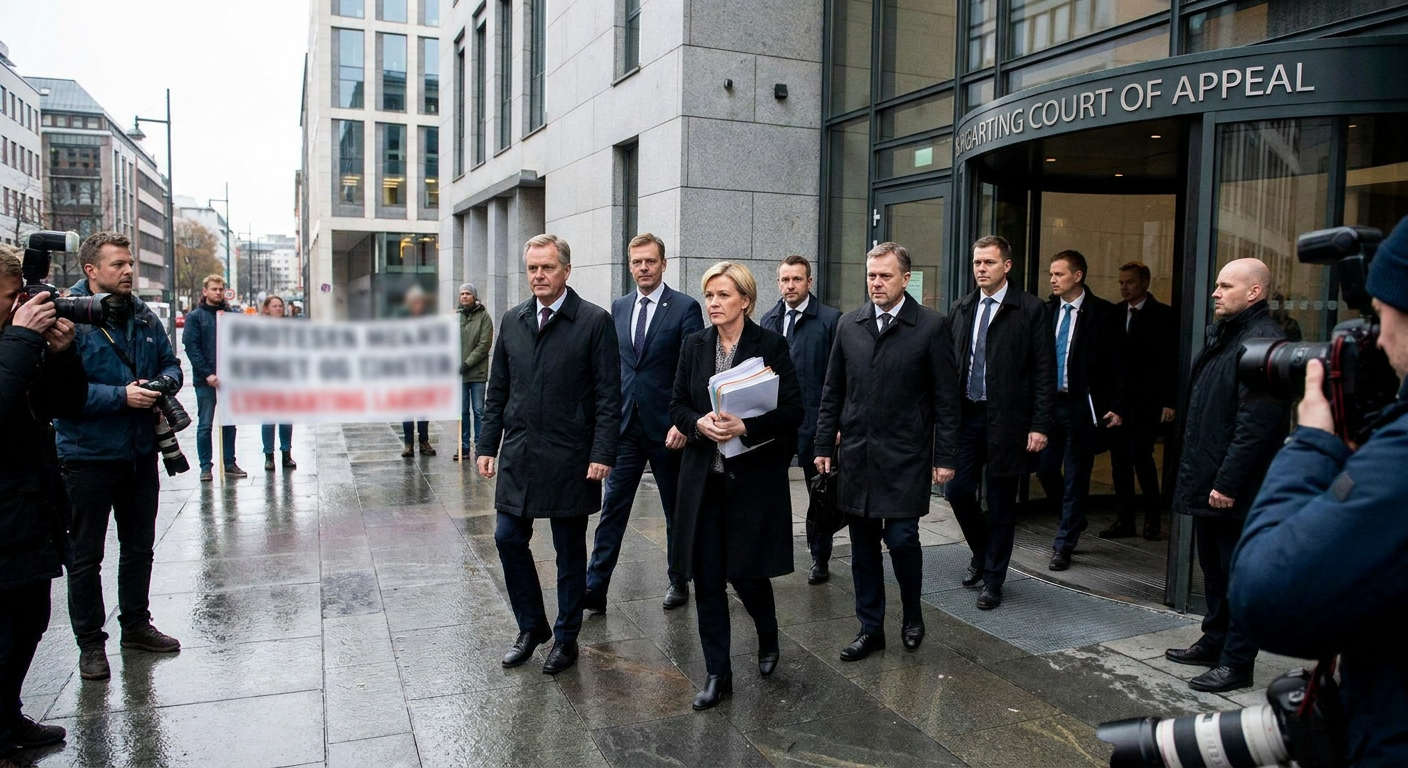
The Norwegian government appeared before the country’s Supreme Court on Monday to request the reversal of a lower-court ruling that invalidated development permits for three oilfields. The lower court previously determined that the government failed to properly assess the environmental impact of the projects, specifically regarding climate considerations.
The legal challenge was initiated in 2023 by Greenpeace and Young Friends of the Earth. Since the start of the proceedings, two lower courts have ruled in favor of the environmental groups, finding that the state did not adequately evaluate the emissions resulting from the eventual burning of the oil and gas produced at the sites, referred to as Scope 3 emissions.
The litigation involves the Breidablikk field, operated by Equinor, and the Tyrving and Yggdrasil fields, operated by Aker BP. While the Breidablikk and Tyrving fields are currently in production, the Yggdrasil field is scheduled to begin operations next year. Despite the rulings against the permits, lower courts have declined to halt current production while the legal process continues.
The Office of the Attorney General stated in a court note that the government has since conducted additional assessments of foreign emissions that now satisfy all regulatory requirements. The government maintains a policy of continuing crude and natural gas extraction for several decades, noting that the industry currently provides half of Norway’s export revenue.
For Norwegian citizens and the broader European energy market, the case highlights the tension between domestic climate obligations and energy security. The three fields in question—two of which are already contributing to the energy supply—are at the center of a debate over whether the government must account for the "Scope 3" emissions generated when the exported fuel is burned by consumers abroad. If the court finds the government's supplemental environmental assessments insufficient, it could create a new legal standard for how the state must evaluate future energy projects.
The Supreme Court hearing is scheduled to last four days. While a specific date for the ruling has not been set, a verdict is expected to be released later this year. The decision will determine whether the development permits for Breidablikk, Tyrving, and Yggdrasil are legally sound or if further regulatory action or halts are required. The government has signaled it intends to proceed with Arctic drilling regardless of external positions, underscoring the high stakes of the domestic legal interpretation of climate laws.