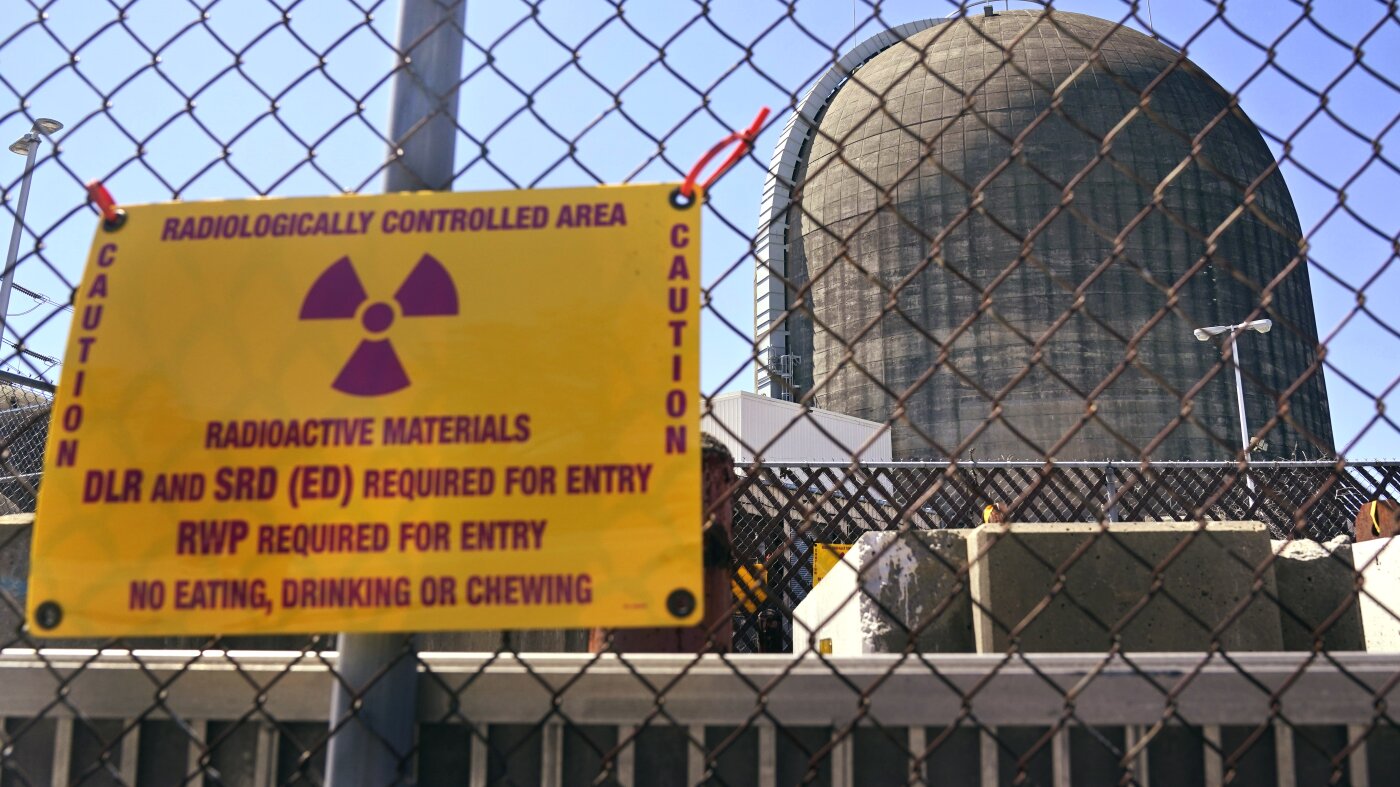
The Nuclear Regulatory Commission (NRC) is preparing to eliminate a 50-year-old safety standard known as ALARA, which stands for \"As Low As Reasonably Achievable.\" The proposed rule change would remove the requirement for nuclear operators to drive radiation exposure for workers and the public below stated legal limits whenever possible. This shift follows an executive order signed by President Trump in May 2025, which called for a comprehensive overhaul of nuclear regulations to support industrial growth and new energy demands.
The ALARA principle has been a foundational part of nuclear oversight for decades, designed to minimize radiation risk in the face of scientific uncertainty regarding low-dose exposure. However, the Trump administration and some technical experts argue the standard is flawed and creates regulatory ambiguity. NRC Chairman Ho Nieh stated that the reform is necessary to meet urgent electricity demands driven by artificial intelligence, data centers, and industrial expansion, noting that the current standard is difficult for reactor designers to implement.
Under the new proposal, the NRC will maintain its current upper limits for radiation exposure—5 rem for workers and 0.1 rem for the public—but will remove the requirement to seek lower levels. The rule also introduces a \"planned occupational dose limit extension,\" allowing certain workers to receive 10 rem in a single year, provided their total exposure does not exceed 25 rem over five years. NRC officials indicated this extension would be intended for specific tasks, such as reactor refueling or plant upgrades.
The scale of the impact is tied to the administration's plan to accelerate the construction of smaller reactors and data centers across the country. Advocates like Emily Caffrey, a radiation health physicist, argue that removing ALARA provides necessary clarity for businesses because \"reasonable\" is a subjective term. Conversely, Edwin Lyman of the Union of Concerned Scientists stated that removing the standard eliminates the incentive for companies to maintain practices that have historically kept exposures at very low levels. The NRC’s own models suggest that risks from low-dose radiation persist, even if they are difficult to measure against the large background of naturally occurring cancers.
The shift sets a precedent for how the federal government balances scientific uncertainty with industrial expansion goals. The knock-on effects could include faster approval for new reactor designs that previously struggled to meet the "reasonably achievable" metric. The public comment period for these changes is set to end on August 31, 2026. If the agency proceeds, the new regulations are expected to go into effect in early 2027.