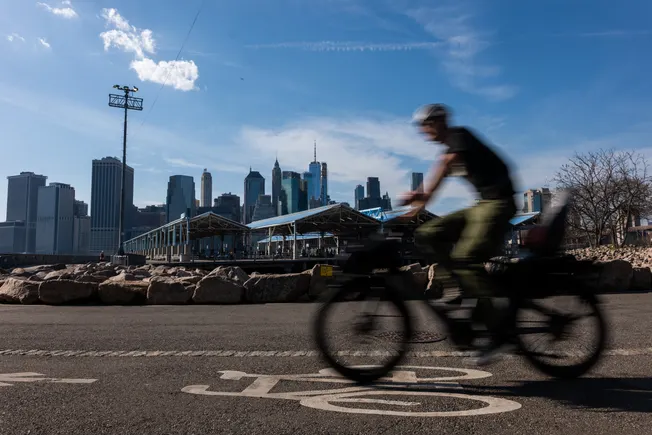
The advocacy group PeopleForBikes released its 2026 city ratings on June 17, reporting a measurable increase in the number of U.S. cities with high bikeability scores. The annual study, now in its ninth year, evaluates how easily residents can reach essential destinations like jobs, schools, and grocery stores using connected and low-stress bike routes. The report noted that the number of U.S. communities scoring 50 or higher on its 100-point scale more than doubled compared to the previous year.
For the 2026 report, PeopleForBikes updated its evaluation process by incorporating revised census data and new street design standards from the National Association of City Transportation Officials. According to the group, cities that performed well typically featured protected bike lanes, off-street paths, and neighborhood streets with slow speed limits. Grace Stonecipher, the group's infrastructure analytics and research manager, stated that these ratings provide a benchmark for city leaders to track progress and advocate for infrastructure investment.
In the category for large cities with populations over 300,000, the New York City borough of Brooklyn ranked first. Following Brooklyn in the top five were Minneapolis, Seattle, San Francisco, and the borough of Queens. For mid-sized cities with populations between 50,000 and 300,000, Hoboken, New Jersey, took the top spot, followed by Rochester Hills, Michigan; Anchorage, Alaska; Ames, Iowa; and Grand Forks, North Dakota. The highest-ranked small cities included Mackinac Island, Michigan, and Old Orchard, Pennsylvania.
For a resident in a high-ranking city like Brooklyn or Hoboken, these infrastructure changes manifest as physical shifts in the streetscape. A commuter would notice new protected bike lanes separated from vehicle traffic and expanded off-street paths, which the report links to safer access to essential services. These improvements are intended to provide residents with alternatives to driving for daily tasks, potentially affecting household spending on fuel and vehicle maintenance, as well as altering travel times to local schools and workplaces.
The 2026 ratings set a new baseline for city transportation policies by adopting updated street design standards. This shift in methodology may influence how municipal governments plan future developments and allocate transportation grants. Beyond the current rankings, PeopleForBikes identified eight "cities to watch," including Atlanta, Baltimore, and Charlotte, which are currently implementing new infrastructure and policies that could affect their scores in the 2027 report. Future updates will likely occur next June as the organization continues its annual benchmarking cycle.