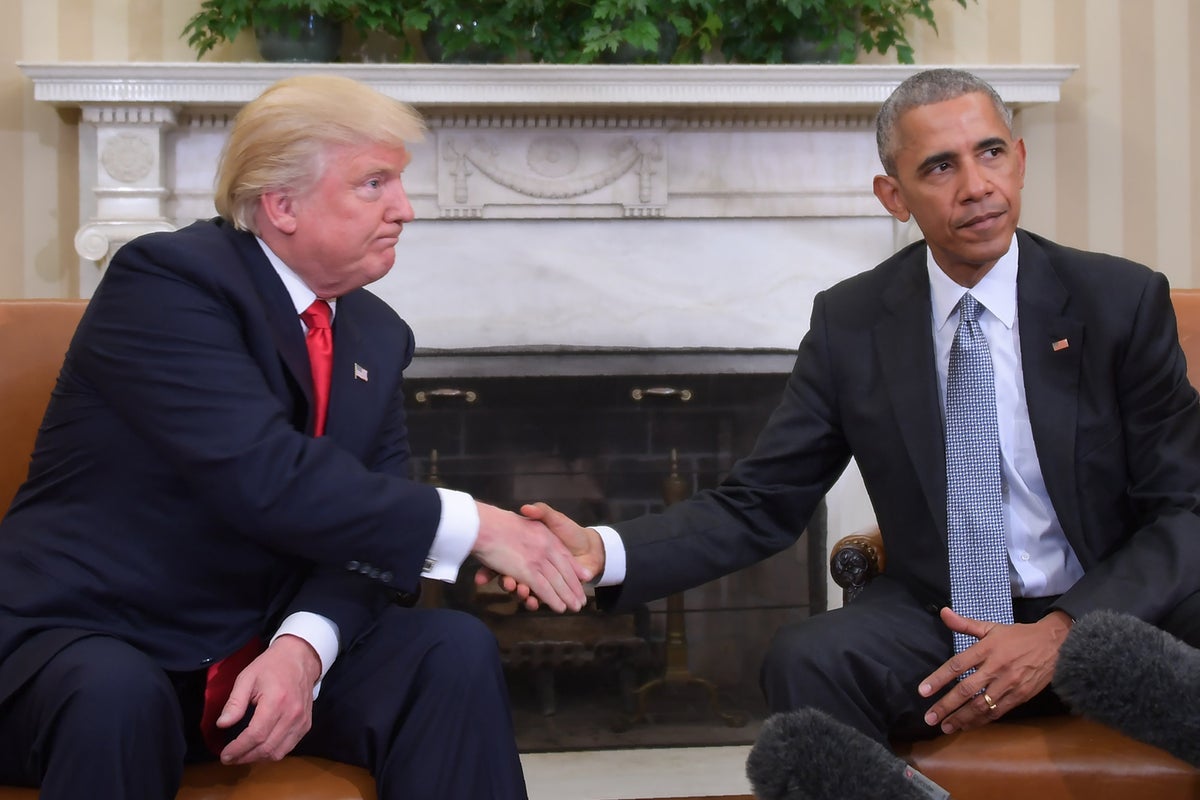
Former President Barack Obama criticized President Donald Trump’s decision to ban three news outlets from the White House during an appearance at Colgate University. During his remarks on Friday, September 18, Obama stated that such an action was previously "unimaginable" and questioned how the public would have reacted if his own administration had barred Fox News. Obama argued that if a portion of the country believes such bans are acceptable, it indicates a lack of understanding regarding democratic requirements.
The comments follow President Trump’s announcement on Friday that journalists from CNN, MS Now, and Politico would be barred from the White House. The president characterized these outlets as "fake news" and alleged they purposely produce negative coverage to diminish Republican administrations. On Sunday, September 20, the president posted an AI-generated image on social media depicting trash bags labeled with the names of the three organizations outside the White House.
On Saturday, September 19, reporters from the affected outlets were denied entry and had their press passes seized. Their employers have stated they intend to challenge the move. President Trump has suggested the ban could be extended to other organizations, including The New York Times and The Washington Post. This follows an existing legal dispute involving The Associated Press, which was barred from the Oval Office and Air Force One after refusing to use the name "Gulf of America" for the Gulf of Mexico as ordered by the president.
In his remarks, Obama also addressed the administration's stance on artificial intelligence (AI) regulation, stating that the current administration is unwilling or unable to establish a serious regulatory framework. Trump responded on Saturday via social media, announcing plans to create an "AI Force" and appoint an "AI czar" to oversee the technology. House Majority Leader Steve Scalise (R-LA) defended the president's media actions on Sunday, stating that while the president is open to the press, he wants a "free and fair" press.
For the general public, this change affects the flow of information from the White House, as the barred outlets will no longer be able to provide first-hand accounts or ask questions during official press events. The organizations have vowed to challenge the move. The precedent of seizing press passes and banning specific outlets based on the content of their coverage follows a previous instance during Trump’s first term involving a CNN reporter, which resulted in a federal court order to reinstate access and the creation of stricter eligibility rules.
The knock-on effects include potential litigation that could redefine the legal rights of the press to access federal property. Additionally, the dispute over AI regulation highlights a policy gap where the former president warns of risks from unregulated technology while the current administration moves to centralize oversight under a new "AI Force." What happens next depends on the promised legal challenges from the news organizations and whether the president follows through on extending the ban to additional outlets. No specific court dates for the new challenges have been reported.