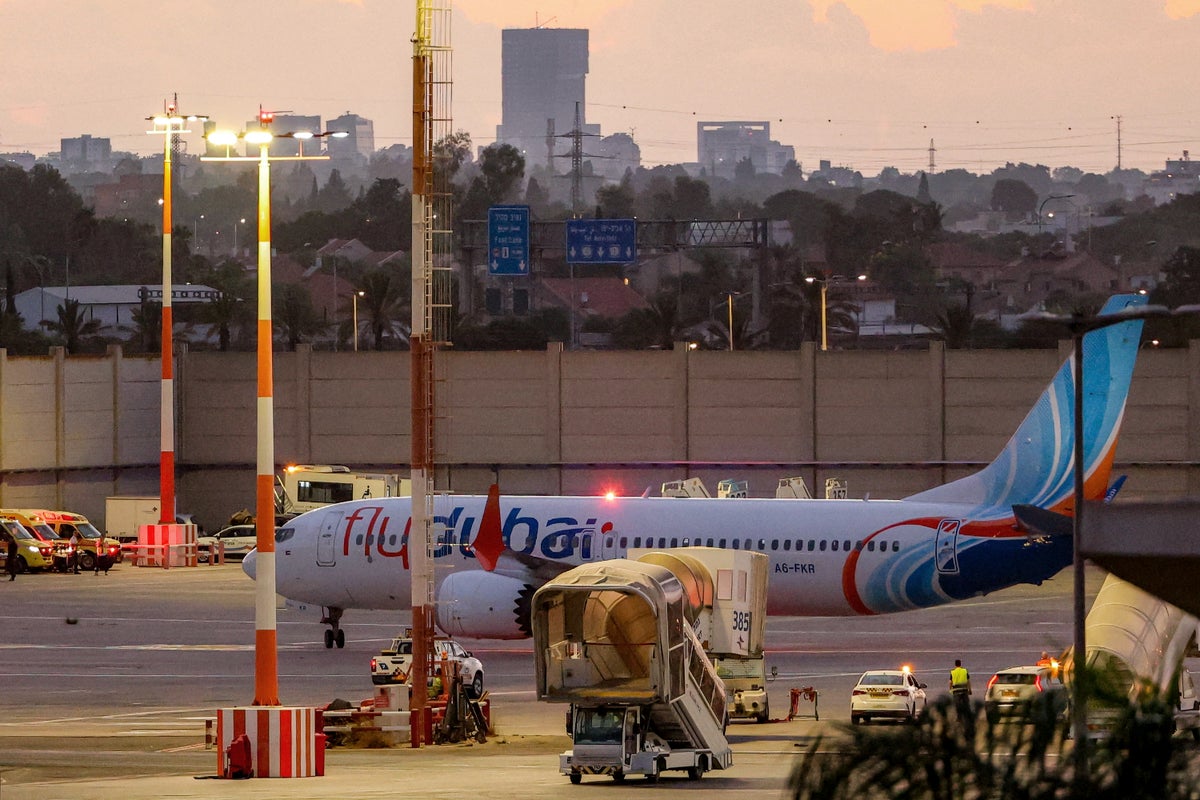
A FlyDubai flight from Dubai to Tel Aviv was diverted to Saudi Arabia on Wednesday, September 30, 2026, after one pilot allegedly stabbed another and attempted to crash the aircraft. Israeli Prime Minister Benjamin Netanyahu confirmed the incident, stating that the plane began a rapid descent before passengers and crew members intervened to subdue the attacker. The aircraft, flight FZ1073, safely landed at Tabuk Airport in northwestern Saudi Arabia at 06:58 local time.
The incident began approximately two and a half hours after the flight departed Dubai International Airport with 174 people on board, the majority of whom were Israeli citizens. Flight tracking data showed the aircraft plummeted more than 17,000 feet in less than two minutes. During the descent, the aircraft signaled a general emergency code followed by a hijacking alert. Israeli and Saudi Arabian air forces responded by scrambling fighter jets.
According to passenger Yaniv Hayun, the injured pilot managed to release the cockpit door lock before collapsing. Hayun and other passengers entered the flight deck where they found the attacker attempting to disable flight instruments. Hayun reported placing the attacker in a chokehold while other passengers used zip ties and headphone cords to restrain him. The stabbed pilot, identified as Capt. Smit Machchhar, an Indian national, was transported to a hospital in stable condition. Prime Minister Netanyahu and Indian Prime Minister Narendra Modi both issued statements praising Machchhar for his actions during the flight.
FlyDubai described the event as an "altercation" in the flight deck and stated the aircraft was secured by on-duty crew members traveling on the flight. The airline dispatched two replacement aircraft to Tabuk to transport the passengers and crew, who arrived in Tel Aviv later that evening. Saudi authorities arrested the alleged attacker, identified by security expert Will Geddes as an Omani national, and began an investigation into the motive. Israeli Defense Minister Israel Katz characterized the event as an "attempted jihadist terror attack," though official investigators have not yet confirmed a motive.
For the broader traveling public, the event raises questions about crew vetting and airport security protocols for airline staff. While U.S. pilots undergo criminal history checks and security threat assessments, security expert Will Geddes noted that some international flight crews may not be subject to the same rigorous physical screening as passengers, potentially allowing small weapons like the pocket knife used in this attack to be brought on board. Aviation experts suggest that while hardened doors are standard, the human element remains a point of reliance, as security is ultimately based on the trust placed in the pilots.
The incident may prompt a review of international flight deck protocols, including the "two-person rule" or the use of secondary physical barriers, which are intended to prevent a single individual from gaining total control of a cockpit. In the immediate future, Saudi authorities will continue their interrogation of the Omani co-pilot to determine the motive and whether the act was individual or part of a larger network. No specific date for a trial or further legal proceedings has been reported. Passengers who returned to Israel on Wednesday are reported to be safe, though some described the experience as highly traumatic.