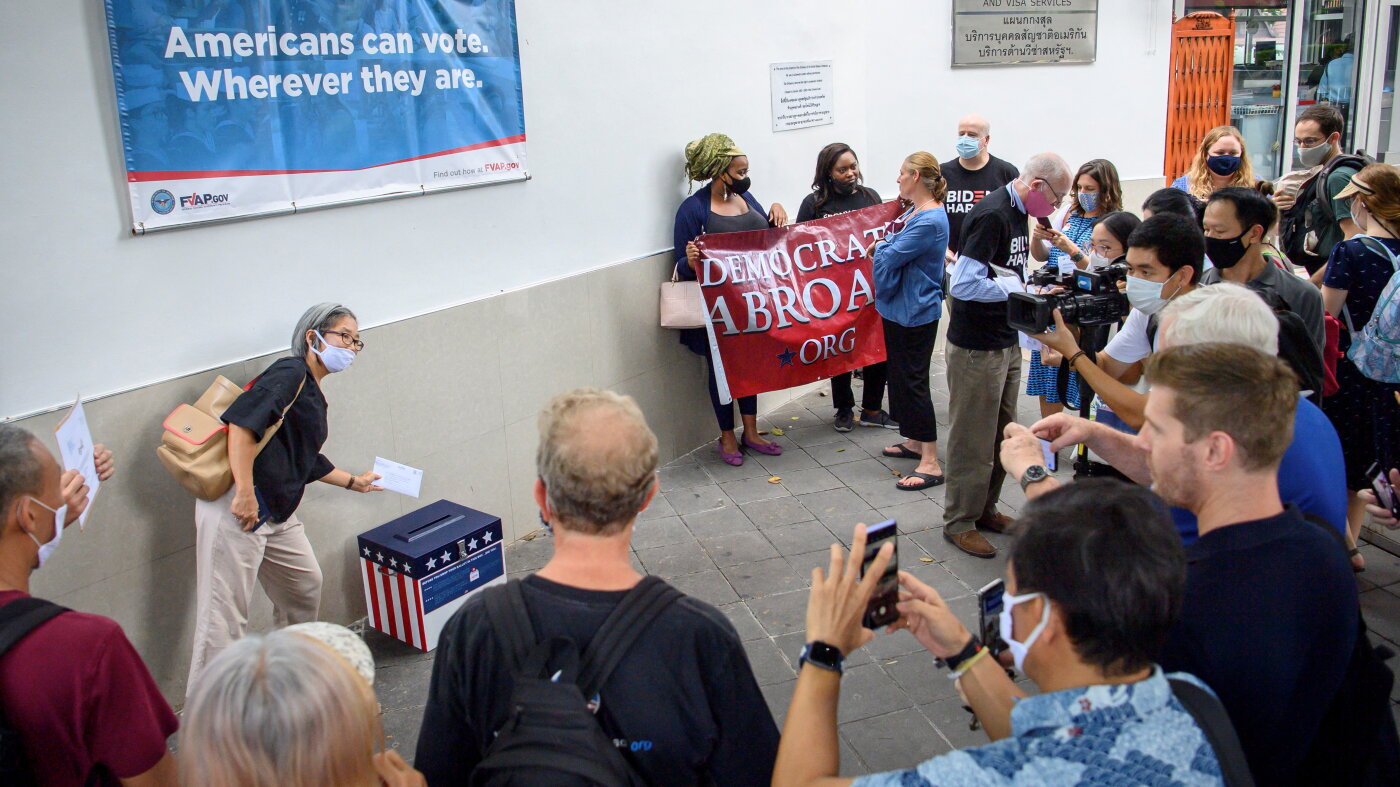
The Pentagon revised federal absentee-voting forms in late August 2026, removing a registration category for U.S. citizens living abroad who have never resided in the United States. The Democratic National Committee (DNC) filed a lawsuit against the Department of Defense on Thursday, October 1, 2026, alleging that the Trump administration used "emergency" measures to bypass standard review procedures and disenfranchise eligible voters.
The Federal Voting Assistance Program (FVAP), managed by the Pentagon, provides the "Federal Post Card Application" and the "Federal Write-In Absentee Ballot" for military members and overseas citizens. Since 2013, these forms included a checkbox for citizens who have never lived in the U.S. but are eligible to vote via a parent or guardian's last U.S. residence. Republican officials have challenged these "never-resided" voting rights in several states, including North Carolina, where a court recently ruled in their favor, and Michigan, where they were unsuccessful.
Pentagon officials stated the changes were made to "eliminate voter confusion" regarding eligibility under the Uniformed and Overseas Citizens Absentee Voting Act. Sean O’Keefe, a Pentagon deputy under secretary, wrote in an August 28 justification letter that the previous format might lead voters to provide incorrect information. The revisions now require these citizens to choose between declaring an intent to return to the U.S. or stating that their return is uncertain, which advocates say does not accurately describe the status of those born abroad who have never lived in the country.
The timing of the change, occurring just weeks before the September 19 deadline for states to transmit midterm ballots, has drawn criticism from voting advocacy groups. Susan Dzieduszycka-Suinat of the U.S. Vote Foundation stated that the 90-day window before Election Day is insufficient for states to retrain election workers or update local instructions. The DNC argues the move violates the Administrative Procedure Act by bypassing the typical months-long public comment and review process for federal form changes.
The Pentagon stated that state election officials may continue to process older versions of the forms and that eligible voters can still register through alternative state-provided methods. However, the revised forms are now the federal standard. The DNC lawsuit seeks to block the use of the updated forms. A public comment period on the changes began more than a week after the forms were updated on September 10, 2026, and further court dates for the DNC challenge have not yet been reported.