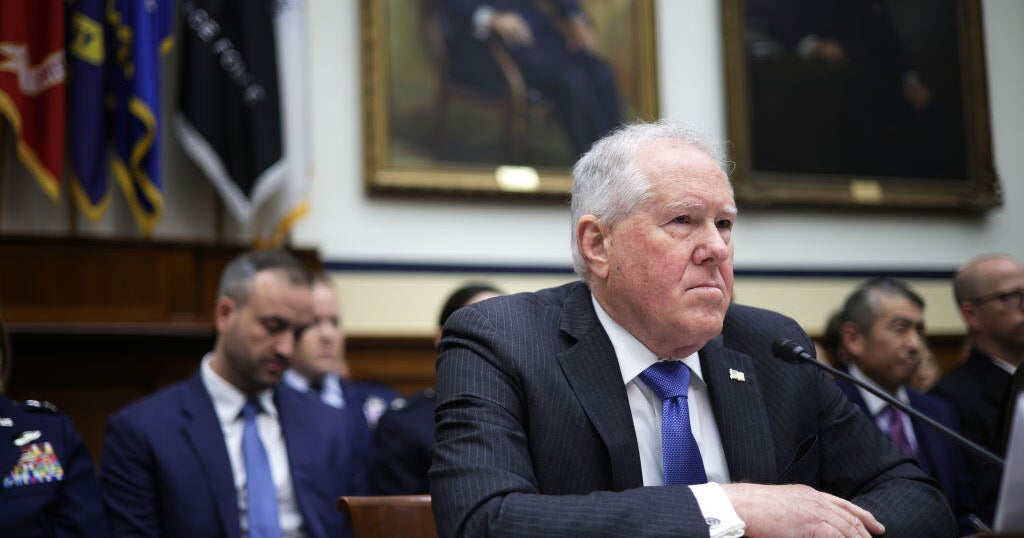
The Pentagon revoked the security clearance and eligibility of former Air Force Secretary Frank Kendall on Friday, citing allegations that he disclosed classified information to a media outlet. Department of Defense spokesperson Sean Parnell stated that Kendall's access was removed following an unauthorized disclosure regarding the capabilities of Air Force One. Kendall, who served under President Joe Biden, told The Associated Press that he was "completely mystified" by the decision and denied sharing any classified material.
The revocation follows recent news reports, including from The New York Times, concerning security features on a Boeing 747 donated to the United States by Qatar for use as Air Force One. The reports suggested the aircraft lacked the advanced antimissile systems found on previous presidential jets. In those reports, Kendall was quoted questioning whether the time allotted for the plane's $400 million retrofit was sufficient for standard Air Force One modifications.
U.S. officials reported that President Trump recently used an older Air Force One model to return from a NATO summit in Turkey after intelligence indicated a credible missile threat from Iran. While the Air Force stated the Qatari-donated jet was modified without security risks, it confirmed the plane lacks specific features, such as built-in hull stairs. The White House subsequently announced the new plane would undergo additional upgrades this fall, expected to take approximately one month.
The scale of the situation involves a $400 million aircraft upgrade and a legal dispute over source protection. The Justice Department recently subpoenaed reporters from The New York Times to identify their sources for the Air Force One story, though those subpoenas were withdrawn last month following judicial criticism. The incident highlights the ongoing tension between government secrecy regarding presidential security—specifically the defenses of the $400 million jet—and the public's right to information regarding the safety of the commander-in-chief during international travel.
The Pentagon has not yet reported whether Kendall's case has been referred to the Justice Department for criminal prosecution under the Espionage Act. While other recent leakers, such as a Massachusetts Air National Guard member, received a 15-year prison sentence in 2024 for unauthorized disclosures, it is not yet known what specific legal steps will follow for Kendall. The new Air Force One is scheduled for its next round of enhancements this fall, during which time it will be out of service for about 30 days.