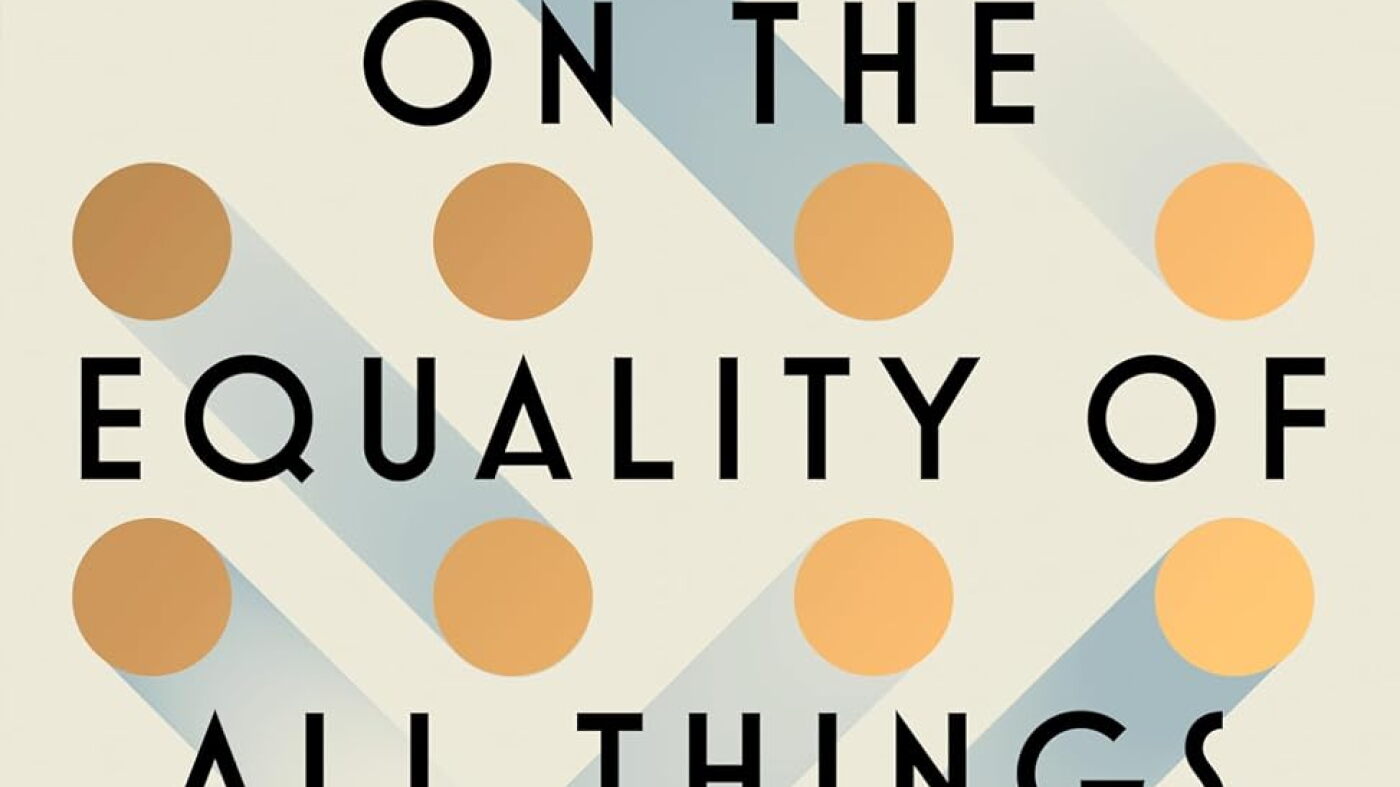
Physicist Carlo Rovelli has released a new book, "On the Equality of All Things," which argues against the possibility of achieving an ultimate or objective knowledge of the universe. Rovelli contends that the "God's-eye view" of reality—the idea that science can provide an absolute, observer-independent description of the world—is not supported by modern physics.
The book draws on the history of 20th-century science to support its claims, citing Albert Einstein’s theory of relativity and the development of quantum mechanics. Rovelli notes that relativity demonstrated that measurements of space and time are relative, while quantum mechanics showed that the properties of matter at the atomic level cannot be disentangled from how they are measured. These developments, he argues, moved physics away from describing a world seen from the outside to one viewed from within.
Rovelli focuses on the "relational interpretation" of quantum mechanics, a view suggesting that the properties of any object exist only in relation to other systems. He rejects other interpretations, such as the idea of parallel universes, describing them as nonsense and attempts to restore an "Ultimate Reality" that he believes does not exist. The book also incorporates classical Indian and Asian philosophies, citing thinkers like Nagarjuna and Zhuangzi alongside Western figures such as Plato and Aristotle to discuss the nature of reality.
By challenging "scientific triumphalism"—the belief that science will eventually explain every aspect of existence—Rovelli suggests a limit to what physicists can claim to know. He disputes the foundational assumptions held since the time of Isaac Newton, suggesting that the "laws of nature" are not independent truths "out there," but descriptions of relationships.
The book integrates non-Western philosophical traditions into modern theoretical physics discussions. While Rovelli defends the utility and beauty of scientific knowledge, he advocates for what he terms a "new kind of humility" regarding the universe's complexity. Adam Frank, a professor at the University of Rochester, noted in a review that the book neglects the "primacy of experience."