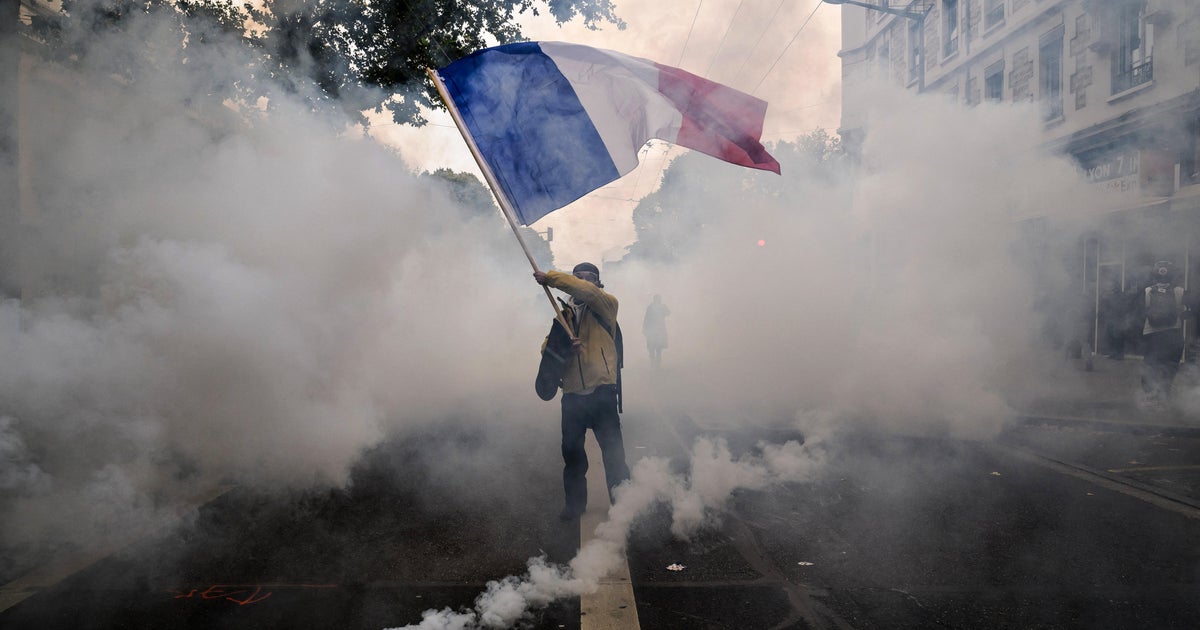
Police clashed with demonstrators across France on Saturday, Oct. 31, 2026, as hundreds of thousands of people marched to protest the rising cost of living and police violence. While many demonstrations remained peaceful, authorities reported skirmishes in Paris, Marseille, Lyon, and Toulouse. Security forces used tear gas, water cannons, and baton charges to disperse groups in several cities where projectiles were thrown and barricades were set ablaze.
The protests occurred two weeks after a previous wave of unrest resulted in widespread looting and hundreds of millions of euros in property damage. In response to that earlier violence, French President Emmanuel Macron decreed that only demonstrations organized by recognized trade unions would be permitted. For the Oct. 31 marches, the interior ministry deployed approximately 70,000 police officers nationwide to prevent a recurrence of the prior destruction.
In Paris, the interior ministry estimated 70,000 people took part in the march, while nationwide figures varied between 320,000 according to the government and 800,000 according to unions. By Saturday night, authorities reported more than 560 arrests nationwide. Interior Minister Laurent Nuñez stated that two people were seriously injured during the day's events, including a 20-year-old man in Toulouse who lost several fingers when an explosive device detonated near him.
The unrest also places significant pressure on France's national security and economic infrastructure. With the eurozone's second-largest economy nearing recession, the government faces limited options for increased public spending to address student and worker demands for better living and learning conditions. The protests have expanded from economic issues to civil liberties, as demonstrators now challenge government restrictions on the right to protest and the use of elite police units in crowd control. These tensions are occurring less than six months before a presidential election, with polls indicating a closely contested race between President Macron, far-right leader Marine Le Pen, and radical-left candidate Jean-Luc Mélenchon.
Looking ahead, student organizers have vowed to stage new blockades of high schools and universities starting next week. The legal system continues to process those detained, with hundreds of people already jailed for vandalism and looting following fast-track court hearings from previous weeks. While French authorities have not announced new national policy changes in response to the Oct. 31 marches, the interior ministry remains on alert for further social media calls for gatherings as the election cycle intensifies. Similar youth-led demonstrations were also reported on Oct. 31 in Germany, Italy, Albania, and Belgium, indicating a broader regional trend of unrest regarding economic conditions.