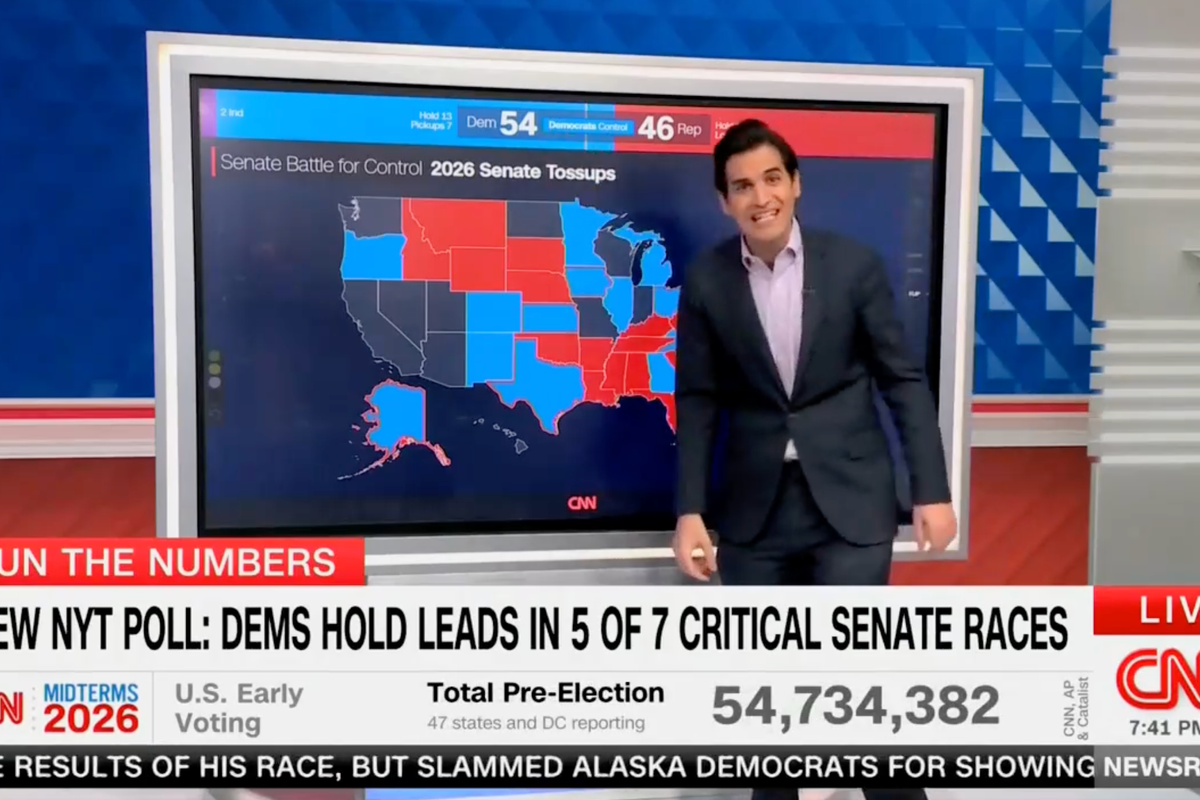
Polling data released ahead of the November 3 midterm elections shows Democratic candidates leading in several key battleground states. According to data from The New York Times/Siena, Democratic contenders are currently leading in Kansas, Maine, Michigan, Ohio, and Texas. The races in Alaska and Iowa are statistically tied.
CNN chief data analyst Harry Enten stated on Sunday, November 1, that these findings suggest a potential shift in congressional power. Enten noted that if Democrats win these contests, they could secure 54 seats in the Senate, moving from their current 47 seats to a majority. However, Enten also cautioned that polling has previously underestimated conservative turnout, noting that Republicans outperformed final Senate polling averages by 4.1 percent in states won by President Donald Trump during the last presidential election.
In specific races, Michigan shows the widest gap among these states, with Democrat Abdul El-Sayed leading Republican Mike Rogers 53 to 42 percent. In Texas, Democrat James Talarico leads Republican Ken Paxton 50 to 43 percent. In Maine, Democrat Troy Jackson holds a six-point lead over incumbent Republican Susan Collins, 51 to 45 percent. In Ohio, Democrat Sherrod Brown leads Republican Jon Husted by five points, 49 to 44 percent. In Kansas, Democrat Adam Hamilton leads incumbent Roger Marshall 49 to 44 percent.
The outcome of these races affects the composition of Congress and the ability to pass legislation during the final two years of President Trump's term. If Democrats gain seven seats to reach a 54-seat majority in the Senate and secure the 238 House seats predicted by analysts, they would hold the authority to block or advance federal judicial appointments, cabinet confirmations, and national policy. A change in party control typically results in different legislative priorities regarding federal spending, healthcare policy, and tax laws, which would be reflected in federal agency actions and new bills starting in January.
The scale of the potential shift involves millions of voters across these seven battleground states. In the House of Representatives, where 218 seats are required for a majority, Enten notes projections that Democrats could reach 223 seats, with a 69 percent chance of a significant seat gain. A Democratic win in Kansas would be the first since 1932, while Texas hasn't elected a Democrat to the Senate in roughly 40 years.
The elections will determine the legislative environment for the remainder of the current administration. A Democratic-led Congress would likely result in increased oversight of executive branch departments and different approaches to matters such as prices amid the Iran war. The immediate focus remains on Election Day, November 3, when polls will close and official vote counting will begin.