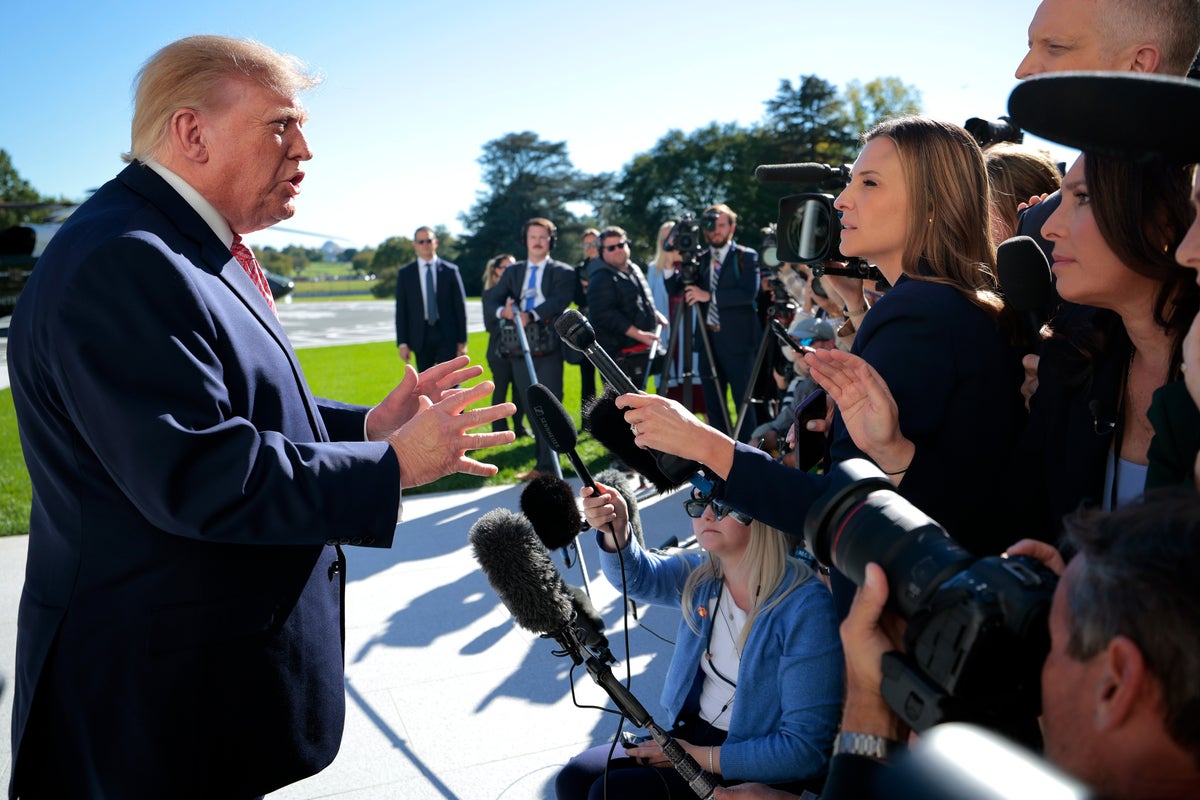
During a press exchange at the White House on Monday, October 19, 2026, President Donald Trump apologized to a reporter after initially labeling her question "fake news." The exchange occurred as the president prepared to depart for a campaign rally in Kansas.
The interaction began when Mary Margaret Olohan, White House correspondent for The Daily Wire, asked the president about remarks made by French President Emmanuel Macron. Olohan stated that Macron was "blaming the Iran war and you, essentially, for the rioting in France right now."
President Trump interrupted the question, stating, "I don’t think he is. No, I think that’s fake news." He then asked Olohan which outlet she represented. Upon learning she was with The Daily Wire, the president replied, "Oh, The Daily Wire is good. Sorry. Daily Wire is good."
Following the identification, the president commented on his relationship with Macron, referring to him as "a friend of mine." However, he criticized the French leader’s policies, stating that Macron had made a "big mistake" regarding immigration and noted that France has "a little bit of a problem with energy."
The question referenced a national address delivered by President Macron on Sunday, October 18, 2026. In that speech, Macron addressed violence and looting during protests over the cost of living and poor conditions in schools. Macron attributed rising fuel prices to "the conflict launched in the Persian Gulf," stating that while France had no part in the conflict, the country was suffering its consequences.
The event touches on the diplomatic relationship between the United States and France, as well as the internal economic stability of a European ally. The conflict in the Persian Gulf was cited as a driver for fuel price increases affecting French households. The exchange occurred as the president traveled to support Republican Senator Roger Marshall in Kansas, an event tied to the midterm elections.
The briefing showed a shift in presidential tone based on the affiliation of the questioner. The effects include the public characterization of French domestic policy by the U.S. president during a period of civil unrest in France. What happens next depends on the upcoming midterm elections in November 2026 and any potential response from the French government regarding the president's remarks concerning their borders and energy policies.