The Plain Record

Neutral daily news — clear headlines, complete facts.

On the Hill

President Trump Bans Three News Outlets Following Legislative and Court Rebukes

President Trump has banned three news outlets from the White House while facing legislative and judicial challenges regarding war powers and mail-in voting.

Background: The power of the purse, explained: appropriations, impoundment and who controls federal spending

By The Plain RecordUpdated September 20, 2026 at 5:12 AM EDT
Published September 19, 2026 at 2:06 PM EDT

The short answer

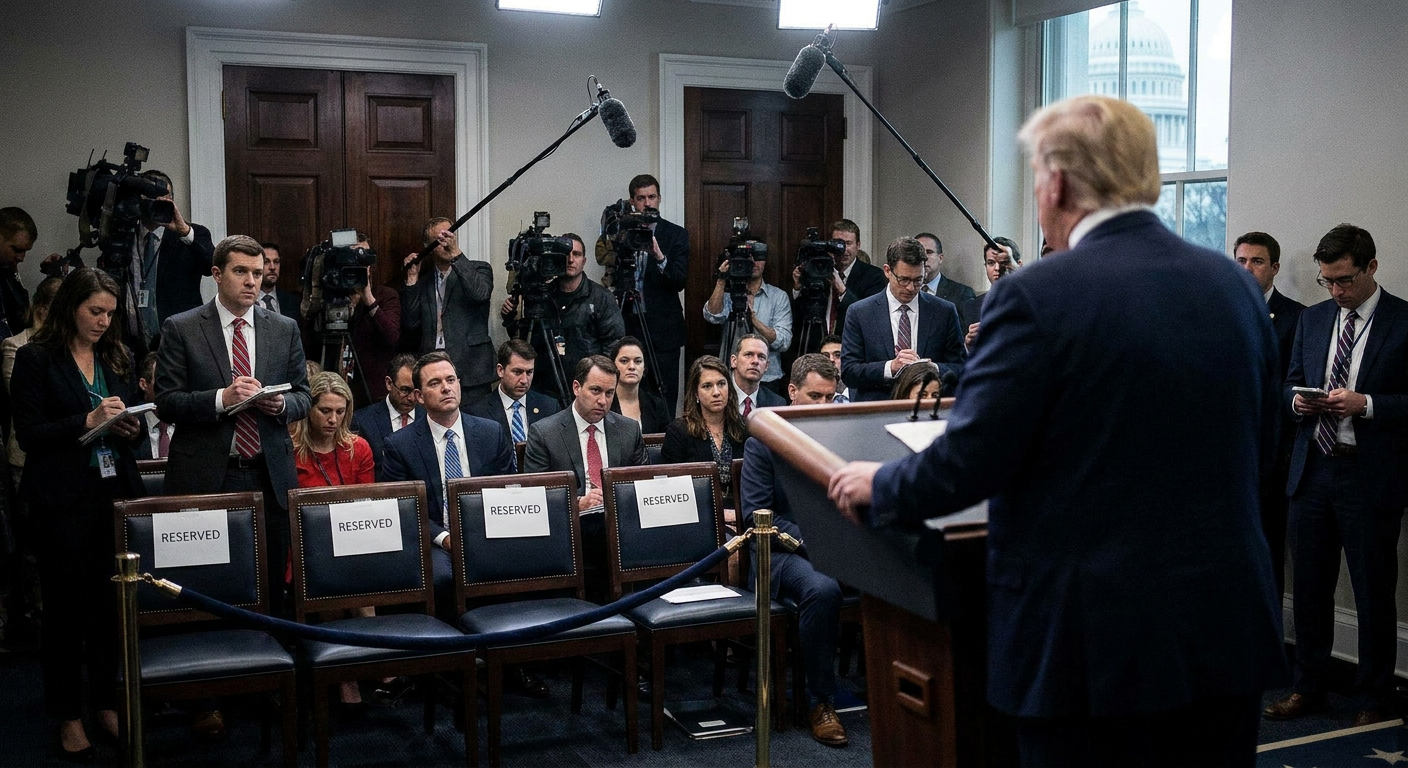
President Trump has banned three news outlets from the White House while facing legislative and judicial challenges regarding war powers and mail-in voting. President Donald Trump has banned three news organizations—CNN, MS NOW, and Politico—from the White House. In an online post, the president stated that other media outlets would follow.

Updates (1)

  • Update — September 20, 2026 at 5:12 AM EDT: President Trump announced a ban on CNN, MS NOW, and Politico from the White House, citing their reporting as the reason for the restriction.
President Trump Bans Three News Outlets Following Legislative and Court Rebukes

The Facts

Who
President Donald Trump, U.S. Congress, U.S. Supreme Court, Federal Reserve, and White House Correspondents’ Association.
What
President Trump banned CNN, MS NOW, and Politico from the White House; Congress voted to limit his war powers; and the Supreme Court blocked mail-in voting restrictions.
When
September 2026 (based on source timestamp)
Where
Washington, D.C.
Why
The administration is seeking to exclude specific media outlets and maintain executive war powers while facing opposition from the courts and the legislature.

President Donald Trump has banned three news organizations—CNN, MS NOW, and Politico—from the White House. In an online post, the president stated that other media outlets would follow. The White House Correspondents’ Association responded to the ban, with President Jacqui Heinrich stating that constitutional protections for the press do not depend on whether a president agrees with a news organization's reporting.

The administration is currently facing multiple legal and legislative challenges. The U.S. Supreme Court recently blocked an administration plan to restrict mail-in voting. Additionally, the U.S. Congress, including seven Republican members, voted to end the president's powers to prosecute the ongoing war with Iran. These developments occur alongside a decision by the Federal Reserve to raise interest rates, an action the president criticized on social media.

Further disputes have emerged regarding national landmarks. The Kennedy Center has been closed following the president’s assertion that it should bear his name. A source report indicates that a large excavation exists at the site where the East Wing of the White House once stood. Regarding technology policy, the president has expressed opposition to AI restrictions, citing a need to remain competitive with China, though some Republican candidates have distanced themselves from this position due to concerns over data centers and safety.

The legislative and judicial actions concerning war powers and voting access directly impact federal governance and the electorate. The Congressional vote, supported by a bipartisan group including seven Republicans, seeks to reassert the constitutional power to declare war, which resides with the legislature rather than the executive. Simultaneously, the Supreme Court's decision on mail-in voting prevents the implementation of the administration's proposed restrictions. The Federal Reserve's interest rate hike will result in higher borrowing costs for consumers and businesses.

The closure of the Kennedy Center and the excavation at the site of the White House East Wing represent significant changes to the physical landscape of the capital. The timeline for the resolution of the Kennedy Center naming dispute was not reported. While the administration continues to oppose AI regulations, the upcoming fall elections may serve as a test for this policy, as several Republican candidates have expressed concern over the localized impact of data center expansion. Future court dates regarding the appeal of the Associated Press ruling or potential challenges to the current media ban were not specified.

Summaries are written by The Plain Record to state the facts of a story plainly and without political slant. Drafted with AI assistance and checked against the source record before publication. See how we report, or report a correction.

← Back to the front page

Questions readers ask

What happened: President Trump Bans Three News Outlets Following Legislative and Court Rebukes?

President Trump banned CNN, MS NOW, and Politico from the White House; Congress voted to limit his war powers; and the Supreme Court blocked mail-in voting restrictions.

Who is involved?

President Donald Trump, U.S. Congress, U.S. Supreme Court, Federal Reserve, and White House Correspondents’ Association.

When did this happen?

September 2026 (based on source timestamp)

Where did this happen?

Washington, D.C.

Why does this matter?

The administration is seeking to exclude specific media outlets and maintain executive war powers while facing opposition from the courts and the legislature.