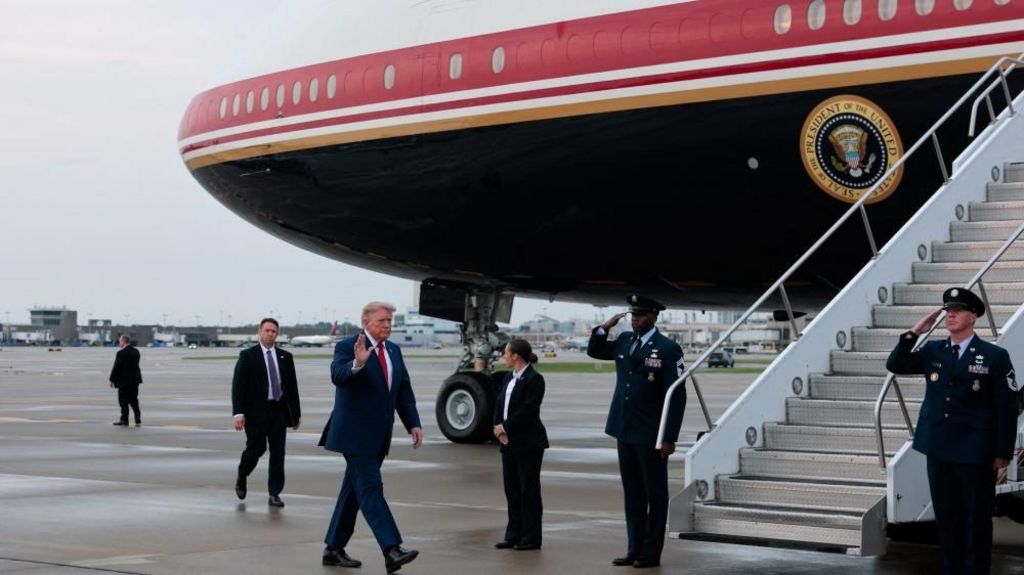
President Donald Trump confirmed on Tuesday that he secretly changed aircraft while departing a NATO summit in Turkey last month following reports of a security threat. The president stated that he acted on the instructions of the Secret Service and the military, who requested he use a different flight than the one originally prepared for his departure. The maneuver involved the president boarding the primary presidential aircraft before being moved to a separate military jet without the knowledge of the journalists and staff remaining on the initial plane.
The incident occurred on July 8 as the president was leaving Ankara. Officials told CBS News that the U.S. had identified a credible threat from Iran involving a potential missile strike against the aircraft. The New York Times reported that intelligence indicated a person equipped with a shoulder-fired missile had been seen near the summit location. These events took place one day after the United States resumed military strikes against Iran following the collapse of negotiations intended to end conflict between the two nations.
According to the Washington Post, the president boarded the Boeing 747 typically known as Air Force One in view of cameras before moving through a catering truck to a C-32A military aircraft. While the president traveled on the C-32A under the call sign "Reach 18," the original aircraft continued to use the "AF1" call sign as a decoy. Members of the president’s cabinet, including Secretary of State Marco Rubio and Treasury Secretary Scott Bessent, remained on the original plane along with the press pool, who were instructed to keep their window shades closed during the flight.
For the individuals involved, the day-to-day reality of the event was marked by unusual security protocols. Journalists reported being told to keep window shades down and were prevented by security from opening them. The president later characterized the flight to reporters as "dangerous" due to external threats. The incident highlights the specific operational changes that occur when the Secret Service identifies a "credible" threat, shifting from standard public departures to "clandestine maneuvers" involving catering trucks and decoy call signs to obscure the president’s location.
The knock-on effects of this maneuver include a formal report from the White House Correspondents' Association and public statements regarding the safety of the press when used as part of a security ruse. The incident sets a precedent for how the military and Secret Service may handle identified missile threats in foreign transit zones. What happens next involves ongoing tensions between the U.S. and Iran following the breakdown of talks. While the president has returned to Washington, the specific status of the security threat that prompted the July 8 switch has not been updated in the current reports.