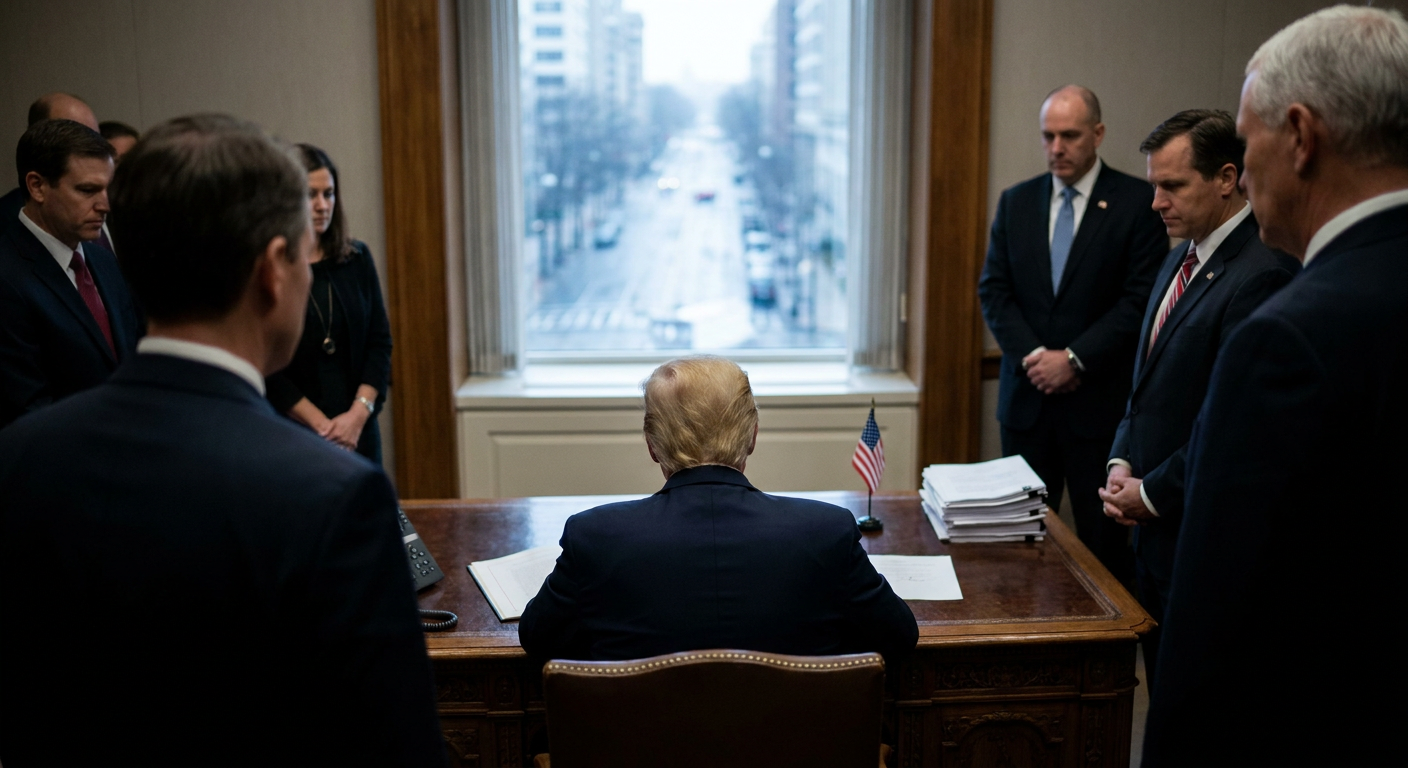
President Donald Trump signed an executive order on Friday to exempt Russia from economic sanctions previously passed by Congress. The White House stated the waiver is in the national security interest of the United States, citing a need to address high domestic energy prices.
The decision follows a diesel sales deal between the U.S. and Russia reached earlier in the week. While the president has expressed concern that Ukrainian strikes on Russian energy infrastructure are driving up fuel costs, analysts with the International Energy Agency (IEA) stated that supply disruptions from the U.S.-Iran war are the primary driver of high prices. The IEA further noted that the diesel deal is unlikely to significantly lower costs for consumers.
Reaction in Congress has been divided. Senate Democratic Leader Chuck Schumer (D-NY) issued a statement criticizing the move, while Senator James Lankford (R-OK) told NBC’s "Meet the Press" that the president is attempting to balance domestic needs with support for Ukraine. Candidate Darline Graham (R-SC), who is running for the seat formerly held by her brother, the late Senator Lindsey Graham, told the Associated Press she supports the sanctions to pressure Russia but understands the president's cost concerns.
The policy change also impacts the U.S. relationship with the Ukrainian government. President Volodymyr Zelenskyy, speaking on "Meet the Press," described the move as a "tragedy" and expressed hope that the U.S. administration would remain supportive of Ukraine’s defense. The waiver comes as the president has publicly called for a change in Ukrainian leadership to facilitate a deal to end the conflict.
The immediate legislative impact is limited because Congress is currently in recess for the midterm elections. While the original sanctions law granted the president the authority to issue temporary waivers for national security reasons, some lawmakers have voiced opposition to the move. However, when Congress returns in December, they will face a crowded legislative calendar including government funding, the debt ceiling, farm aid, and war funding, which may prevent them from prioritizing a reversal of the sanctions waiver.
Congress is scheduled to return to Washington D.C. after the midterm elections conclude. The current government funding measure is set to expire in early December. No specific dates for court challenges or legislative votes regarding the executive order were reported.