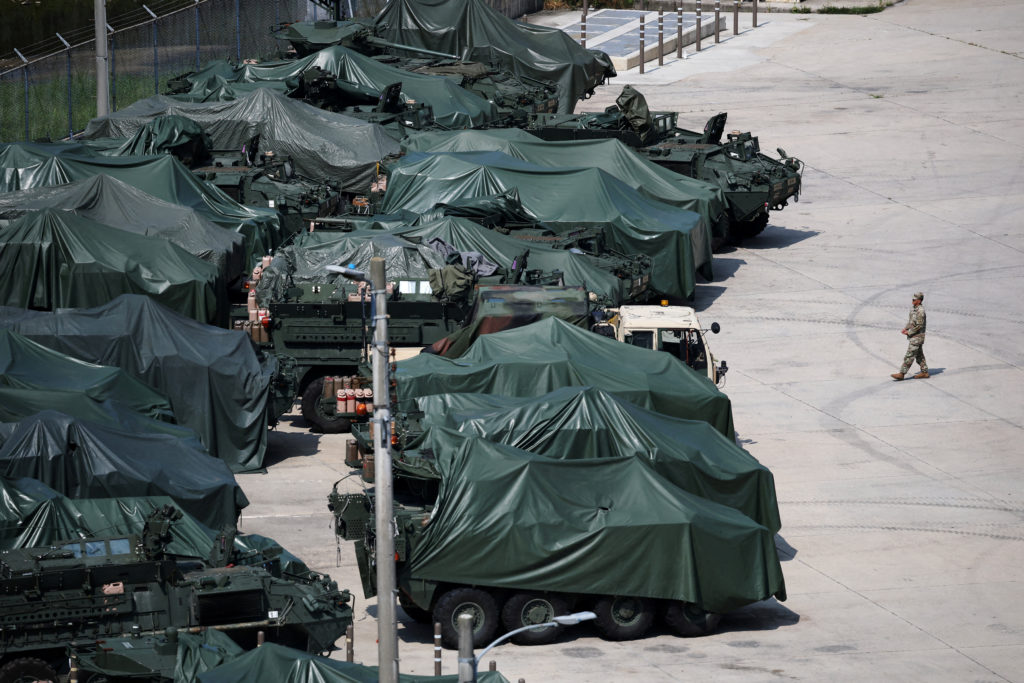
President Trump has scaled back joint military exercises between the United States and South Korea, citing concerns over their financial cost. In addition to the expense, the president identified his ongoing relationship with North Korean leader Kim Jong Un and South Korea's refusal to participate in the Iran war as primary reasons for the shift in military cooperation.
The decision follows a period of established military partnership between the two nations, which have historically conducted regular large-scale exercises to ensure regional security. Retired Navy Rear Adm. Mark Montgomery discussed the implications of this shift with PBS NewsHour, noting that the move reflects a transactional approach to foreign alliances.
The reduction in these exercises comes as the administration manages several other foreign policy and domestic matters. These include tensions in the Strait of Hormuz involving Iran and threats regarding military action in Oman. The administration is also navigating domestic legal challenges, such as a recent court order blocking the relocation of FBI headquarters from Maryland to Washington, D.C.
For the broader region, the scale of this policy shift impacts the security calculus of neighbors like Japan and North Korea. Analysts such as Montgomery suggest that by making military cooperation contingent on specific costs and external participation in other conflicts like the Iran war, the U.S. is signaling a change in how it values long-term treaty obligations. This could lead other allies to reassess the reliability of U.S. defense commitments, potentially affecting future negotiations regarding troop hosting costs and intelligence sharing.
What happens next remains dependent on the administration's ongoing diplomatic efforts with North Korea. While no specific dates for the resumption or further cancellation of exercises were reported, the policy remains in effect as of August 18, 2026. Future adjustments will likely be influenced by North Korea's actions and whether South Korea reconsidered its stance on regional conflicts outside the peninsula.