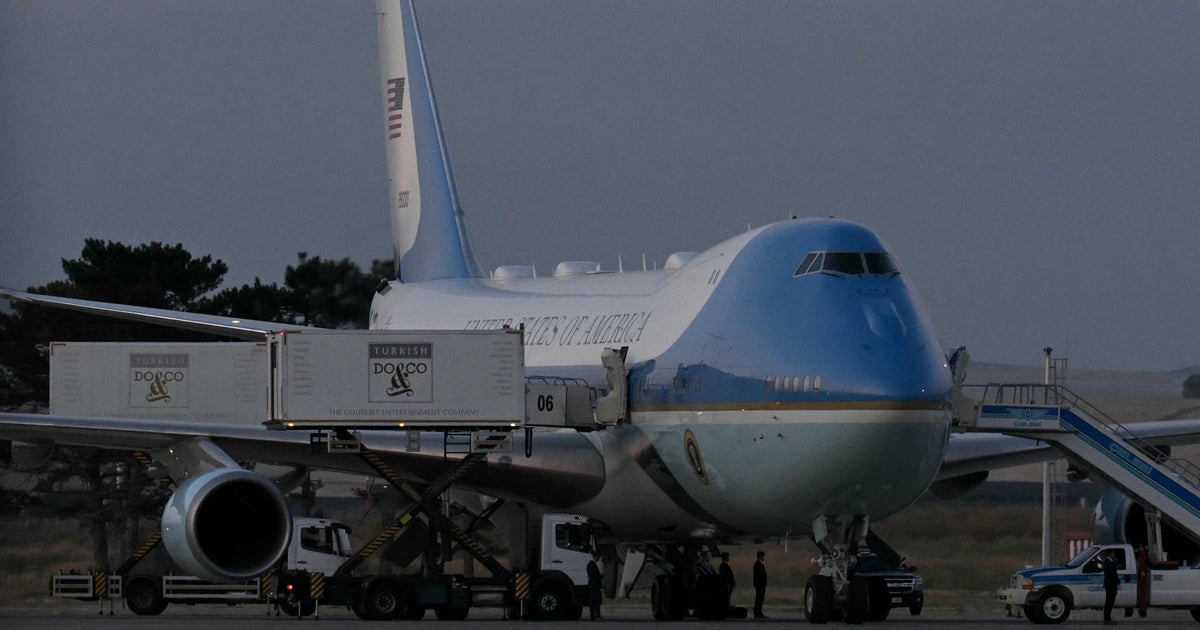
President Trump secretly transferred from Air Force One to a different government aircraft while departing Turkey last month following a NATO summit, according to a U.S. official with knowledge of the matter. The transfer, which reportedly involved the use of an airport catering truck to move the president between planes, was executed due to intelligence regarding a missile threat from Iran and its allied proxies. While members of the press and staff remained on the primary presidential jet, believing the president was on board, Mr. Trump traveled on a separate Air Force C-32A to a refueling stop in the United Kingdom.
The security maneuver followed U.S. intelligence reports of a credible plot to target the president's aircraft as it left Ankara. Before the flight on July 8, Mr. Trump had publicly announced he would use the older Air Force One jet rather than a newer aircraft donated by Qatar, citing "old time's sake" as the reason. However, the Secret Service reportedly advised the use of the older plane for security purposes. During the stay in Ankara, reporters were instructed to keep window shades closed in the press cabin, a measure Mr. Trump later attributed to security risks.
On Tuesday, Mr. Trump confirmed the plane switch, stating it was done at the request of the military and Secret Service. He noted he was aware of the threats, referring to himself as Iran's "number one target" during the NATO summit. While the Trump administration had not previously disclosed the use of a decoy plane, administration officials expressed frustration on Monday that details of these classified protective tactics had been leaked to the public. White House communications director Steven Cheung stated that the administration uses all available tools to address threats from "enemies of America."
For those directly involved, such as the journalists and staff on the July 8 flight from Ankara, the maneuver meant they were traveling on a high-profile target while the president was moved elsewhere. The public disclosure of these "highly classified tactics," as described by administration officials, could change how future presidential departures are managed in high-risk zones. It may lead to increased restrictions on press movement or new requirements for window shades and cabin activity during sensitive takeoffs, which journalists would notice immediately upon boarding.
The incident also highlights the operational status of the presidential fleet. The newer Air Force One, donated by Qatar last year and debuted in June, was recently sent for additional security upgrades. The precedent set by using a catering truck as a transport vehicle and a primary aircraft as a decoy may influence future Secret Service protective models. As of now, the administration has not announced new public travel guidelines, but officials noted that the leak of these procedures could limit future protective options. The next steps involve the continued retrofitting of the Qatari-donated jet to meet high-level security protocols.