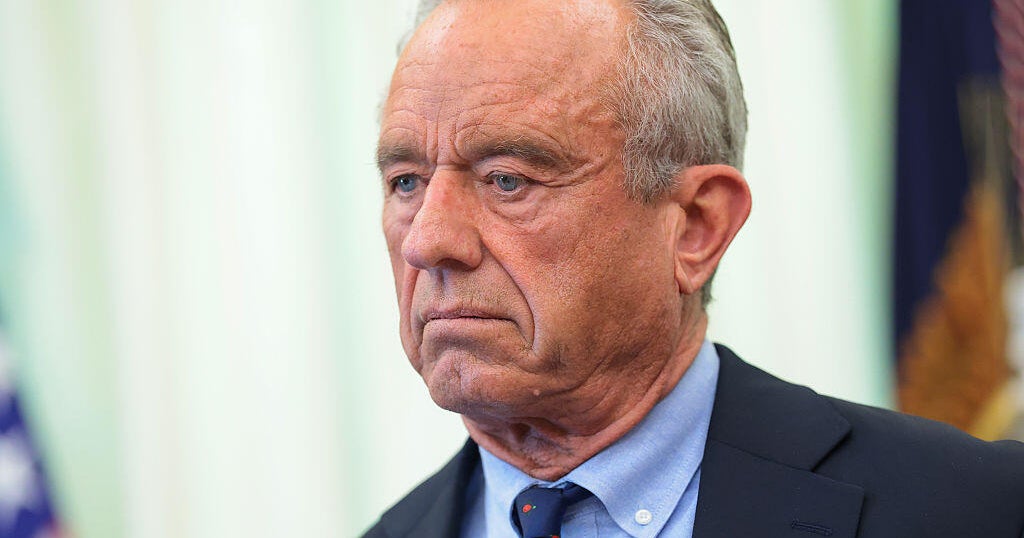
President Donald Trump signed an executive order on August 10 directing a reduction in childhood vaccine recommendations, citing a rise in autism cases as the rationale. The order followed statements by Health and Human Services (HHS) Secretary Robert F. Kennedy Jr., who has led a taxpayer-funded research initiative into the causes of autism for over a year. While the president has publicly linked the disorder to vaccinations, the administration has not yet released evidence from its internal research to support this connection.
The administration's research efforts have been described by some scientific observers as opaque. Helen Tager-Flusberg, head of the Coalition of Autism Scientists, compared the secrecy of the project to the Manhattan Project, noting that prominent autism advocacy groups and career federal scientists have not been consulted. HHS spokesperson Emily Hilliard stated that the agency is examining "every biologically plausible hypothesis" and will make findings public once they are ready.
To support the research, senior adviser William "Reyn" Archer III has been acquiring American medical records for review by political appointees. Additionally, the National Institutes of Health (NIH) has issued $50 million in grants to universities for autism studies, though most are not expected to conclude for several years. In January, Secretary Kennedy appointed 21 new members to the Interagency Autism Coordinating Committee, including vaccine skeptics and parents of children with autism; the group recently released a strategic plan suggesting federal research has focused too heavily on genetics.
The policy shift involves significant federal expenditure, including the $50 million in NIH grants and additional millions allocated to the Secretary's internal research mission. This internal project has faced criticism from organizations like the Autism Society for a lack of transparency. The policy also places the U.S. at odds with peer countries; while HHS cited international guidance as a basis for reassessing schedules, the administration acknowledged that no other peer nation currently requires the separation of the MMR vaccine components as ordered by the president.
The directive carries immediate political and health policy implications as it precedes midterm elections. Former Representative Larry Bucshon noted the timing could affect candidates in swing districts. Furthermore, the order was signed during a period when the U.S. was experiencing a wave of measles infections. The administration faces a self-imposed deadline to produce definitive research findings, with Secretary Kennedy stating he aims to finish the work within the remaining two years of the current presidential term.
In the interim, scientific figures within the administration have expressed uncertainty regarding the causes of rising autism rates. NIH Director Jay Bhattacharya stated on August 9 that he does not yet have an answer for the increase. Existing scientific studies generally attribute the rise in diagnoses to factors such as expanded screening, a broader definition of the disorder, and older parental age. Secretary Kennedy has previously suggested links between autism and factors like Tylenol use or circumcision, though studies published in JAMA and JAMA Pediatrics have not found evidence to support those specific associations.