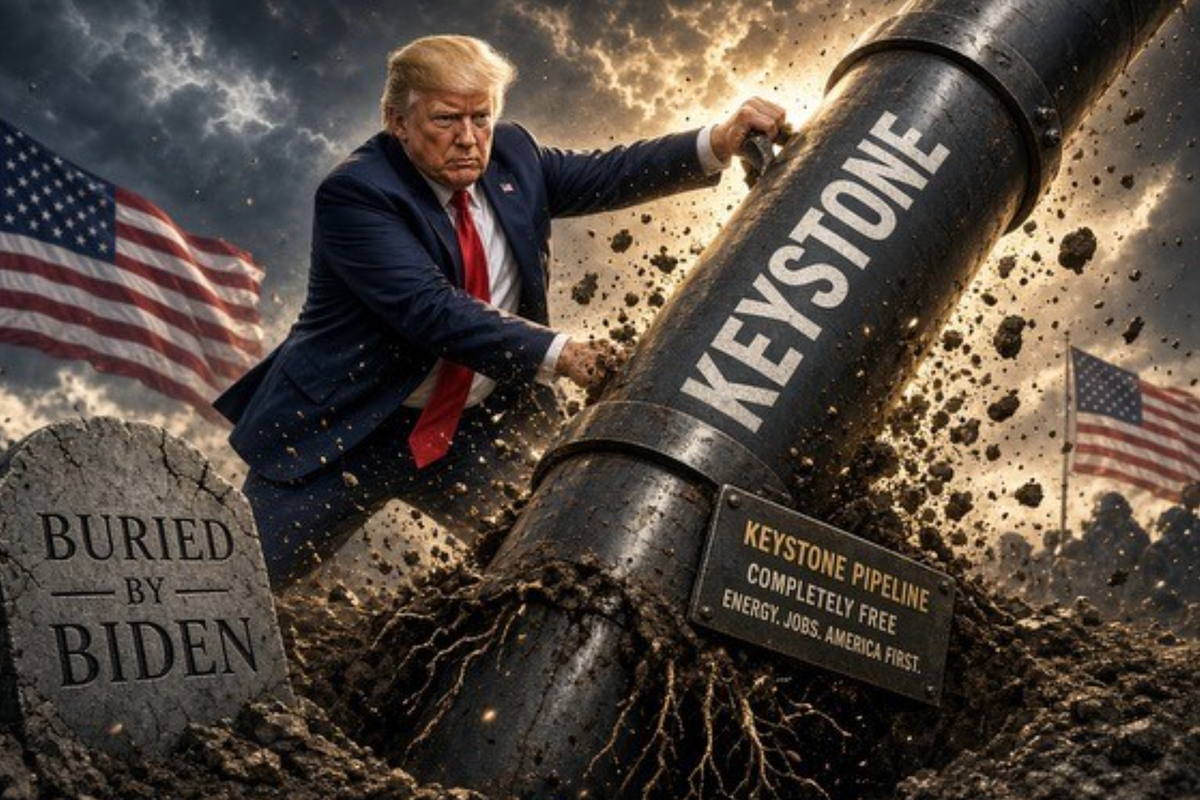
President Donald Trump suggested the potential revival of the Keystone XL oil pipeline project in a series of social media posts on Tuesday night. The statements, shared on Truth Social, included an artificial intelligence-generated image depicting the pipeline being unearthed from a grave marked "Buried by Biden." The posts coincided with the president's announcement that he was pausing a 50 percent tariff on various Canadian imports for three days while trade negotiations continue.
The Keystone XL project, an extension of an existing system, was first proposed in 2008 to transport crude oil from the Alberta tar sands in Canada to U.S. refineries. The project has faced a long period of regulatory hurdles across different administrations. Former President Barack Obama opposed the project in 2015, citing a State Department finding that it did not serve the national interest. While Trump supported the project during his first term, President Joe Biden revoked a critical permit for the pipeline upon taking office.
According to the Government of Alberta, the 1,947-kilometer pipeline was designed to carry 830,000 barrels of crude oil per day into Nebraska. Environmental organizations and Native American tribes have consistently opposed the construction, citing risks of oil spills and potential threats to indigenous land and water safety. In February 2025, Trump stated that the original company or a new firm should "get it built," promising "easy approvals" and an "almost immediate start."
Canadian Prime Minister Mark Carney confirmed on the social media platform X that "substantial progress" had been made regarding trade deals and the pause of U.S. tariffs. While Carney did not mention the pipeline in his recent public statement, he reportedly raised the topic with Trump during an October meeting as part of broader discussions on energy, steel, and aluminum trade.
The potential policy shift signals a move toward expedited federal energy permits. A person working in the Canadian energy sector or a U.S. refinery worker would see a direct impact on the long-term availability of crude oil supply and transportation infrastructure. Environmental groups and tribal governments would likely face renewed legal and regulatory battles to protect water safety and land rights, which they have argued are threatened by the risk of spills along the transcontinental route.
What happens next depends on the finalization of the trade deal between the U.S. and Canada. The 50 percent tariff pause on Canadian imports is currently set for a three-day duration, ending later this week. While the Trump administration has indicated a willingness to grant "almost immediate" approvals, the original company behind the project has not publicly confirmed a restart, and any new permit issuance would likely face challenges in federal court.