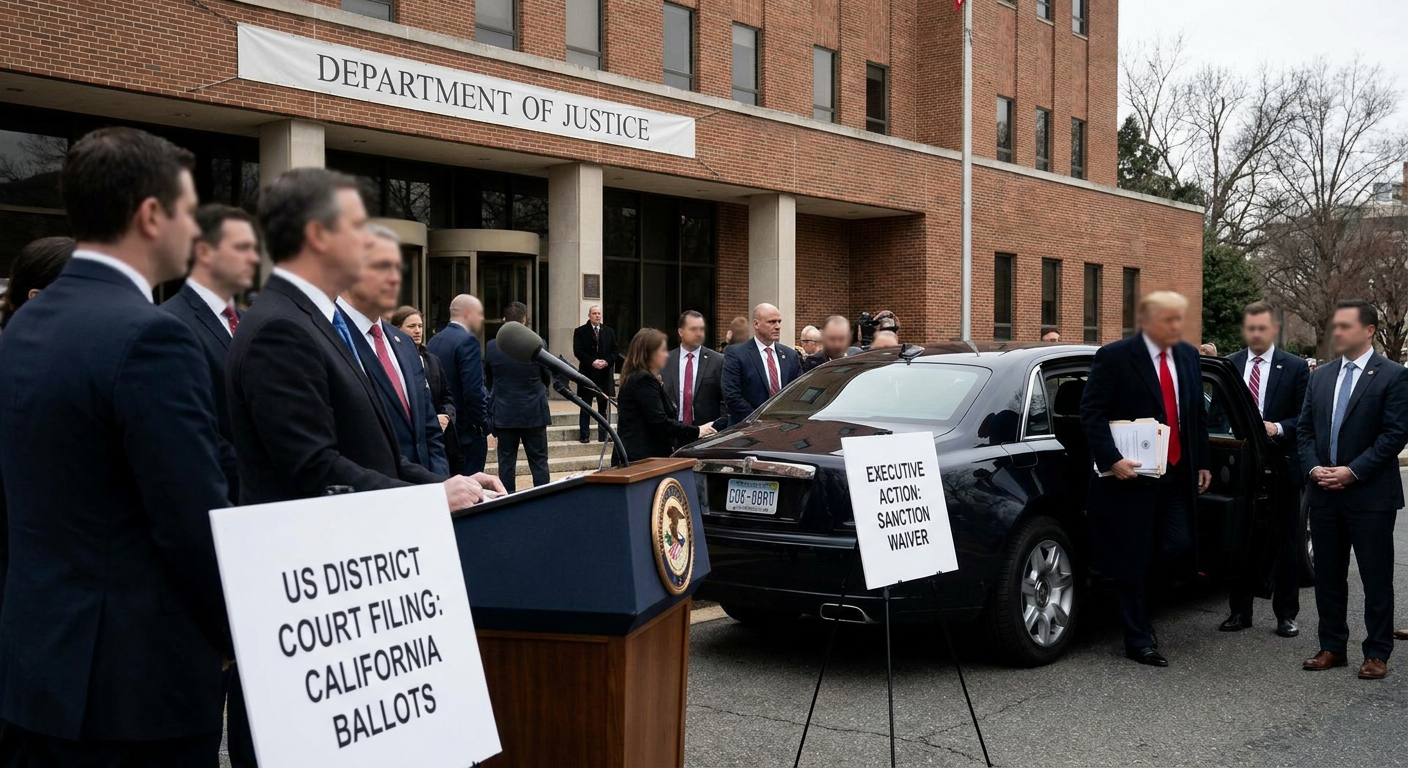
President Donald Trump signed an executive order Friday to waive sanctions against Russia, following an earlier announcement of a deal to import Russian diesel fuel. The President stated the agreement aims to lower domestic fuel prices, which he attributed to Ukrainian strikes on Russian oil refineries. The deal was intended to include an energy ceasefire; however, Ukraine resumed strikes on Russian refineries this week following Russian attacks on Ukrainian power plants.
The executive order waives sanctions established under the Lindsey Graham Act, a bipartisan measure. Market experts cited by NPR stated that the deal is unlikely to lower fuel prices in the near term. Fuel prices have been rising since March, coinciding with the administration's military actions involving Iran.
In a separate action, the U.S. Department of Justice (DOJ) filed a lawsuit against the state of California to prevent the counting of ballots from individuals the federal government identifies as "likely noncitizens." This legal action precedes upcoming midterm elections. While the administration has asserted that millions of people vote illegally, data from the Heritage Foundation, a conservative organization, recorded 99 cases of ineligible noncitizen voters nationwide over the past 40 years.
President Trump also reversed a decision this week regarding the scheduled execution of the convicted Fort Hood shooter. Defense Secretary Pete Hegseth had previously moved to livestream the execution, which involves a firing squad and a prisoner who uses a wheelchair. Though the President initially expressed support for a public execution, he has now withdrawn that backing.
For residents in California, the concrete day-to-day change involves the processing of their ballots. If the DOJ successfully blocks these votes, individuals flagged by federal databases may find their participation in the midterm elections voided or delayed. The knock-on effects of the fuel deal are tied to broader economic trends; high fuel prices contribute to inflation across various sectors, affecting household costs for transportation and goods. Market experts suggest consumers may not see a reduction in their energy bills in the immediate future despite the new Russian imports.
The administration’s shift in policy, including the waiver of bipartisan sanctions, sets a precedent for how energy needs may influence foreign policy and existing legislative frameworks like the Lindsey Graham Act. What happens next includes the progression of the DOJ lawsuit through the court system as the midterm election date approaches. Additionally, the execution of the Fort Hood shooter remains scheduled, though it will no longer be livestreamed to the public following the President's reversal.