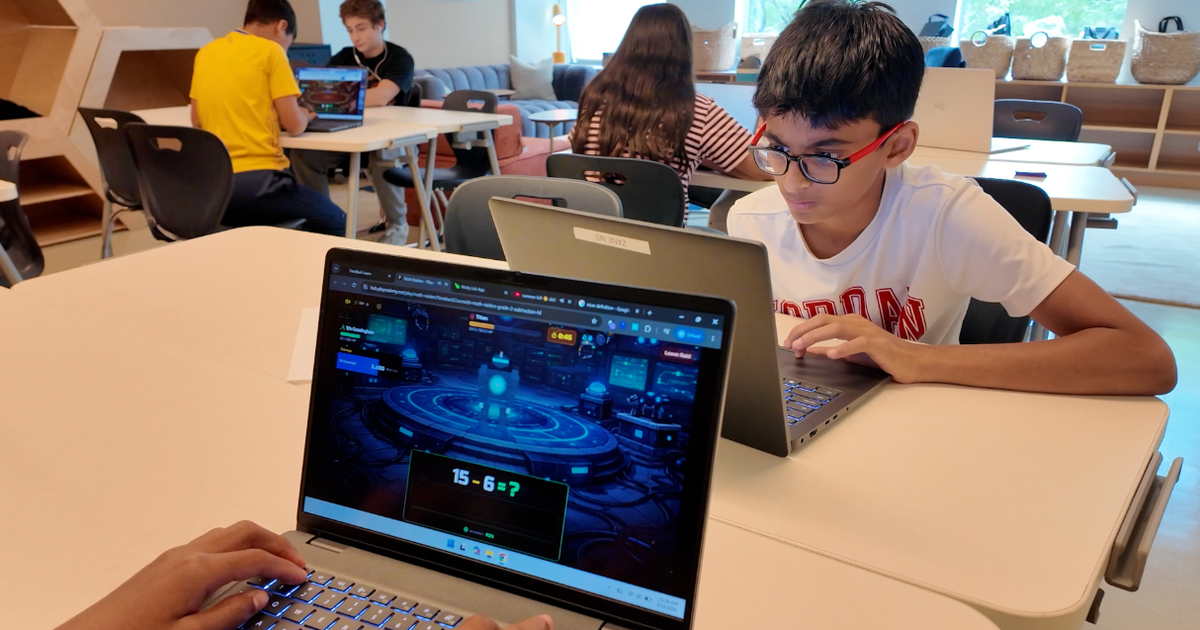
Alpha School, a private for-profit institution, opened its first Chicago campus in September 2024, featuring a curriculum delivered by adaptive software rather than traditional teachers. The school utilizes programs that Alpha claims allow students in pre-K through eighth grade to master core academic subjects, including math, reading, and science, in approximately two hours each day.
MacKenzie Price founded Alpha in Austin, Texas, in 2014, and the network has since expanded its model of "mastery-based" learning. According to school officials, the program does not screen applicants based on prior academic performance but seeks students who are self-motivated. Alpha reports that its students score in the top 1% on national standardized tests, though some education experts have noted a lack of independent validation for these outcomes.
Instruction centers on a proprietary system called TimeBack, developed by a research team led by cognitive scientist Carl Hendrick. The software adjusts to individual student progress and is "closed," meaning it does not access the open internet. While the school employs adults known as "guides," their role is to provide motivational and emotional support rather than academic instruction. An analysis by the University of Colorado’s National Education Policy Center found that approximately one-third of these guides have formal education training or degrees.
Education experts have expressed varying degrees of skepticism regarding the model. Rebecca Winthrop, a senior fellow at the Brookings Institution, described the school as an "experimental model" and noted that neuroscience emphasizes the importance of deep reflection, which she suggested might be limited by the two-hour daily academic window. Carol Corbett Burris of the Network for Public Education characterized the for-profit model as an experiment in profit extraction and noted that a similar implementation at an Arizona charter school resulted in performance levels she characterized as dismal compared to local public schools.
A student attending this school would experience a shift from a classroom of 20 to 30 peers led by a teacher to an individualized environment where they work on a laptop. Instead of asking a teacher for help with a math problem, a student is directed by a "guide" to utilize software hints or participate in a remote coaching call with a global academic team. Critics like Burris describe this as the "financialization" of education, where instruction is automated to reduce labor costs associated with traditional certified teaching staff.
The long-term impact on the education market depends on whether Alpha’s students continue to secure admission to universities such as Stanford and Northwestern, as Dean of Parents Brian Howell stated they currently do. If the model expands, it could set a precedent for other private or charter institutions to reduce physical staffing in favor of licensed software platforms. For now, the program remains a private option with no reported dates for public expansion.