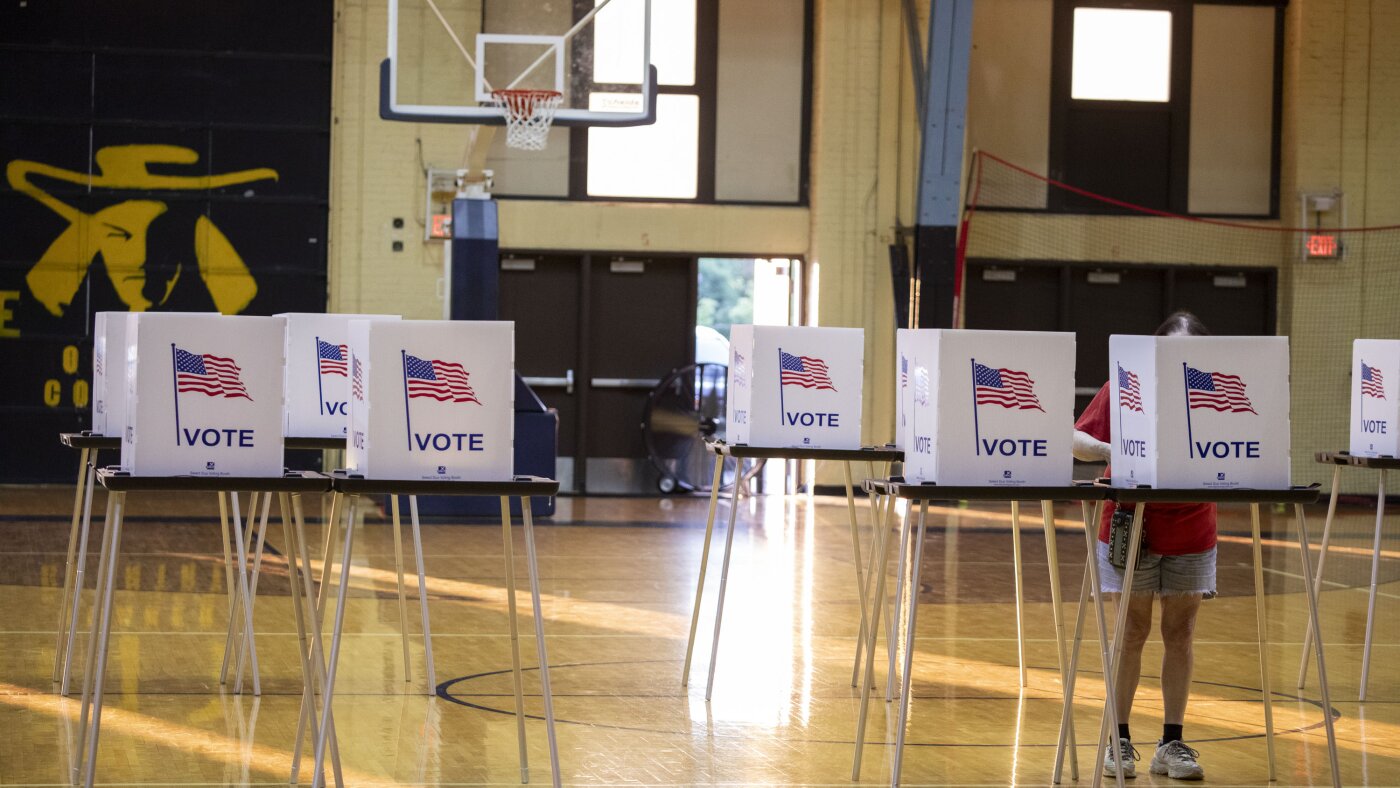
Primary elections held Tuesday across several states, including Michigan, Missouri, Kansas, Virginia, and Washington, resulted in wins for candidates from various wings of the Democratic and Republican parties. In Michigan, voters selected candidates from the progressive wing of the Democratic Party for U.S. Senate and several House seats. Meanwhile, Republican voters in Michigan, Kansas, and Washington advanced candidates endorsed by former President Donald Trump.
The results come amid the 2026 midterm cycle as both parties compete for control of the U.S. Senate and House of Representatives. In Michigan, the Democratic primary for the open U.S. Senate seat became a focal point for internal party debates over policy agendas, such as Medicare for All, and the influence of outside campaign spending.
In the Michigan Senate primary, Abdul El-Sayed defeated U.S. Rep. Haley Stevens, who had received backing from the party establishment and pro-Israel groups. Outside groups spent $52 million in Michigan by mid-July, the second-highest amount of outside spending in a Senate race this cycle according to Open Secrets. In Missouri’s 1st Congressional District, establishment-backed Rep. Wesley Bell defeated incumbent Rep. Cori Bush, who was supported by progressive leaders like Sen. Bernie Sanders (I-VT).
The scale of financial influence in these races is significant, with $52 million in outside spending recorded in Michigan alone by mid-July. This level of funding translates to roughly $5.20 per resident in a state of 10 million people, highlighting the high cost of campaigning for federal office. Voters in Missouri and Kansas also directly influenced state-level governance by rejecting two Republican-led ballot initiatives. In Kansas, voters maintained a system where the governor appoints Supreme Court justices, and in Missouri, voters rejected a proposal that would have required constitutional amendments to pass by a majority in all eight congressional districts rather than a simple statewide majority.
These results establish the matchups for the November general election, where control of the U.S. Congress will be decided. In Michigan, Republican Rep. John James will face Secretary of State Jocelyn Benson for governor, while El-Sayed will face former Rep. Mike Rogers for the U.S. Senate. In Washington’s 4th District, Trump-endorsed Amanda McKinney will face Democrat John Duresky. The failure of the Missouri ballot initiative means future public amendments will continue to require only a simple statewide majority to pass. All winners from Tuesday's contests will proceed to the general election scheduled for November 2026.