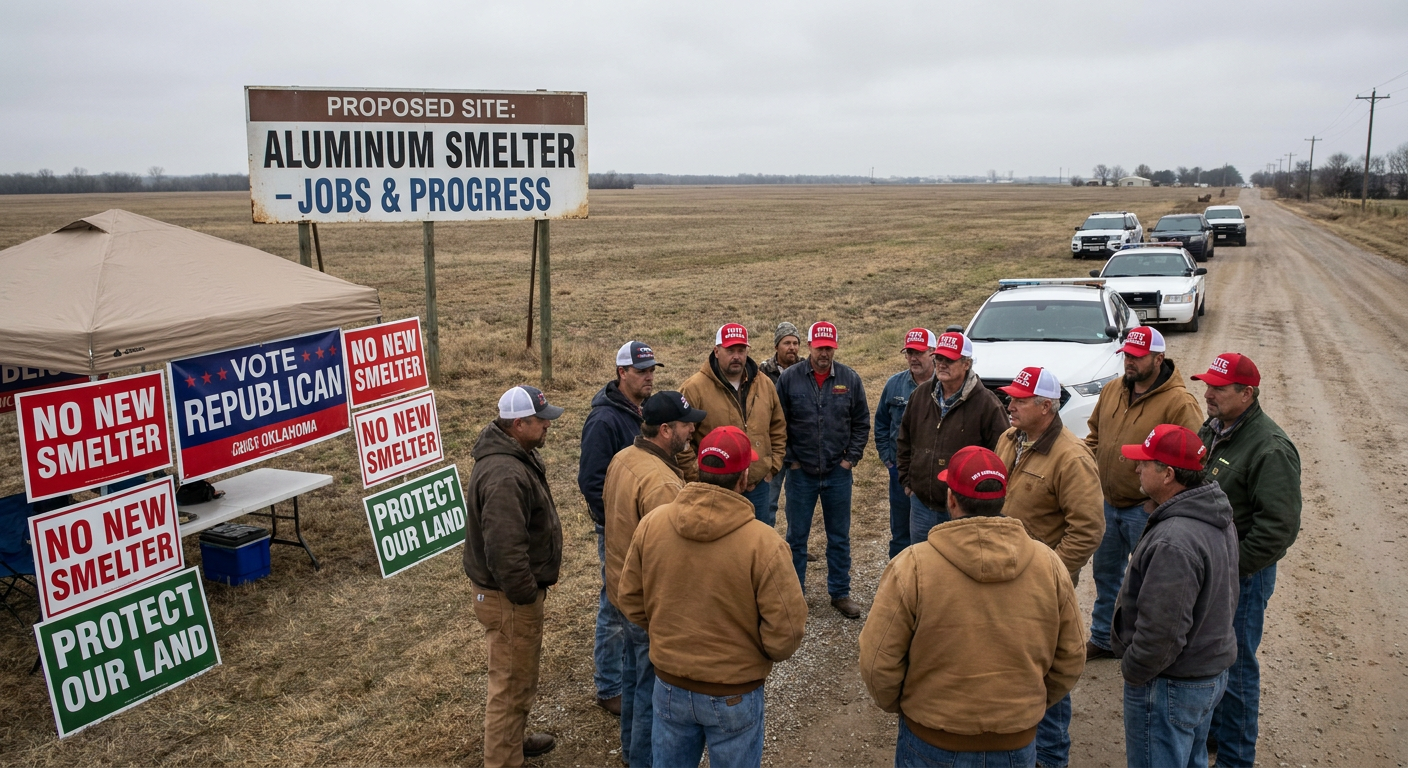
A proposed $4 billion aluminum smelter supported by President Trump has emerged as a central issue in the Oklahoma Republican runoff election for governor. The project, which is intended to bolster domestic metal production, has created a policy division among Republican candidates and officials in the state.
The debate follows efforts by the Trump administration to promote industrial development through the construction of the large-scale manufacturing facility. While the specific site and local incentives for the smelter have been discussed in the context of Oklahoma's economic development, the project has become a point of contention between different factions within the state's Republican party.
Specific details regarding the construction timeline or the specific candidates' individual stances were not detailed in the report. However, the $4 billion price tag represents one of the largest proposed industrial investments in the state's recent history. The project is being framed as a key component of the administration's broader economic agenda.
The project will also have a direct impact on the local energy market and utility rates, as aluminum smelting is an energy-intensive process that requires vast amounts of electricity. Residents and small-business owners may see changes in their utility bills or regional infrastructure depending on how the smelter is integrated into the state's power grid. The rift among Oklahoma Republicans suggests that the project's approval could hinge on the results of the upcoming runoff election, which will determine the party's nominee for governor.
Furthermore, the decision sets a precedent for how the state handles large-scale industrial projects backed by the federal government. A final determination on the smelter is expected to follow the conclusion of the runoff election, though specific deadlines for breaking ground or finalizing environmental permits have not yet been reported. The results of the August 25, 2026, runoff will likely dictate the state's next steps in negotiating the terms of the facility's development.